Cologne beer coaster tower collapses after girl pulls single piece in viral video
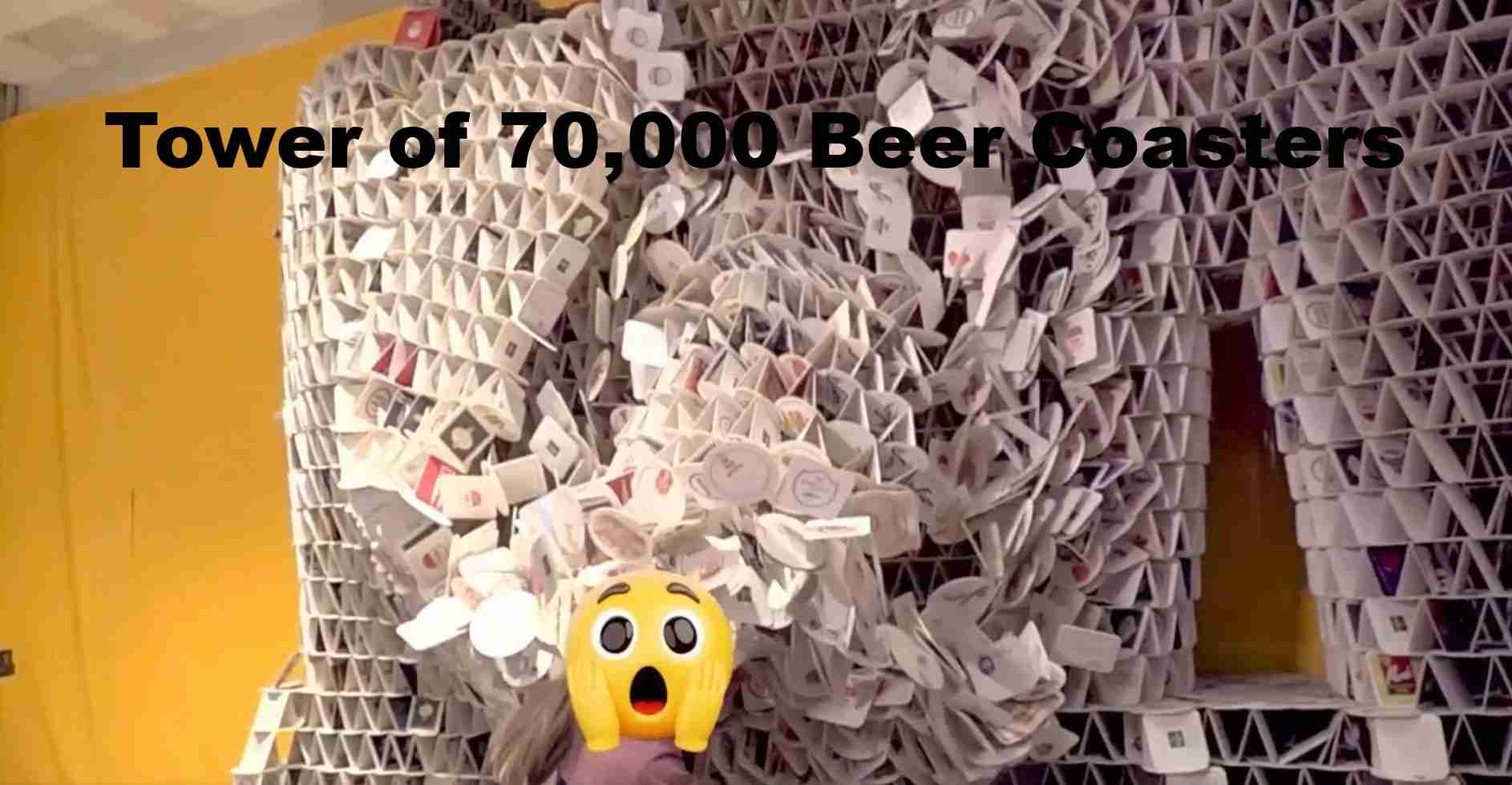
A 63,000-beer-coaster sculpture by German artist Benjamin Klapper collapsed at Cologne’s Rhein-Center on Jan. 10, 2026, after a girl removed a single coaster during an interactive game — and drew millions of views online.
- Months of work undone: Klapper spent roughly 120 hours assembling a structure of about 63,000 beer coasters that later toppled.
- Interactive finale: After a partial structural failure, the public was invited to remove single mats; a girl’s pull triggered the final collapse.
- Viral reach: Bystander footage circulated globally, prompting sympathy, skepticism and debate about staging fragile public art.
- Record missed: The collapse prevented an official Guinness World Records submission; the standing record is 70,000 coasters.
What happened: the build, the partial failure and the interactive game
Benjamin Klapper, a 49‑year‑old artist and owner of MuVi 3D GmbH, assembled the installation titled Inside inside the Rhein‑Center mall in Cologne. Klapper told reporters he spent about 120 hours on the build, which began Oct. 31 and was finished Dec. 8, 2025.
According to multiple accounts, the structure suffered a partial collapse under its own weight shortly before Klapper could complete and verify it for Guinness recognition. Rather than disassemble immediately, Klapper opened the remaining sculpture to visitors and invited them to remove single mats in turn.
“In total, I spent about 120 hours constructing the sculpture,” Klapper said, describing the project as painstaking work watched by mall visitors.
On Jan. 10, video recorded by bystanders shows a young girl — identified by Klapper as the daughter of one of his helpers — removing a horizontally placed coaster. The tower then toppled in a rapid chain reaction, footage that many viewers likened to a collapsing house of cards.
Numbers and reporting differences
Coverage varies slightly: most outlets cite roughly 63,000 beer coasters while some report 64,000. Descriptions alternate between “tower,” “castle” and “structure.” These variations are common in fast‑breaking, syndicated coverage and reflect different source citations.
Primary reports include outlets such as Tribune, Fox News and syndicated video from Newsflare, plus regional coverage such as Nevsedoma.
Guinness context and why the record was missed
The current Guinness World Record for the largest beer‑coaster structure stands at 70,000 coasters (set by Sven Goebel in 2004). Because Klapper’s installation experienced a partial failure prior to official verification, it could not be submitted intact for adjudication.
Klapper’s decision to allow the public to interact with the remaining structure transformed a failed record attempt into a public performance and a viral moment.
Eyewitness video and global reaction
Short clips captured by onlookers quickly circulated online. The footage amassed millions of views, drawing mixed reactions: sympathy for Klapper’s months of work, criticism of staging fragile displays in public spaces, and some skepticism with viewers suggesting the clip might be manipulated.
Social reaction ranged from amusement to cautionary commentary about safety and the wisdom of inviting untrained visitors to handle delicate installations.
About the artist
Benjamin Klapper has built coaster structures since childhood and operates MuVi 3D GmbH. He has used public displays to let people watch his process; he described the project as a personal milestone despite the outcome.
Source links for verification
- Tribune: Girl accidentally topples 63,000 beer coaster tower
- Fox News: Girl caught on video pulling single square as 63,000-beer-coaster tower collapses
- Newsflare: Devastating moment man’s structure of 64,000 beer mats collapses
- Nevsedoma: Castle made of beer coasters collapsed
Implications for Las Vegas, Nevada
The Cologne collapse offers practical lessons for Las Vegas stakeholders across tourism, regulation and community programming:
- Economic & publicity potential: Small, shareable installations that encourage participation can generate organic reach and foot traffic.
- Safety & permitting: City regulators and mall operators should require structural reviews, permits and clear safety plans for fragile interactive displays.
- Community & cultural fit: Interactive spectacles suit tourist corridors and nightlife districts but need sensitivity in family or residential areas.
- Operational planning: Use staff supervision, signage, insurance and a social media capture plan to maximize benefits and minimize risk.
Conclusion
The Cologne beer coaster collapse transformed a local, unfinished record attempt into an international talking point: a reminder that participatory public art can earn global attention, but that organizers must balance spectacle with safety and clear operational safeguards.
For verification and further reading, see the sources listed above.