NASA rolls Artemis II stack to Launch Pad 39B as final tests begin ahead of February launch
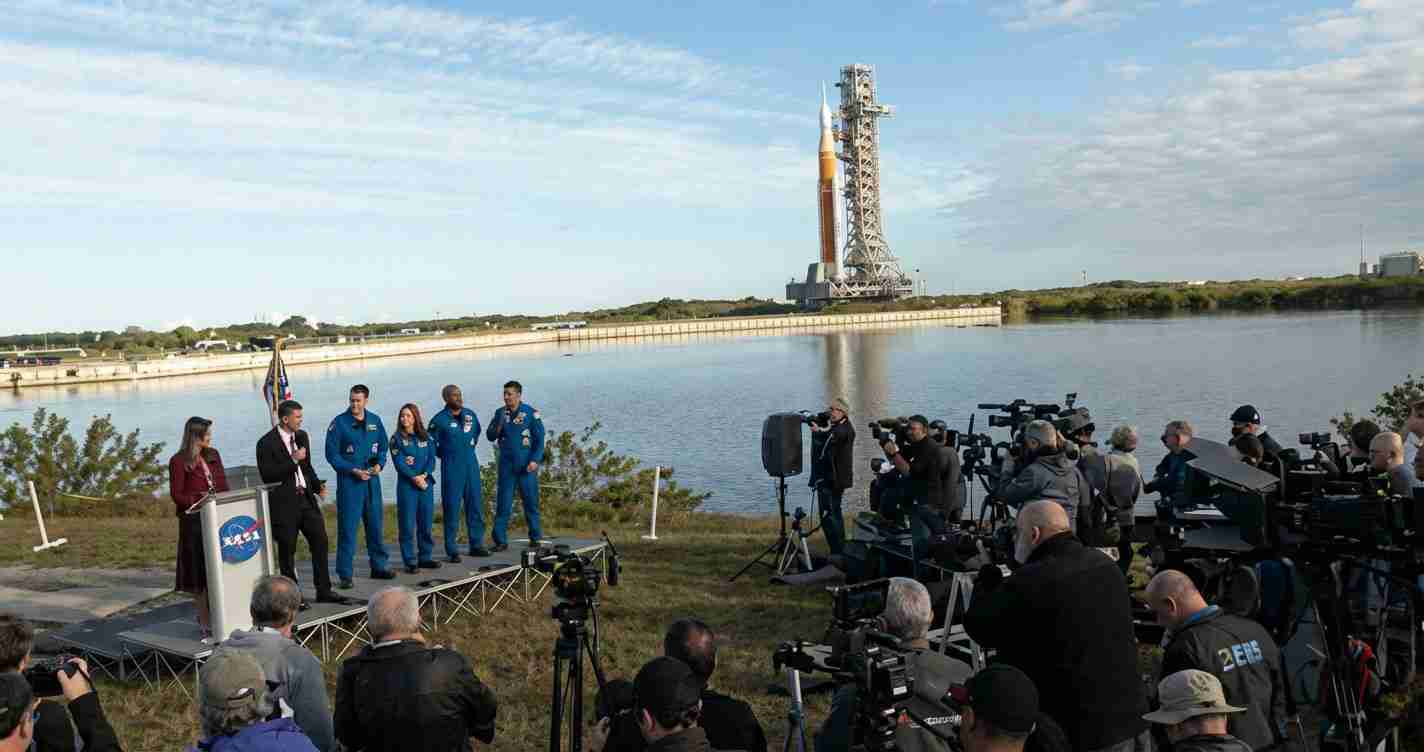
The Artemis II rocket and Orion capsule rolled to Launch Pad 39B on Jan. 17, 2026, starting final pad hookups and rehearsals before a targeted Feb. 6 launch — the first crewed lunar flight since Apollo 17 and a key step toward future landings.
- Rollout completed Jan. 17, 2026: the stack traveled on crawler-transporter-2 in an ~11.5-hour move to Launch Pad 39B — see the Rollout report.
- Crewed test flight: Artemis II is a roughly 10-day mission with Reid Wiseman, Victor Glover, Christina Koch and Jeremy Hansen aboard NASA’s Artemis II mission page.
- Wet dress rehearsal is the gate: tanking and full-countdown checks are set for Feb. 2, 2026; the current target for liftoff is Feb. 6 at 9:41 p.m. EST.
- Local and program effects: success clears major risks for Artemis III and may bring indirect economic, educational and cultural benefits to places like Las Vegas.
Rollout details: slow, careful, and watched closely
NASA’s largest rocket, the 322-foot Space Launch System (SLS), carrying the Orion crew capsule, began its first trip to the pad early on Jan. 17. The stack moved on the Mobile Launch Platform atop crawler-transporter-2 at a pace of less than one mile per hour. The journey began at 7:04 a.m. EST and concluded at 6:42 p.m. EST after roughly 11.5 hours, covering nearly seven kilometers. Teams made brief stops to address minor hardware items and retracted the crew access arm as planned during the trek — see the Rollout report.
Moving the stack to Launch Pad 39B shifts most remaining work to the pad: connecting propellant lines, routing ground systems, and exercising pad power and safety equipment. These steps echo procedures from the Artemis I campaign but carry extra scrutiny for a crewed flight, as detailed in the Rollout report.
Mission overview: a deep-space shakedown for crewed flight
Artemis II will be the first crewed lunar mission since Apollo 17 (1972). Rather than entering lunar orbit, Orion will fly a free-return trajectory that sends the crew about 7,500 kilometers beyond the lunar far side — farther than any humans have traveled. The mission is planned as a roughly 10-day test flight to validate life support, communications, navigation and crew procedures before lunar landings resume; background is available in the Rollout report and on NASA’s Artemis II page.
The crew is led by Commander Reid Wiseman, with Pilot Victor Glover, and Mission Specialists Christina Koch and Jeremy Hansen. The team will rehearse launch and abort scenarios, evaluate Orion systems under flight conditions and practice mission operations crucial for later Artemis missions — see the Rollout report for details.
Launch schedule and the role of the wet dress rehearsal
NASA has scheduled a wet dress rehearsal for Feb. 2, 2026, to simulate an actual launch countdown and include loading propellant into the SLS core and upper stages. Agency leaders say the final call on Artemis II’s launch date will follow the rehearsal’s closeout and engineers’ satisfaction with systems. Read more in the Rollout report and the Artemis II summary.
The primary launch window opens Feb. 6, with additional opportunities on Feb. 7, 8, 10 and 11. NASA’s current target is Feb. 6 at 9:41 p.m. EST but planners remain sensitive to technical issues, test results and weather. If required, further windows are available in March and April because lunar timing constrains safe trajectories — see the Rollout report and NASA’s final-steps overview.
Final integration, testing and crew preparations at Launch Pad 39B
With the stack on the pad, teams will work around the clock to connect propellant lines, test pad support equipment, and conduct electrical and communications checks. Mission control and the crew will run through launch rehearsals while engineers validate interfaces between the SLS and pad systems. Live coverage and ongoing reporting are available from Space.com’s live coverage.
These checks are critical because moving complex hardware can expose connectors, seals or valves to stresses that must be inspected and re-verified. The wet dress rehearsal will exercise tanking and full-countdown operations; any anomaly during propellant loading would require troubleshooting and could shift the Artemis II launch date — see the Rollout report.
Investigative look at risks and schedule pressure
NASA is operating on a tight timeline to meet an early February launch. The Jan. 17 rollout itself included brief stops to resolve minor hardware issues — not unusual, but illustrative of how small faults can cascade into larger schedule impacts when only weeks of integrated testing remain.
Weather in Florida — storms, lightning and high winds — remains a variable. Leaders have emphasized that both technical readiness and forecasts will influence the confirmed launch date. In the words of administrators and mission leaders:
“We will not confirm a launch date until after the wet dress rehearsal is completed and any issues are resolved.”
Further reading and context are available in the Rollout report, NASA’s final-steps overview and the Artemis II summary.
Why Artemis II matters for lunar return and Artemis III
Artemis II is a systems-validation flight, not a landing. Its aim is to prove crewed operations in deep space: Orion’s life support, navigation and communications systems must perform under real flight conditions. Success will remove a major hurdle en route to Artemis III, which aims to return humans to the lunar surface. Every completed pad check at Launch Pad 39B brings the program closer to end-to-end systems validation — see the Rollout report.
Implications for Las Vegas, Nevada
Economic impact: While assembly and launches occur in Florida, Nevada’s tech and defense contractors may see indirect benefits. Local firms with aerospace-relevant skills could win subcontracts as the Artemis industrial base scales; background reporting appears in the Rollout report and on NASA’s Artemis II page.
Political and social effects: High-profile NASA missions shape conversations about jobs and federal investment. Nevada leaders can leverage Artemis II momentum to push for workforce training, STEM programs and research partnerships. The mission also offers civic outreach opportunities — watch parties, exhibits, internships and curriculum — that can inspire students and families.
Cultural relevance and practical participation: Las Vegas’ tourism and events ecosystem may host public viewings and exhibits tied to the mission. Residents can engage through live NASA coverage, local events and educational programming. For ongoing reporting see Space.com’s live coverage and the Artemis II summary.
Sources
- NASASpaceflight: Artemis II rollout report
- NASA Artemis II mission page and NASA final-steps overview
- Space.com live coverage of Artemis II rollout and testing
- Artemis II summary (administrative statements and planning)
Article prepared for CNN by Times Media Service.