Treasury moves to block refundable federal tax benefits for undocumented immigrants, targets EITC and Child Tax Credit
Treasury Secretary Scott Bessent announced measures on Friday, November 28, 2025, to eliminate refundable federal tax benefits for undocumented immigrants at President Donald Trump’s direction, targeting credits like the EITC and Child Tax Credit effective for 2026.
Key takeaways
- Proposed rule: Treasury will seek to bar undocumented immigrants and other non‑qualified aliens from receiving the refundable portions of certain federal tax credits (Fox Business, ABC News).
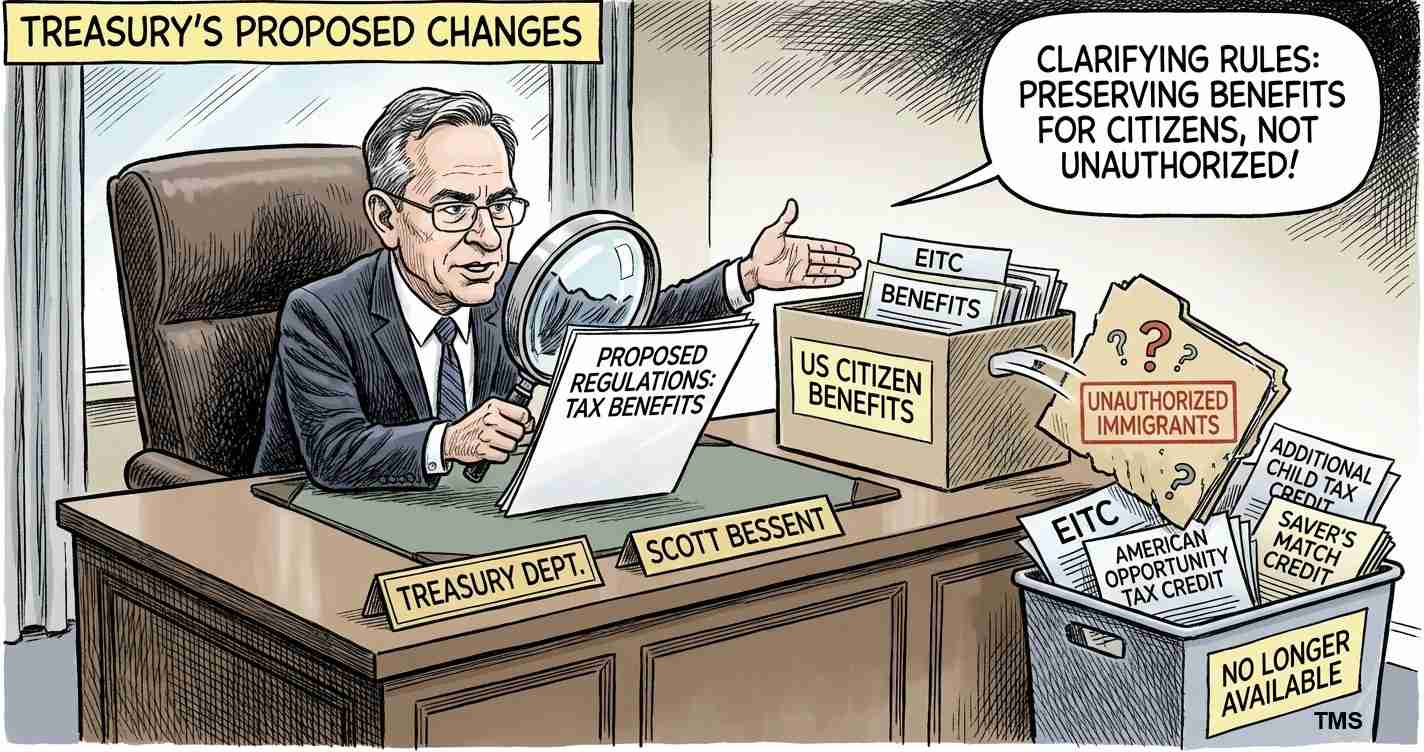
- Credits affected: The refundable portions of the EITC, Additional Child Tax Credit (ACTC), American Opportunity Tax Credit and Saver’s Match Credit are named for restriction (Fox Business, ABC News).
- Timeline & legal basis: Treasury says the change rests on an OLC opinion reclassifying refundable credits as federal public benefits and would take effect for tax year 2026 (returns filed in early 2027) (Fox Business, ABC News).
What the Treasury announced
Treasury Secretary Scott Bessent said the department will publish proposed regulations that reclassify the refundable portions of several individual income tax benefits as “federal public benefits.” That reclassification, the department said, would make those refundable credits unavailable to undocumented immigrants and other non‑qualified aliens. The specific credits named were the Earned Income Tax Credit (EITC), Additional Child Tax Credit (ACTC), American Opportunity Tax Credit and the Saver’s Match Credit (Fox Business, ABC News).
Bessent framed the move as preserving taxpayer resources for U.S. citizens, posting on social media:
“we are working to cut off federal benefits to illegal aliens and preserve them for U.S. Citizens.”
In a Department announcement he said Treasury’s Office of Tax Policy and the IRS have worked to advance the initiative and “ensure that taxpayer resources are directed only to those who are entitled under the law.” (Fox Business).
Legal basis and timeline
Treasury officials point to a recent legal opinion from the Justice Department’s Office of Legal Counsel (OLC) that interprets the refundable parts of these credits as federal public benefits. That legal view allows the department to write rules that limit access by people who are not lawful residents or citizens. Treasury says any final rules would apply starting in tax year 2026, affecting returns filed in early 2027 (Fox Business, ABC News).
Critics and potential legal fights
Advocates for immigrants’ rights and tax experts warn the change could leave low‑income families worse off and spur litigation. ABC News reported critics say the move is problematic and likely to be contested in court. The proposed rules will go through the notice-and-comment process, and legal challenges are expected after any final rule is issued (ABC News).
Treasury enforcement and financial system measures
Alongside tax regulation proposals, the Treasury’s Financial Crimes Enforcement Network (FinCEN) issued an alert to banks and money service businesses reminding firms of suspicious activity reporting requirements for certain transactions. The advisory highlighted filing suspicious activity reports for transfers of $2,000 or more when there is reason to suspect illegal activity, including funds derived from unlawful employment. FinCEN said the alert aims to stop exploitation of the financial system by people in the country illegally. Bessent warned bluntly:
“If you’re here illegally, there’s no place for you in our financial system.”
(Source: Fox Business).
Policy context
Treasury officials tied the regulatory effort to President Donald Trump’s direction and broader administration steps to tighten immigration policy. The announcement followed White House decisions related to migration and signals a heightened focus on immigration enforcement across agencies. The Treasury move is part of a larger push to limit benefits and access for people the administration describes as being in the country unlawfully (Fox Business).
How the change would work in practice
Under current rules, some people without lawful immigration status can qualify for refundable credits if they meet income and filing requirements and claim eligible children or education expenses. Treasury’s proposed change would strip the refundable cash payments — the part that results in a refund — from those who do not meet immigration qualifications. Nonrefundable portions that lower tax owed but do not produce a refund would not be the focus of the action, according to Treasury explanations (Fox Business, ABC News).
Implications for Las Vegas, Nevada
Economic impact: Las Vegas has a large low‑wage workforce and a sizable immigrant population contributing to the local economy. Changes to refundable tax credits like the EITC and ACTC could reduce disposable income for families who currently receive refunds tied to work and children, likely reducing consumer spending and increasing demand for emergency services.
Political consequences: Las Vegas-area officials and Nevada lawmakers may face pressure to respond. Representatives from both parties could be called on to explain how they will protect local families, and the issue may test how federal immigration policy affects working families and city services.
Social effects: Many households rely on tax refunds for rent, food, and medical bills. If some families lose access to refundable credits, community groups and charities may see increased demand for food banks, rental assistance and other services; schools could also feel indirect effects.
Practical applications: Local tax preparers and community organizations that help file returns will need to update guidance if the rule is finalized. Workers may have to gather different documentation or seek help from free tax clinics. Financial institutions should be aware of the FinCEN alert and reporting reminders (Fox Business).
What to watch next
The Treasury will publish proposed regulations for public comment and outline enforcement plans. Monitor the publication of the proposed rule, the public comment period, and any legal challenges that follow. Local groups in Las Vegas that assist low‑income filers may issue guidance or advocacy responses as the rule-making process unfolds (Fox Business, ABC News).