Greta Thunberg Fined and Temporarily Banned After Extinction Rebellion Dyes Venice’s Grand Canal Green in COP30 Protest
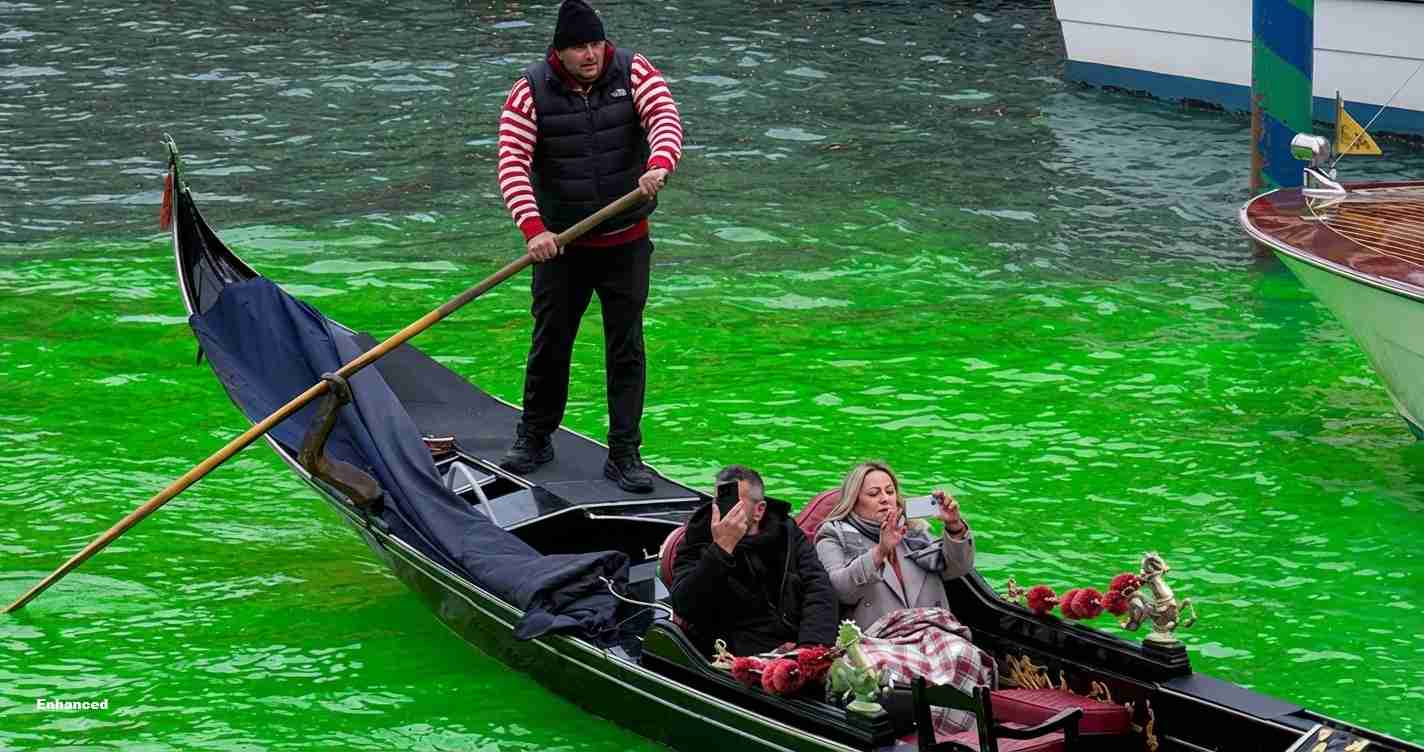
Climate activist Greta Thunberg and Extinction Rebellion dyed Venice’s Grand Canal fluorescent green on 24 November 2025 to protest COP30 and Italy’s climate stance, drawing fines, temporary bans and global media attention for the symbolic action.
- Visible disruption: Thunberg and 36 activists staged a flash-mob that dyed the Grand Canal and other waterways green to spotlight perceived COP30 failures.
- Penalty and response: Each participant received a €150 fine and a 48-hour ban from Venice amid official condemnation.
- Environmental claim: Organizers say the dye was non-toxic fluorescein; authorities and scientists will monitor any lasting impact.
- Broader campaign: Coordinated actions hit ten Italian cities to target governments’ reluctance to commit to fossil-fuel phase-outs.
Key information
- Who: Greta Thunberg and 36 Extinction Rebellion activists (mostly Italians, some foreigners) — sources: The Independent (video report) and Wanted in Milan.
- What: Release of fluorescent green dye (fluorescein) into the Grand Canal and other water bodies across ten Italian cities — reporting by Fox News and RFI.
- When: 24 November 2025 — Independent timeline.
- Where: Venice’s Grand Canal; coordinated actions in Genoa, Padova, Turin, Bologna, Taranto and other cities — Wanted in Milan, NSS Magazine.
- Penalty: €150 fine and a 48-hour ban from entering Venice for Thunberg and the activists — Independent.
- Motive: Protest against weak COP30 outcomes and Italy’s climate stance; banner message “Stop Ecocide” — coverage in The Telegraph and The Independent.
Flash mobilization and visual tactics
Visibility was central to the action: activists dressed in red with veils staged a brief, theatrical flash-mob through crowded walkways before releasing the dye into the Grand Canal. They also hung a large banner reading “Stop Ecocide” from the Rialto Bridge to amplify the visual message. Eyewitness and press reports documented tourists photographing the scene and extensive media pickup — see RFI and NSS Magazine.
Type of dye and environmental claims
Extinction Rebellion stated the bright green color came from fluorescein, a tracer dye commonly used to map water flow and locate leaks. Organizers insisted the compound was non-toxic and posed no ecological harm to Venice’s waterways; local authorities and scientists, however, signaled they would monitor any lasting impacts. Contemporary reporting on the dye and safety claims includes Fox News and NSS Magazine.
Nationwide coordination and political targets
The Venice dyeing was part of a coordinated campaign across ten Italian cities timed to the close of COP30 in Brazil. Extinction Rebellion targeted fountains and rivers in Genoa and Padova and waterways in Turin, Bologna and Taranto to highlight what it described as governments’ failure to commit to a rapid phase-out of fossil fuels. Coverage and lists of targeted cities are available via Wanted in Milan and The Independent.
Political targets
Italy’s government — led by Prime Minister Giorgia Meloni — was explicitly singled out by protesters, who criticized Italy’s resistance to stronger COP30 language on phasing out fossil fuels. Campaigners say the final COP30 agreements lacked the robust commitments activists demanded; reporting on these political criticisms appears in The Independent.
Official reaction and penalties
Local authorities moved quickly. Thunberg and the activists were issued €150 fines and ordered out of Venice for 48 hours — an administrative measure designed to deter disruptive demonstrations in a city dependent on tourism and protective of its heritage sites. Veneto governor Luca Zaia condemned the act as “disrespectful” and “harmful,” reflecting broader official anger about the perceived threat to Venice’s image and economy. See Independent and Wanted in Milan for coverage.
Media and public responses
The stunt generated immediate international coverage and a mixture of reactions. Tourists photographed the scene; residents and officials expressed frustration with tactics they labeled performative or potentially damaging. Supporters argued the dramatic imagery was necessary to cut through media fatigue and force political attention to rising seas and climate inaction. See reporting in The Independent (video) and RFI.
COP30 backdrop
Extinction Rebellion timed the dyeings to coincide with COP30’s conclusion in Brazil. Activists framed the protests as a rebuke to what they described as weak conference outcomes and a lack of a binding roadmap to phase out fossil fuels. Contemporary analysis and context are available via The Independent and Wanted in Milan.
Legal and ethical debate over protest tactics
The event reopened debates about civil disobedience, public order and effective climate advocacy. Critics say high-profile stunts risk alienating the public and harming fragile sites; supporters argue that peaceful, visually striking actions can be necessary to force policymakers to act on slow-moving crises like climate change. Commentary and discussion appear in The Telegraph and The Independent.
Sources and further reading
- The Independent: Greta Thunberg — video report
- The Independent: Banned from Venice after dyeing Grand Canal green
- Wanted in Milan: Greta Thunberg fined after climate activists dye Venice Grand Canal green
- The Telegraph: Greta Thunberg banned from Venice after dyeing canal green
- RFI: Climate activists dye Venice’s Grand Canal green
- Fox News: Thunberg banned from Venice after activists dye canal
- NSS Magazine: Grand Canal green protest
- AOL: Coverage summary of events
Implications for Las Vegas, Nevada
Economic impact and tourism messaging
Las Vegas’s economy depends on tourism and image. The Venice dye stunt demonstrates how quickly visual protests can dominate headlines and shape perceptions. Local leaders should prepare clear, factual messaging about safety and stewardship and build rapid-response plans to protect visitor-facing sites and events.
Political consequences and local policy debate
The episode underscores political pressure on cities over climate policy. In Las Vegas, COP30’s weak outcome and high-visibility protests may push officials to re-examine municipal climate plans — from hotel and casino energy efficiency to Colorado River water-use strategies — as residents and business groups demand concrete action.
Social effects and community response
The protest highlights tensions between disruptive tactics and local sensibilities. Nevada community groups working on water and climate may see increased engagement after dramatic imagery; conversely, tourism workers and business associations may resist actions perceived to threaten livelihoods. Expect mixed public sentiment and debate over strategy.
Cultural relevance and how activism plays in Nevada
Venice’s symbolism — a historic city threatened by rising waters — resonates with Las Vegas’s climate vulnerabilities around water and heat. Activists in Nevada might adapt visual tactics to local realities (water scarcity, heat resilience) while tailoring messages to connect with desert-specific concerns.
Practical applications for local officials and businesses
- Review event and tourism contingency plans to respond to high-visibility protests quickly and safely.
- Use clear, factual communication about environmental stewardship to preempt misinformation.
- Form partnerships between city government, resorts and climate groups to showcase sustainability steps publicly.
- Anticipate legal and permitting questions around eye-catching tactics and craft lawful rapid responses to reduce escalation.
“For Las Vegas residents and leaders, the Venice protest and COP30’s aftermath are a reminder that climate debates are increasingly visual and immediate.”
Bottom line: The Venice dyeing and the resulting fines and bans kept the spotlight on climate frustration at COP30. Whether one views the act as necessary civil disobedience or an avoidable provocation, the episode offers a clear lesson: visual protests can rapidly shape headlines and local policy debates — and cities reliant on tourism must be prepared to respond.