Iran’s worsening water crisis risks “water bankruptcy,” UN expert warns — president says mass evacuations possible without rain
Iran faces one of its worst droughts in decades, causing severe water shortages nationwide and warnings of “water bankruptcy” from UN experts; President Masoud Pezeshkian says mass evacuations could become necessary without substantial rainfall this year.
- Widespread shortage: 2024–25 rainfall was roughly 45% below normal, pushing reservoirs and aquifers to record lows (water scarcity in Iran).
- Human impact: Nineteen provinces face severe drought; some regions may need evacuation unless rains return (water scarcity in Iran).
- Critical infrastructure risk: Low water threatens agriculture, urban services and water-dependent energy and nuclear facilities — raising national security concerns (water scarcity in Iran).
Key information
- Rainfall decline: 2024–25 was called one of Iran’s most challenging water years, with average rainfall roughly 45% below normal (water scarcity in Iran).
- Provinces affected: Nineteen provinces face significant drought; Hormozgan saw a 77% drop in rainfall and Sistan-Baluchestan 72% (water scarcity in Iran).
- Reservoirs falling: Major reservoirs and rivers are at critical levels — Lar Dam, a main reservoir for Tehran, was reported at about 1% capacity in early 2025; national dam inflows were down 28% year-on-year (water scarcity in Iran).
- Official warnings: UN experts and Iranian officials warn of potential “water bankruptcy,” with risks to regime stability and water-dependent infrastructure, including nuclear facilities (water scarcity in Iran).
Severity of the drought and shrinking supplies
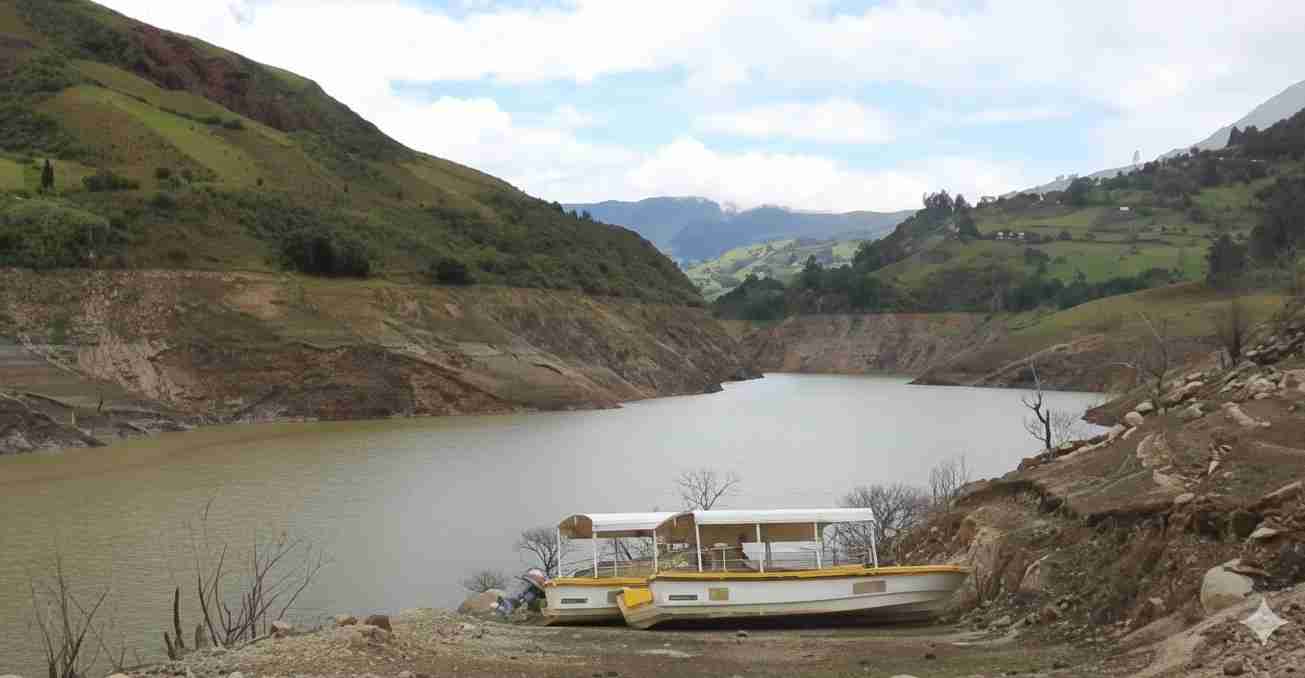
The drought is deep and nationwide. Rainfall has plummeted, leaving rivers, wetlands and lakes at record lows. Lake Urmia and other inland bodies have receded, exposing salt flats and former farmland. In some basins, reservoirs fell below 15% capacity.
Tehran’s rainfall for 2024–25 was about 42% below average, marking the capital’s fifth consecutive year of water stress. Officials say shortfalls reflect a multi-year collapse in natural replenishment rather than a temporary dry spell (water scarcity in Iran).
Cities, daily life and early rationing
Shortages are shaping everyday life. Tehran has introduced strict rationing: 12-hour cut-offs for the top 5% of high-usage households and appeals to residents to cut consumption by 20%. Public offices in Tehran and 24 other cities were temporarily closed to reduce demand.
Authorities even urged some citizens to “go on vacation” as a drastic conservation measure. In agricultural provinces, wells and irrigation canals have run dry, threatening crops, livestock and livelihoods (water scarcity in Iran).
Warnings of evacuations and “water bankruptcy”
“Without significant rainfall, provinces may need to evacuate,” — President Masoud Pezeshkian, warning of possible mass displacement.
Regions in the south and east, notably Sistan-Baluchestan and Hormozgan, face the highest risk of displacement after rainfall declines of 72% and 77%, respectively. UN-affiliated experts have used the term “water bankruptcy” to describe a scenario where Iran cannot meet basic domestic or industrial water needs — a condition with clear implications for nuclear and power plants that rely on steady cooling water supplies (water scarcity in Iran).
Political and social fallout
The crisis is straining political trust. Surveys show a majority of Iranians blame domestic mismanagement rather than external pressures. Past protests and unrest over water access may be renewed as shortages persist, and experts warn that sustained scarcity could erode regime legitimacy if citizens lose confidence in the government’s ability to secure basic needs.
Infrastructure responses and limits
The government has launched technical measures: construction of the Qamar Bani Hashim pipeline ring to move water to Tehran, expanded wastewater recycling and upgraded sewage projects. Rationing rules include fines for excessive use.
But engineers warn these steps cannot quickly restore depleted aquifers or replace historic rainfall. With dam inflows down nearly 30% year-on-year and key reservoirs at record lows, short-term projects may provide localized relief but do not reverse the broader hydrological decline (water scarcity in Iran).
Economic and environmental risks
Agriculture is the first casualty: irrigation-based farming is at risk of collapse in hard-hit provinces, which can drive food shortages, higher prices and loss of rural jobs. Desertification and degraded wetlands reduce climate buffering and biodiversity.
Overuse of groundwater to compensate accelerates aquifer depletion and land subsidence. These trends raise the probability of environmental migration — people moving to cities or across borders — adding stress to urban services and regional stability (water scarcity in Iran).
Nuclear program and strategic implications
A critical vulnerability is water-dependent energy and nuclear infrastructure. Reactors and related facilities require reliable cooling water; severe shortages could disrupt operations and create safety risks. UN expert commentary links the environmental crisis directly to national security concerns by highlighting how failing water supplies compromise critical systems (water scarcity in Iran).
Outlook: climate and long-term pressures
Climate change is shifting rainfall patterns and raising temperatures, making natural replenishment less reliable. Even if short-term weather eases conditions, analysts say major reforms are needed: better water pricing, stricter regulation, and investment in durable infrastructure to avoid recurring crises.
Without structural changes, repeated acute water stress episodes may trigger migration, unrest and damage to critical systems.
Implications for Las Vegas, Nevada
- Water policy lessons: Las Vegas — an arid, drought-prone city — can learn from Tehran’s rationing and recycling efforts and the risks of overreliance on vulnerable sources (water scarcity in Iran).
- Migration planning: Iran’s potential evacuations underscore the need for U.S. cities to prepare for climate-driven migration with emergency housing, health services and employment support.
- Economic links: Large-scale displacement or regional instability can ripple through global commodity markets, affecting Nevada businesses, supply chains and insurance costs.
- Technical cooperation: Opportunities may arise for desalination, recycling and irrigation efficiency partnerships; Las Vegas’ conservation experience could be a basis for humanitarian and technical aid.
- Public accountability: The crisis is a reminder that transparent water planning and community engagement are essential to maintain public trust.
Reporting note and sources
Reporting for this story relied on compiled findings and expert warnings documented in reporting and public records on the Iran water crisis. Key source: water scarcity in Iran.