Trump administration moves to restore Albert Pike Confederate statue toppled in 2020, sparking renewed debate
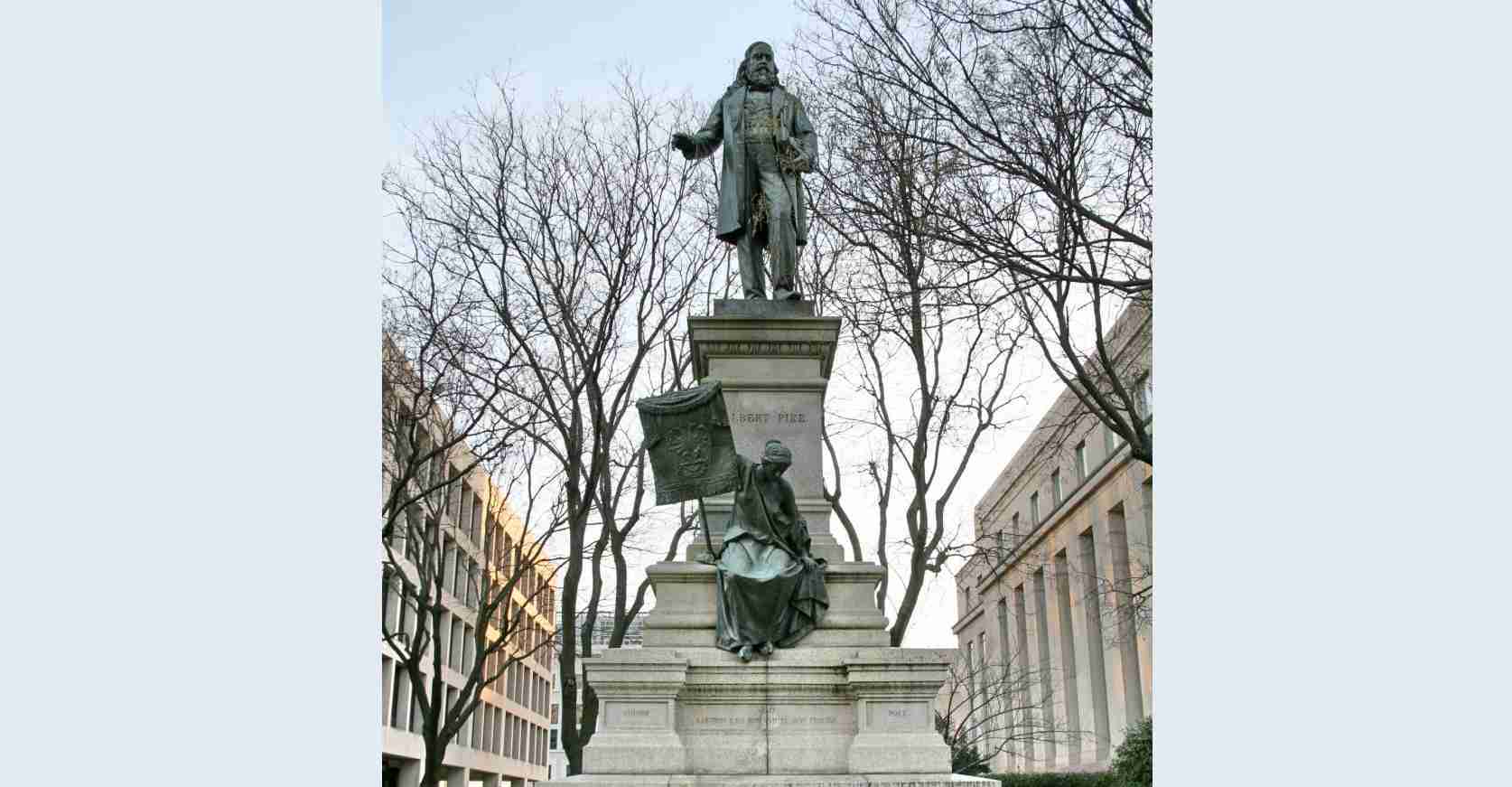
The Trump administration said it will restore and reinstall the Albert Pike Confederate statue in Judiciary Square, Washington, D.C., a monument toppled during George Floyd protests in June 2020, with work to be completed by October 2025.
- Restoration planned: The National Park Service will repair and return the Albert Pike statue to Judiciary Square by October 2025, citing federal preservation rules and Trump executive orders.
- Historic controversy: Pike’s Confederate service and alleged ties to racist violence and the KKK make the monument deeply contentious.
- Legal and political clash: Administration officials frame the move as compliance with preservation laws and executive orders; critics call it a political rollback of local efforts to reconsider public commemoration.
- Broader impact: The decision intensifies national debate over Confederate memorials and may ripple into local politics and civic life, including in places like Las Vegas.
Overview
The Albert Pike statue — a 19th-century monument approved by Congress in 1898 and installed in 1901 — was toppled by demonstrators on June 19, 2020. The National Park Service (NPS) announced work to conserve and reinstall the monument, tying the action to federal preservation statutes and two Trump-era executive orders.
What the statue represented and why it was controversial
The statue commemorated Albert Pike, known both as a Freemason leader and as a Confederate general. Critics emphasize Pike’s Confederate service and recorded allegations of racist actions and reported ties to the Ku Klux Klan; supporters point to his Masonic role. The debate centers on whether public monuments honor historical figures or implicitly validate their actions.
The toppling: what happened on June 19, 2020
On Juneteenth 2020, protesters wrapped ropes around the Pike statue in Judiciary Square, pulled it down, sprayed graffiti and set parts aflame amid national demonstrations after George Floyd’s killing. Video from the event captured crowds chanting, “No justice, no peace!” Former President Trump condemned the toppling and criticized local law enforcement’s response at the time.
“A statue honoring a racist and a traitor has no place on the streets of DC,” said DC Delegate Eleanor Holmes Norton in response to the restoration announcement.
National Park Service role and the restoration plan
In August 2025 the NPS said conservators at the Historic Preservation Training Center began repair work: fixing broken stone, restoring mortar joints and remounting the masonry base. Officials described the actions as technical conservation undertaken under federal preservation law and two executive orders titled “Making the District of Columbia Safe and Beautiful” and “Restoring Truth and Sanity to American History.”
Reporting on the NPS announcement and timeline is available from outlets including Global News: “Donald Trump: Albert Pike Confederate statue”, Tag24: coverage of the restoration, and Mother Jones: reporting on 2025 actions.
Legal and political basis cited by the administration
Officials point to statutes protecting federally recognized historic objects and to the Trump executive orders cited above as justification for returning the vandalized monument to its documented location. Critics counter that these policies were designed to limit local authority over monuments and represent a politically driven intervention in debates about race and history.
Opposition and reactions from lawmakers and activists
Immediate criticism came from local leaders and racial justice advocates. DC Delegate Eleanor Holmes Norton vowed to reintroduce legislation to remove the statue from public streets and place it in a museum. Progressive groups called the reinstallation an affront to the movement sparked by George Floyd’s killing and to communities that pressed for re-evaluation of public commemoration.
Supporters’ arguments and preservation proponents
Supporters argue that federal preservation standards require returning historic objects to their documented locations where feasible. Some historians and preservationists assert that contested monuments should be contextualized — with explanatory plaques or museum relocation — rather than permanently removed, warning that removal risks erasing elements of the public record.
Public context: how this fits into the national debate
The Pike decision comes amid a wider national debate over Confederate memorials. Since 2020 many monuments have been removed or relocated, while other leaders defended preservation. The Pike case highlights tensions between local efforts to rethink commemoration and federal policies that protect or restore monuments.
Restoration process and current condition
After its removal in 2020 the statue was placed in secure storage. Conservators are repairing vandalism and structural damage at the NPS Historic Preservation Training Center, addressing broken stone, mortar joints and the pedestal mounting in preparation for reinstallation.
Alternative readings and political interpretations
While NPS frames the work as technical preservation, critics see the action as a political stance opposing racial justice initiatives and local re-evaluation of history. Some suggest compromise options: returning the statue with explicit, critical interpretation or relocating it to a museum where fuller context can be provided.
Implications for Las Vegas, Nevada
Economic and political effects: Las Vegas tourism and convention choices are sensitive to national cultural debates; the Pike decision could affect perceptions, political discourse, and local policy discussions. Residents may see renewed activism, public forums and calls for contextualization or removal of contested local monuments.
Practical steps for residents include contacting elected officials, attending public meetings and engaging with museums and cultural organizations to advocate for contextual displays or relocations.
Source list for reporting and further reading
- Global News: “Donald Trump: Albert Pike Confederate statue”
- Tag24: “Trump administration to reinstall Confederate statue toppled by protesters”
- Mother Jones: reporting on 2025 actions and political context
- Video coverage of the 2020 toppling and reactions
- National Park Service restoration notes and preservation context (referenced in reporting above)
Reporting assembled from National Park Service announcements and contemporaneous and retrospective coverage by major outlets and local reporting.