Smithsonian replaces Trump portrait, strips Jan. 6 and impeachment references from National Portrait Gallery display
The Smithsonian’s National Portrait Gallery replaced Donald Trump’s photographic portrait and removed on‑wall references to his two impeachments and the Jan. 6, 2021, attack, prompting debate over curatorial independence and how recent history is presented in public museums.
Key takeaways
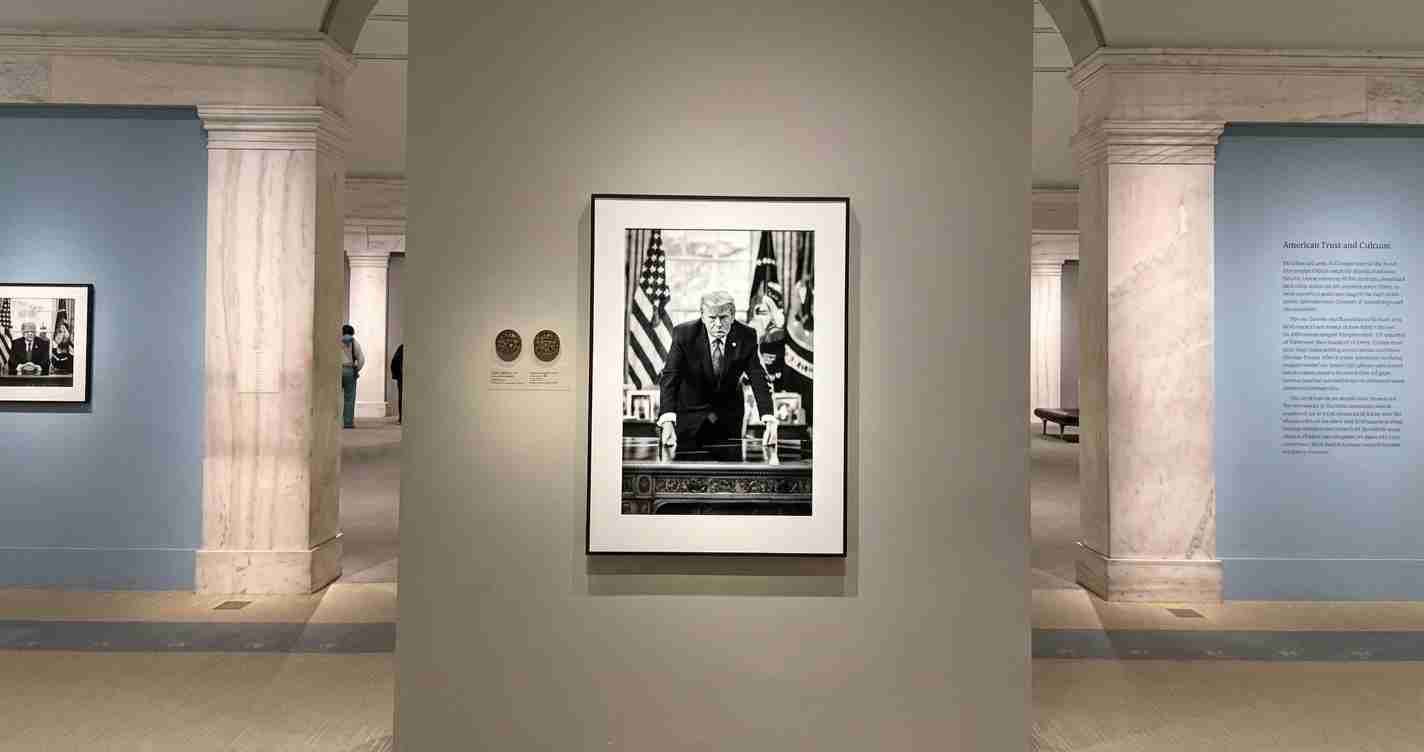
- Portrait swap: The gallery removed an earlier photograph and label and installed a new black‑and‑white image by White House photographer Daniel Torok — reported by Fox News and CBS News.
- Label change: A longer wall label that mentioned Trump’s two impeachments and the January 6 attack has been removed from the gallery wall and replaced by a minimal “tombstone” label (years and credit) — coverage from Fox News and CBS News.
- Smithsonian response: Officials say the fuller text remains available online and that the gallery is beginning a planned update; this explanation is cited in CBS News.
- Context and reaction: The change follows a Trump-ordered review of Smithsonian displays and drew praise from the White House and criticism from historians and museum professionals — reported by Fox News, CBS News and The Daily Beast.
Portrait and label changes: what happened
What the gallery changed. Last week the National Portrait Gallery removed a previously displayed photographic portrait of President Donald J. Trump and its longer biographical wall label, installing a new black‑and‑white photograph by White House photographer Daniel Torok. The Torok image shows Trump in the Oval Office, leaning on the Resolute Desk and looking directly at the camera — a formal substitution intended to remain until an official painted portrait is completed.
More notable was the text change. The earlier, fuller label explicitly summarized Trump’s first term and stated he had been “impeached twice—on charges of abuse of power and incitement of insurrection after supporters attacked the U.S. Capitol on January 6, 2021—[and] acquitted by the Senate in both trials.” That extended panel is no longer on view; in its place the gallery displays a short tombstone label listing years in office and the photographer credit.
“impeached twice—on charges of abuse of power and incitement of insurrection after supporters attacked the U.S. Capitol on January 6, 2021—[and] acquitted by the Senate in both trials.”
The National Portrait Gallery says this change is part of a planned update of the America’s Presidents gallery and that fuller contextual text remains accessible on the museum’s website and elsewhere in the Smithsonian system (CBS News).
How this compares to other presidents’ labels
Reporting indicates that, at present, Trump is unique among displayed presidents in lacking an extended on‑wall label that addresses controversies from his term. By contrast, labels for Andrew Johnson and Bill Clinton continue to note their impeachments, and Richard Nixon’s panel references his resignation amid the Watergate scandal. Critics say the discrepancy suggests selective softening of a recent and contentious historical record (Fox News, CBS News).
Smithsonian rationale and what remains on view
Institutional explanation: The Smithsonian frames the edits as part of a gallery refresh that experiments with shorter in‑gallery labels while moving fuller interpretation online or to other museum spaces. The institution emphasized that presidential impeachments and related history continue to be represented elsewhere in the Smithsonian complex, including the National Museum of American History (CBS News).
White House review, personnel changes and broader context
The timing of the gallery edits follows President Trump’s directive in August ordering Smithsonian officials to review exhibits ahead of the nation’s 250th anniversary and to “celebrate American exceptionalism” while removing what he described as divisive narratives. That review included requests for internal records and accompanied personnel changes: Trump moved to replace leadership at several cultural institutions and announced the termination of the National Portrait Gallery director, Kim Sajet, who later resigned. Media outlets and critics have linked those actions to broader pressure on cultural institutions to change how history is presented (CBS News, The Daily Beast).
Reaction from the White House and critics
White House: Officials praised the new portrait; a White House spokesperson framed the image as letting Trump’s “unmatched aura” be visible in the halls of the National Portrait Gallery, and Trump shared the display image on his Truth Social account (Fox News, CBS News).
Scholars and lawmakers: Museum experts, historians and some legislators expressed concern that removing on‑site references to impeachments and Jan. 6 reduces an important teachable moment. Critics also warned that shifting fuller context online could disadvantage visitors who rely on in‑gallery interpretation and signage (CBS News, The Daily Beast).
What remains unclear
The Smithsonian did not confirm that the White House specifically requested the label change, and the White House has not stated it pushed for the edits. That uncertainty fuels debate over whether the edit is a routine curatorial update or the result of political pressure shaping public memory. The fuller text remains online, so the record is not deleted, but the change removes those words from the immediate, physical exhibit where many visitors first encounter historical context (Fox News, CBS News).
Implications for Las Vegas, Nevada
Local and regional stakeholders in Las Vegas may feel direct and indirect effects from high‑profile changes at national museums like the Smithsonian. The implications span economic, political, social and cultural domains.
Economic and tourism effects
- Las Vegas tour operators and travel planners who package Washington, D.C. itineraries may need to update narratives and materials to reflect new in‑gallery displays and online content.
- Local venues that partner with national institutions or host traveling exhibits could face renewed scrutiny about how they present contested recent history.
Political and civic consequences
- As a battleground state jurisdiction, Nevada could see this change invoked in local political debates, campaigns and candidate forums as an example of federal influence on public history.
- State and local officials may be asked by constituents about whether federal museum narratives influence local educational materials or public events tied to the 250th anniversary.
Social and educational impact
- Teachers and university instructors in Las Vegas who use Smithsonian resources should note the shift to shorter in‑gallery labels and ensure students access the fuller online content when preparing lessons or field trips.
- Community groups—museums, libraries and historical societies—may organize panels or programs to examine how museums handle contested episodes like impeachments and Jan. 6.
Cultural relevance and practical applications
- Residents traveling to Washington or following national museum news should check museum websites for the most complete labels and background information before visiting.
- Local cultural leaders might use the Smithsonian changes as a catalyst for exhibits or discussions about how public memory is made and contested, helping Las Vegas audiences evaluate curation practices and primary sources.
Sources and further reading
- Fox News: Smithsonian replaces Trump portrait display, strips Jan. 6, impeachment references from accompanying text
- CBS News: Reference to Trump impeachments removed from National Portrait Gallery
- The Daily Beast: Smithsonian quietly strips impeachment details from Trump’s portrait
Reporting compiled from the outlets above and statements from the National Portrait Gallery and the Smithsonian.