
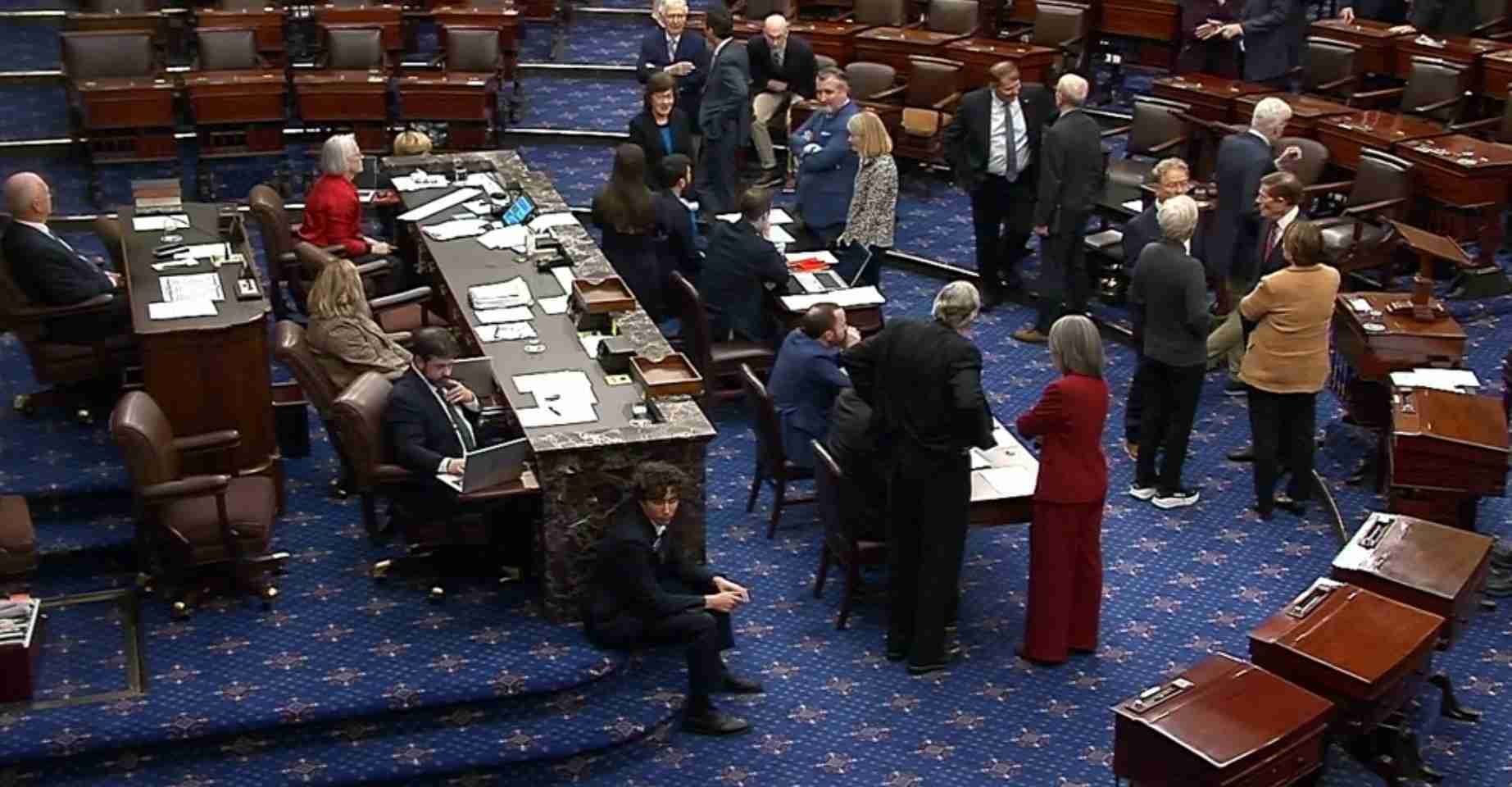
Senate Democrats cave, open path to reopening government after 40-day shutdown
On Nov. 10, 2025, the Senate ended a historic 40-day shutdown after eight Democrats broke ranks to advance a funding bill, restoring services, guaranteeing back pay for furloughed workers and setting a December vote on Obamacare subsidies.
Key takeaways
- Senate voted 60–40 to invoke cloture on a motion to proceed with government funding legislation, allowing debate and the path to a stopgap funding bill.
- Eight Democrats and one Independent joined Republicans to reach the 60-vote threshold, including Nevada’s Catherine Cortez Masto and Jacky Rosen.
- Democrats advanced the package without a guaranteed extension of Obamacare subsidies, but secured a promise of a December vote on the matter.
- Short-term funding would keep most federal agencies operating through Jan. 30, 2026, with full-year appropriations for select departments and guaranteed back pay for furloughed workers.
Main story
How the vote unfolded
After weeks of stalemate, the Senate’s cloture vote on Nov. 10 broke a Democratic filibuster and moved debate forward on a bipartisan funding plan.
The motion to proceed passed 60–40, the number needed to end extended debate and allow a final vote — a sharp turn after repeated Democratic blocks that had kept the government closed for 40 days.
Who crossed the aisle
A group of eight Democrats and one Independent who caucuses with Democrats sided with Republicans to reach the 60-vote threshold. The lawmakers who voted to advance the bill were:
- Dick Durbin (D-Ill.)
- Jeanne Shaheen (D-N.H.)
- Maggie Hassan (D-N.H.)
- Tim Kaine (D-Va.)
- John Fetterman (D-Pa.)
- Catherine Cortez Masto (D-Nev.)
- Jacky Rosen (D-Nev.)
- Angus King (I-Maine, caucuses with Democrats)
Many who broke ranks are viewed as moderates or face limited near-term electoral risk, factors that likely reduced the political cost of compromise for those senators. (source)
What Democrats gave up — and what they got
The most contentious issue was the future of Affordable Care Act premium subsidies. Democrats won a promise of a December vote on extending subsidies, not a guaranteed extension. That means an extension would require separate negotiations and another floor vote.
In return for advancing the bill without a subsidy guarantee, Democrats secured several concessions:
- A short-term continuing resolution funding most federal agencies through Jan. 30, 2026.
- Full-year appropriations for some agencies, including Agriculture, the FDA, the VA, military construction and congressional operations.
- Guaranteed rehiring and back pay for federal workers who were furloughed or required to work without pay.
“At some point, Democrats have to take ‘yes’ for an answer,” Senate Majority Leader John Thune said as the vote advanced. (CBS News)
Why the deal is fragile
The vote resolved the immediate crisis but left major questions unsettled. The promised December vote on Obamacare subsidies does not ensure an extension; failure in December could leave millions facing higher premiums. (analysis)
Because the continuing resolution is short-term, budget fights are expected to return as lawmakers work toward a longer-term agreement before Jan. 30, 2026.
Next steps in Congress and the presidency
The House must now take up the Senate bill. If the House passes it, President Trump is expected to sign the measure quickly, formally ending the shutdown and allowing agencies to reopen.
Federal operations are planned to resume gradually once funding is signed into law. News outlets described the cloture vote as the turning point many advocates had sought; “It’s now only a matter of time before the government shutdown is over,” reported Chad Pergram of Fox News on the breakthrough. (source)
Political fallout and reactions
Reactions were sharp. Progressive activists criticized Democrats for accepting only a promise on subsidies, while party leaders defended the move as necessary to restore pay and services to families and workers. (reporting)
Republicans hailed the result as reopening government without major policy concessions but must now deliver on the promised December vote while managing conservative concerns.
Timeline recap
- Early November 2025: Shutdown continues as Democrats repeatedly block GOP spending measures.
- Nov. 9–10, 2025: Bipartisan negotiations intensify, producing an agreement to bring a stopgap to the floor.
- Nov. 10, 2025: Senate invokes cloture 60–40, clearing the way for a final vote and reopening.
- Immediate next steps: House vote and presidential signature; December vote planned on Obamacare subsidies.
Investigative angle: why Democrats broke ranks
Several factors explain why some Democrats crossed party lines: mounting political pressure from constituents, unions and advocacy groups as furloughed workers drew public sympathy; a number of those senators are moderates or not facing 2026 reelection, reducing the political cost of compromise. (details)
Leadership argued the immediate human costs — lost paychecks, paused benefits and reduced services — outweighed the policy prize of a guaranteed subsidies extension, producing a tactical retreat to restore government operations while keeping the health care fight alive for later. (Politico)
Implications for Las Vegas, Nevada
Local impacts: The shutdown disrupted workers and businesses tied to tourism and travel; reopening restores federal staff and back pay, which should help local consumer spending and service stability. (report)
Economic impact
Reopening means federal workers — including airport screeners and administrative staff — will return to full operations and receive back pay, providing immediate relief to furloughed federal employees and contractors in the Las Vegas area. (source)
Tourism and travel
Las Vegas, a major travel hub, faced risks to screenings, customer service and permit processes during the shutdown. Restored federal funding reduces the chances of airport delays and staffing shortages and stabilizes visitor services for hotels, casinos and tours. (report)
Health care and Obamacare subsidies
Many Nevadans rely on marketplace plans with premium subsidies. The Senate vote secured only a promise of a December vote, not an extension, leaving uncertainty and potential premium increases for residents if Congress fails to act. Local health advocates and clinics will be watching closely. (Politico)
Veterans and federal services
Las Vegas’ sizable veteran population depends on VA clinics. The package includes full-year appropriations for the Department of Veterans Affairs, helping ensure continuity of care and reducing the chance of delayed benefits for Southern Nevada vets. (source)
Political consequences for Nevada lawmakers
Senators Catherine Cortez Masto and Jacky Rosen voted to advance the bill; their choices could draw scrutiny from progressive voters but may also resonate with moderates and independents who prioritize reopening government and securing back pay. (report)
Practical effects on daily life
For residents: federal offices will reopen, travel and services will stabilize, and furloughed workers will see back pay. However, the unresolved subsidy question means families relying on premium assistance still face uncertainty until December. Local groups and legal aid organizations are likely to step up outreach. (analysis)
What to watch next
Nevadans should watch the House calendar for a vote on the Senate package and the president’s expected signature. Locally, health advocates, veterans groups and labor unions will monitor the promised December vote on Obamacare subsidies and push for a substantive extension. (Politico)
Bottom line: The cloture vote cleared the path to reopen the government, restored pay and services for many, but left a fragile, time-limited funding arrangement and an uncertain future for Obamacare subsidies that will require further negotiation in December.



