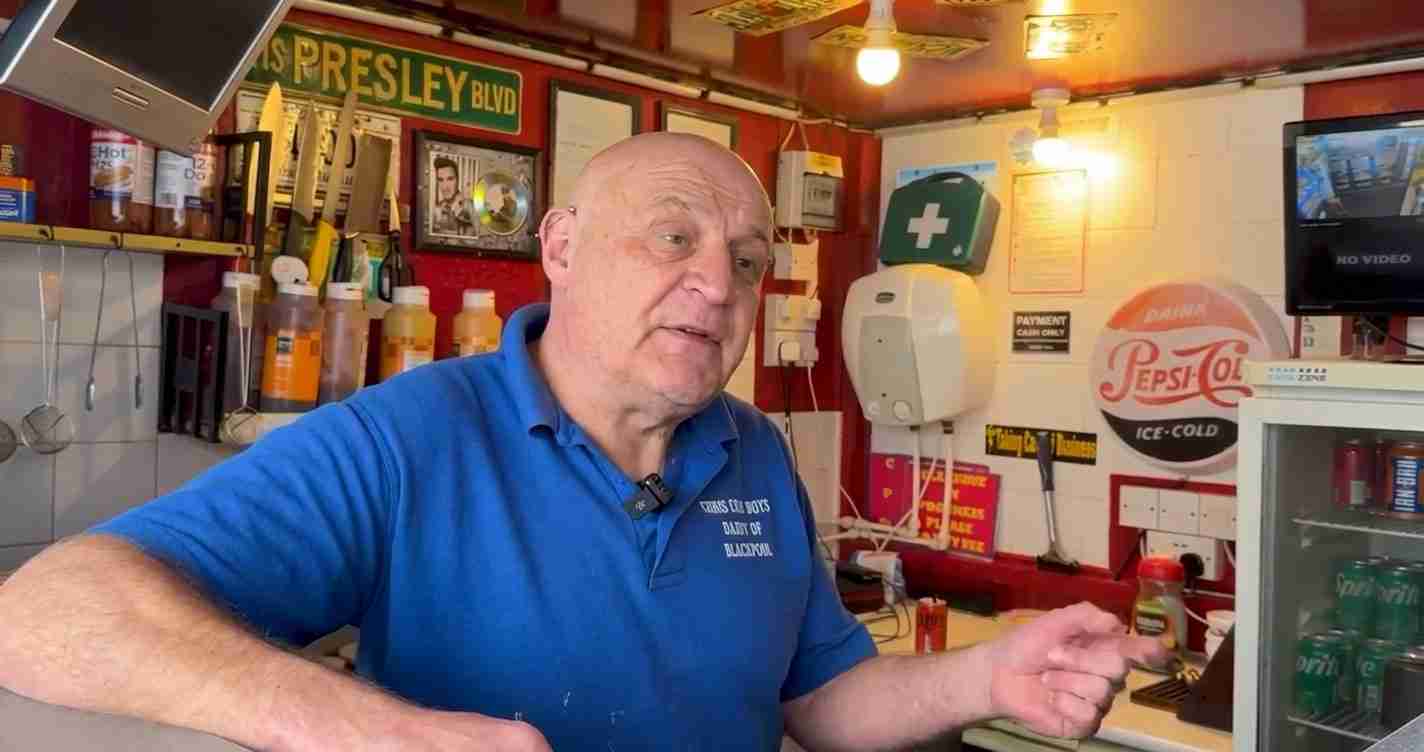
The £1 Burger That Defied Inflation: Inside Higgitt’s Las Vegas Arcade and Britain’s Cheapest Burger
In Blackpool, Chris Higgitt’s Las Vegas Arcade has sold a signature burger for £1 since 2006, surviving rising costs through efficiency, bulk buying and viral social media — a local staple that draws long queues and national attention.
Key takeaways
- Signature price: Higgitt’s burger has cost £1 (about $1.34 US at time of reporting) since 2006; reporting and interviews attribute details to syndicated coverage. Source
- Low unit cost: Higgitt estimates each burger costs roughly 50 pence to make, including ingredients and electricity. Source
- Operation model: Simple menu, streamlined prep, bulk purchasing and high volume during peak season enable the low price point. Source
- Seasonal focus: The stand operates seven days a week from March through November, concentrating revenue in tourist months. Source
Main story
What’s in the £1 burger?
Higgitt’s signature offering is intentionally minimal: a bun, an English beef patty, onions and sauce. It is not a gourmet item — rather, a no-frills snack built for speed and volume. The simplicity reduces prep time and waste, central to the stand’s tight cost model.
“The simplicity helps keep prep time and waste low,” Higgitt told SWNS, as reported in syndicated coverage.
How he keeps the price at £1
Higgitt describes a tight operation where small margins are balanced by high volume and careful purchasing. His reported cost per burger — about 50 pence — covers ingredients and electricity, leaving roughly a 50% gross margin before labor, rent and other overheads.
- Efficiency: Streamlined prep and a limited menu reduce labor time and waste; speed and repeatability enable hundreds of burgers per day during peak season. Source
- Bulk purchasing: Buying ingredients in large quantities lowers per-unit costs for beef, buns and onions. Source
- High customer volume: Long lines and steady demand convert small per-item profits into viable revenue — customers often queue for more than an hour in busy periods. Source
- Seasonal focus: Operating mainly from March through November concentrates sales during tourist season and limits off-season losses. Source
Higgitt says he “sat down and did the math” before setting the price in 2006, and that fixed price has become part of the brand — a story that attracts both repeat customers and first-time visitors.
Social media, novelty and demand
Viral clips on TikTok and YouTube play a major role in sustaining traffic: creators film taste tests, reactions and the famous queues. Higgitt welcomes the exposure because the videos bring new visitors who want to try what many call Britain’s cheapest burger, providing free marketing and keeping throughput high enough to support the low price.
Demand mixes price-sensitive customers seeking a cheap meal and novelty-seekers chasing a story. During peak times, the queue becomes part of the attraction — reinforcing reputation and amplifying social buzz.
From arcade rescue to primary income
Before the burger bar became the heart of the operation, Higgitt worked as a processing and quality engineer and later ran a bed-and-breakfast with his wife, Karen. The couple bought the Las Vegas Arcade in 2006; when attendance lagged they added a burger bar as a draw. Today, Higgitt estimates the burger operation generates about 90% of the couple’s revenue.
Menu breadth beyond the £1 burger
The stand keeps its menu intentionally lean: hot dogs, Spam sandwiches and sausage sandwiches supplement the £1 burger. These low-prep items align with a high-turnover strategy that supports the signature price point.
What the public reporting does — and does not — show
Coverage of Higgitt’s business is largely drawn from an SWNS-origin profile carried by syndicated outlets. Public reporting provides price, cost estimate, seasonality and Higgitt’s explanations, but it does not include detailed financials such as rent, payroll, health inspection specifics or exact sales counts. Those gaps leave open questions about long-term sustainability under different wage or rent pressures. Source
Implications for Las Vegas, Nevada
Economic impact
Las Vegas’s year-round tourism and higher operating costs (rent, utilities, labor) make a direct £1 copy challenging. Bulk purchasing and efficiency help but would need to be balanced against higher fixed costs; operators might instead use limited-time promotions rather than a permanent ultra-low price.
Political and regulatory considerations
Local labor rules, licensing fees and health inspections in Nevada differ from Blackpool. A low-price novelty could attract regulatory scrutiny on wages and food safety, and would require careful compliance planning.
Social effects
In Las Vegas, a rock-bottom price could create viral moments that boost foot traffic — but long queues can strain sidewalks, complicate crowd control, and shift attention from nearby businesses.
Cultural relevance
Las Vegas ranges from budget buffets to luxury dining; a low-cost signature item that becomes a social-media phenomenon fits the city’s culture of spectacle. Still, any low-price offering must uphold food-safety and service expectations.
Practical applications for operators
Restaurants in Las Vegas could adopt elements of Higgitt’s model without matching the exact price: simplify menus, focus on high-turnover items, buy in bulk and use social media to amplify a single signature offering. Season-limited runs, timed promotions or pop-ups can create buzz without eroding margins.
Source and reporting notes
Reporting above draws on an SWNS-origin profile carried by syndicated outlets, including Fox News. Direct quotes and cost figures are drawn from Higgitt’s comments to SWNS as reported in the syndicated coverage linked above.