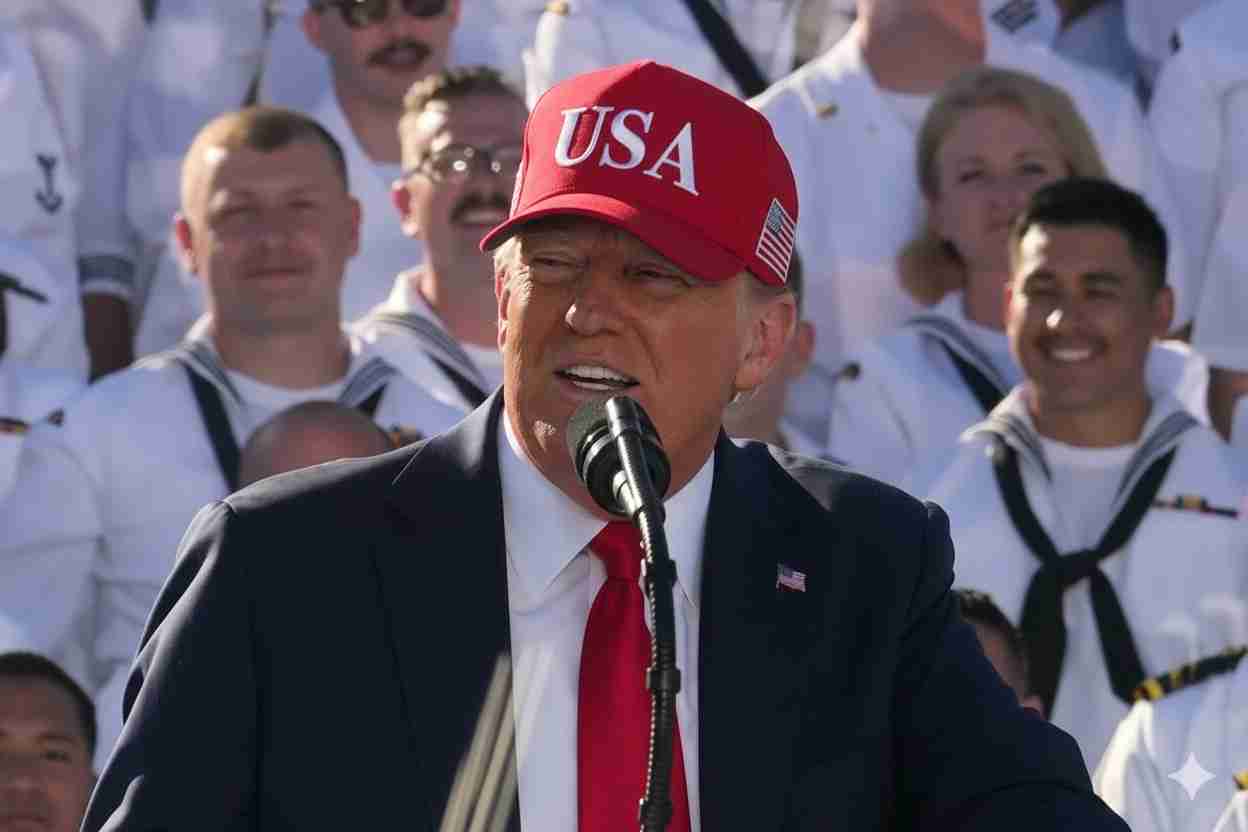
Trump tells troops “every last penny” will come despite frozen pay at Norfolk Navy anniversary
President Donald Trump told U.S. service members in Norfolk that despite a government shutdown freezing active-duty pay, they will receive “every last penny” owed and future raises — pledging restitution and reassurance at the Navy’s 250th anniversary.
- Frozen pay: Active-duty paychecks are halted during the shutdown though back pay is required once funding is restored.
- Presidential promise: At Norfolk, Trump vowed every last penny will be made whole and future raises will follow.
- Relief options: Military relief societies, credit unions and local programs are offering short-term help while pay is delayed.
- Legislative push: Lawmakers have proposed measures like the Pay Our Troops Act of 2026, but it is not yet law.
Key information
At the Navy’s 250th anniversary in Norfolk, President Trump told sailors they will get “every last penny” owed and pledged future raises despite a government shutdown that has left many active-duty service members without pay. Reporting on the event is available from Washington Examiner, AOL and WTOP.
The shutdown began Oct. 1 after Congress failed to approve full funding; active-duty troops, the National Guard and reserves called to duty must continue to serve but may not be paid until funding is restored, per reporting from CBS News, Military Times and LiveNOW from Fox.
What the shutdown means for troops on the job
Active-duty service members must keep working even when paychecks are frozen. The Pentagon has directed that mission-critical operations continue — including deployed forces, border security tasks, depot maintenance and other national security priorities. Many routine moves and non-essential travel are paused unless judged mission essential. Civilian excepted employees who perform critical functions also continue to report to work without current pay; retirees and annuitants continue to receive benefits funded differently.
For more on operational impacts, see coverage from Military Times.
Promises and politics at the Norfolk Navy anniversary
Speaking to sailors at the 250th anniversary, Trump framed the shutdown politically — blaming Democrats for the funding impasse while assuring personnel that missed wages will be made whole and that pay raises are on the way. He used the event to offer public reassurance and to highlight priorities for the military community.
Those assurances mirror prior presidential promises during shutdowns: while the executive can pledge to secure funds, only Congress can appropriate the money to pay troops. The Government Employee Fair Treatment Act of 2019 requires back pay after a shutdown ends but does not prevent immediate pay interruption during the shutdown. See reporting from Washington Examiner and analysis at CBS News.
Legislative efforts and protections
Lawmakers have proposed bills to protect troops’ pay during shutdowns. The Pay Our Troops Act of 2026, led by Rep. Jen Kiggans (R-VA), aims to guarantee uninterrupted pay for active-duty personnel, support staff and some contractors during funding gaps. Backers say the bill would remove the need for troops to bear the immediate financial cost of political deadlock.
As of the Norfolk event, that legislation had not been enacted and therefore does not affect the current freeze; pay remains delayed until Congress passes appropriations or a stopgap measure (CBS News; Military Times).
Financial strain and available support
The immediate effect of a frozen paycheck is tangible for many service members. Families who rely on regular pay cover rent, mortgage, utilities, child care and essentials. To help bridge gaps, banks, credit unions and military relief societies have stepped in with emergency loans, fee waivers and grants.
Organizations such as the Navy-Marine Corps Relief Society and Army Emergency Relief provide short-term loans and grants; local financial institutions near bases often run hardship programs. These supports vary in scope and do not replace a steady paycheck. Reporting on relief efforts is available from Military Times.
How leaders and service members are responding
Military leaders must follow guidance prioritizing mission readiness and national security while also recognizing the stress lost pay causes. Commanders have been sharing information about guaranteed back pay and non-government relief resources to ease concerns.
Service members and families have expressed frustration in interviews and social media. The central burden is uncertainty: while back pay is likely under current law, the timing of when dollars arrive depends on congressional action in Washington (CBS News; Military Times).
Sources and reporting
This article draws on reporting and official guidance about the shutdown’s effects on military pay and operations, including coverage of President Trump’s remarks at the Navy anniversary and broader reporting on how the shutdown affects troops, pay rules and available relief. Key sources include:
Implications for Las Vegas, Nevada
Las Vegas hosts tens of thousands of active-duty, reserve and veteran families who depend on steady military pay. A prolonged freeze can ripple through the local economy: reduced spending at restaurants, hotels, retail and entertainment could harm businesses central to the region. Housing stress may rise as missed pay increases the risk of late rent or mortgage payments, driving demand for emergency assistance and rental support.
Workforce and readiness in the region could be affected if morale and retention decline; local employers who rely on Guard and Reserve personnel may see disruptions. Nevada lawmakers and local leaders may face constituent pressure to push for protections such as the Pay Our Troops Act.
Practical steps for local residents
- Contact relief agencies: Military families should reach out to base support offices, the Navy-Marine Corps Relief Society or other service relief agencies immediately.
- Ask local banks: Credit unions and banks often offer emergency programs, fee waivers or short-term loans for service members.
- Employers and landlords: Consider temporary measures like flexible payment plans to reduce immediate strain on military families.
The shutdown’s immediate effect is clear: troops are working without current pay, and promises made in Norfolk aim to assure they will be made whole. For families and businesses — particularly in places like Las Vegas — the practical pain is happening now, until Congress acts or relief steps in to bridge the gap.