Chicago police sources say department ordered officers not to help federal agents as agents were rammed, surrounded by armed crowds
Chicago police sources say an internal order instructed officers not to assist Border Patrol and ICE agents who were rammed and surrounded by armed crowds in Brighton Park, leaving federal agents exposed amid chaotic protests and prompting national scrutiny.
- Internal dispatch reportedly told officers to withhold aid to federal Border Patrol and ICE agents working in Brighton Park — Source
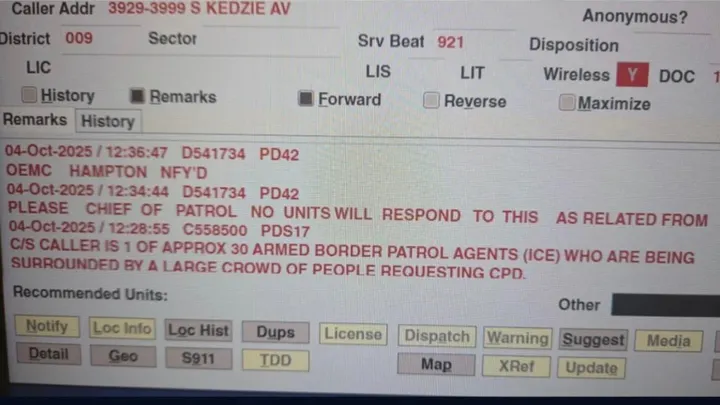
- Federal agents were allegedly struck by vehicles and encircled, and their radioed requests for backup were not acted on by a patrol chief — Source
- President authorized 300 National Guard troops; Illinois governor rejected the move as political theater, intensifying a national debate — Source
- The episode deepens tensions between local and federal law enforcement amid ongoing disputes over immigration enforcement — Source
What happened: timeline from sources
Chicago police sources say the confrontation unfolded during a period of escalating protests and federal immigration activity in several neighborhoods. Federal Border Patrol and ICE agents were conducting enforcement actions in Brighton Park when a woman allegedly attempted to strike agents with a vehicle; agents reportedly fired, wounding the woman. The shooting and the presence of federal teams ignited a rapid, chaotic response from local residents and activists. Source
As crowds gathered, accounts from Chicago officers say federal agents came under physical attack: agents were reportedly struck by cars and surrounded by armed individuals. Internal dispatch records cited by police sources indicate that federal teams radioed for assistance, but a patrol chief allegedly refused to send backup. Some officers summarized the order as a directive to “cover their a–,” a phrase used by multiple anonymous Chicago police sources. Source
Internal dispatch and police reaction
Dispatch records reviewed by sources appear to show a refusal to deploy patrol units into the area where federal agents were trapped. According to sources, a patrol chief decided the situation was too dangerous or politically sensitive to risk sending local officers into a clash involving federal immigration teams. Rank-and-file officers told Times Media Service they were disturbed by the order and by the notion that fellow law enforcement personnel were left exposed. Source
Chicago police declined to confirm the dispatch text publicly or to comment on specific orders. Still, officers expressed frustration, saying the decision undermined trust among partners and may have endangered lives during a volatile confrontation. Source
Federal response and broader law enforcement tensions
Federal agencies involved included Border Patrol and ICE. Their enforcement presence in Chicago neighborhoods — long a flashpoint over immigration policy — heightened tensions. Federal agents said they were conducting immigration enforcement when the attack occurred and that they requested assistance to safely leave the scene. Sources contend the local refusal to provide backup illustrates deeper strains between city police and federal officers operating in Chicago. Source
Political fallout
National attention followed the confrontation. President Trump authorized the deployment of 300 National Guard troops to Chicago, calling it a response to “ongoing violence and lawlessness.” Illinois Governor J.B. Pritzker criticized that deployment as a “manufactured performance,” arguing it did not address underlying causes of violence. The incident intensified questions about coordination between the mayor’s office, the Chicago Police Department, and federal authorities. Source
Legal and national context
The episode mirrors legal battles elsewhere over federal force in cities. For example, a federal judge in Oregon temporarily blocked National Guard deployment plans for Portland amid concerns about presidential authority and the domestic use of federal forces. Those rulings and related developments shape how cities and states respond when federal personnel enter local jurisdictions. Source
Local activists’ perspective
Community organizers and immigrant-rights groups criticized both federal agents and Chicago police. Activists argued that raids and aggressive enforcement tactics sow fear, disrupt families and can provoke dangerous confrontations. Some community leaders viewed the refusal by city personnel to cooperate with federal agents as a principled stand against aggressive immigration enforcement; others said the decision risked public safety. Source
Calls for investigations
After the standoff, police sources and local leaders urged inquiries into both the federal operation and the city’s response. Central questions include whether the patrol chief’s refusal complied with department policy, whether officers were put at unnecessary risk, and whether federal tactics were lawful and appropriate. Many called for release of internal dispatches, body-camera footage and an explanation of the chain of command. Source
Chicago police refuse federal aid: what officers say
Rank-and-file officers interviewed by Times Media Service expressed anger and disbelief. Many said training emphasizes protecting any officer in danger — federal or local — and that denying assistance violated that principle. Several officers, speaking anonymously out of fear of retaliation, described a sense of abandonment as federal agents faced a growing hostile crowd. Source
Federal agents attacked: eyewitness and video accounts
Publicly shared video shows chaotic scenes consistent with the accounts: heated confrontations, vehicles striking agents, and groups surrounding federal teams. Eyewitness statements combined with the internal dispatch records cited by police sources form the basis for allegations that local units withheld aid. Source
Implications for Las Vegas, Nevada
Economic impact: Large-scale federal deployments and high-profile standoffs can affect tourism and business confidence in Las Vegas. Headline-making clashes and questions about local–federal cooperation could make visitors and event planners wary, with potential short-term losses for hotels, restaurants and entertainment venues.
Political consequences: Nevada leaders may scrutinize Chicago’s experience when considering cooperation policies with federal immigration teams. This controversy could become a political talking point in local races and shape debates on public safety and immigration.
Social effects: Las Vegas’ immigrant communities may feel heightened fear and mistrust toward law enforcement, potentially reducing crime reporting and public-health outreach cooperation.
Cultural relevance & practical steps: Local officials in Las Vegas should review mutual-aid policies, and community organizations should prepare multilingual information on residents’ rights during enforcement actions. Businesses and event planners may create contingency plans anticipating protests or federal deployments.
Ongoing developments and next steps
Investigations by city and federal authorities have been requested by police sources, community leaders and elected officials. Transparency about internal dispatches, body-camera footage and the command chain will be essential to determine why Chicago police allegedly refused federal aid when agents were attacked, and whether failures in policy or leadership endangered lives. Source
“We were trained to protect any officer in danger,” several rank-and-file officers said, expressing frustration and disbelief at the alleged order to withhold assistance.
Full source for the reporting: Source