Federal judge blocks National Guard Portland deployment, ruling it exceeded presidential authority
A federal judge in Oregon issued a temporary restraining order halting the deployment of roughly 200 National Guard troops in Portland, finding serious questions about whether the President exceeded authority by ordering them without proper state consent.
- Temporary restraining order: The court paused the Guard deployment while legal issues are reviewed. (Source: Source)
- Presidential authority questioned: The deployment of about 200 troops raised serious questions over whether the President acted beyond legal grounds or without state approval. (Source: Source)
- Federal vs. state powers: The case sharpens debate over when federal officials can use military forces inside states to protect federal agencies like ICE. (Source: Source)
What the ruling says and why it matters
A federal judge in Oregon found there are serious legal questions about whether the President can order National Guard troops into a state to respond to protests without the governor’s consent or another clear legal basis. The temporary restraining order blocks the deployment while the court examines those questions. (Source: Source)
Quote: “The judge did not resolve the merits but found enough concern to pause the Guard’s use while the case proceeds.”
Scope and context of the National Guard Portland deployment
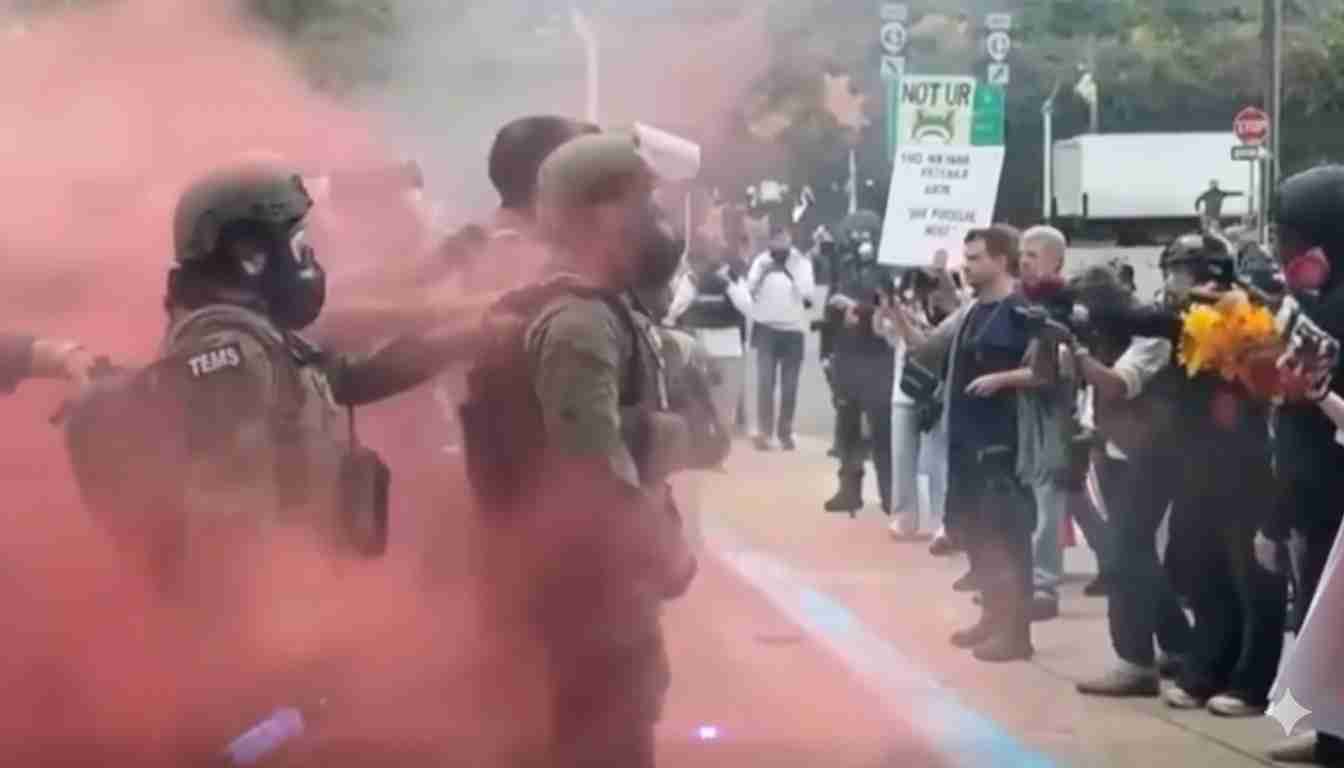
The troops were sent amid demonstrations targeting U.S. Immigration and Customs Enforcement (ICE) operations in Portland. Reporting indicates roughly 200 National Guard personnel were called up to augment federal efforts around ICE facilities and other federal interests as protests intensified.
Supporters said the move aimed to protect federal property and agents. Critics warned sending military forces risks escalating tensions and may sidestep state control of the Guard. The court’s order pauses federal use of the Guard while legal boundaries are sorted. (Source: Source)
Legal basis and limits on presidential authority
At issue is a constitutional and statutory question: what limits exist on the President’s authority to deploy the National Guard inside a state? Under long-standing principles, a governor generally controls a state’s Guard unless federalized under specific laws. The judge’s order signals skepticism that the President’s unilateral deployment here had sufficient legal grounding.
The court suggested potential merit in arguments that the deployment exceeded presidential authority on the facts presented, a question that could set precedent for federal responses to protests focused on federal agencies. (Source: Source)
Federal vs. state authority during civil unrest
This dispute reflects the broader debate over federal power and state sovereignty. State officials usually oversee law enforcement and the state Guard; federal leaders oversee federal property and agencies. When protests focus on federal targets—like ICE facilities—the lines can blur and courts must weigh competing interests: protecting federal property, preserving public safety, and upholding state control of troops.
Legal scholars and civil-liberties advocates caution that deploying armed forces to manage protests can chill free speech and risk misuse of military power in civilian affairs. Others emphasize the federal duty to protect property and employees. The restraining order buys time for the courts to clarify rules. (Source: Source)
What happens next in court
The restraining order is temporary. The case will proceed with further arguments and evidence from both sides: plaintiffs will seek to make the order permanent or otherwise block similar deployments; the government will defend its authority and argue the call-up was lawful and necessary.
Given the constitutional stakes, the case could move quickly through the federal courts and may prompt appeals. Its outcome could shape precedent on presidential authority and the use of federal resources inside states during protests. (Source: Source)
Limited public information and developments to watch
Public reporting is limited about next steps, including whether the court will extend or make the restraining order permanent. Observers should watch for court filings, government responses, and statements from Oregon officials or federal agencies—documents that will clarify who requested the Guard, what orders were given, and how troops were to be used. (Source: Source)
Implications for Las Vegas, Nevada
Though the ruling concerns Portland, it could affect federal planning in other cities, including Las Vegas. A judicial limit on presidential deployment authority could prompt changes to federal security planning, alter contracts for private security, and shift public-safety grant usage.
Politically, Nevada leaders may face pressure to clarify local policies on cooperation with federal agencies. Socially and culturally, the decision may resonate with communities concerned about military involvement in protests. Practically, Nevada National Guard leaders and local emergency planners should review coordination protocols with federal agencies. (Source: Source)
Source and further reading
This article is based on reporting and the court action described in available coverage: Source
Parent Publication: Times Media Service