Ford to move world headquarters for first time in nearly 70 years; iconic Glass House to be demolished as Dearborn campus is reinvented
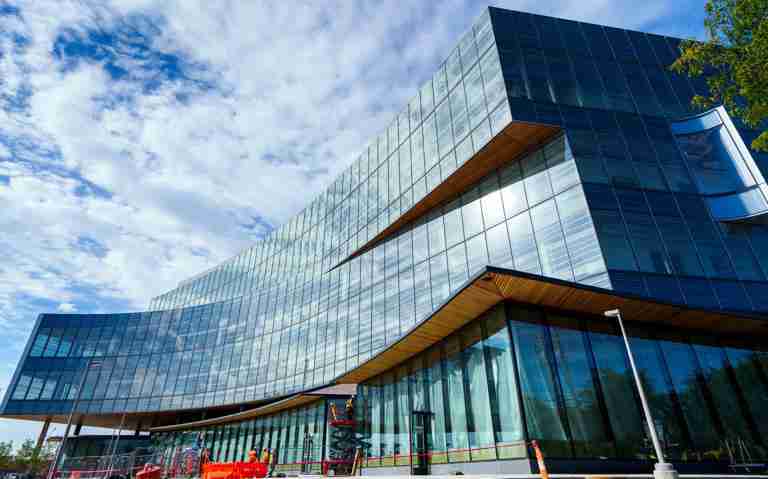
Ford is relocating its world headquarters in Dearborn for the first time in nearly 70 years, opening a new 2.1-million-square-foot, software-forward facility in November 2025 and planning demolition of the iconic Glass House by 2026.
Key takeaways
- New headquarters opens: The Ford World Headquarters will open November 2025 at 20901 Oakwood Blvd. on Ford’s Dearborn campus (Ford From the Road (key facts), Automotive Dive).
- Scale and capacity: The building offers about 2.1 million square feet of office space and room for up to 4,000 employees (Automotive Dive; Ford From the Road (detailed article)).
- Glass House decommission: The Glass House (opened 1956) will be sustainably decommissioned and demolished beginning after most employees move out in 2026; demolition could take up to 18 months (Automotive Dive; USA Today).
Main content
A new headquarters, a much older company
Ford’s new world headquarters sits on the former Ford Product Development Center site on Oakwood Boulevard. The company says the structure emphasizes open, flexible workplaces built for a software-forward organization. The building not only increases footprint — about 2.1 million square feet, more than double the Glass House — but also includes a 160,000-square-foot food hall and roughly 12 acres of new green space (Ford From the Road (key facts); Automotive Dive).
Modern workstyle and technology
Ford has repurposed campus space to encourage cross-team work, with technology upgrades and flexible meeting and work areas meant to support the company’s shift toward electric vehicles, software and mobility services. Company materials describe the facility as part campus anchor and part innovation hub — language Ford uses as it repositions itself for a changing industry (Ford From the Road (detailed article)).
Why the move now
Employees, executives and outside analysts say the Glass House no longer met modern needs. Its systems and midcentury layout are costly to retrofit for cloud computing, secure digital work and flexible teams. Ford leaders argue a fresh campus better supports hybrid schedules and collaboration among engineering, product and software teams (Detroit Free Press; Automotive Dive).
The Glass House’s history and the weight of change
When it opened in 1956 the Glass House — designed by Walter B. Sands and once called the Henry Ford II World Center — was among the nation’s largest single-company office buildings. For many in Dearborn and beyond, the building is not only a workplace but a piece of industrial and family legacy. Ford says it will “sustainably decommission” the structure and work with the City of Dearborn on future plans (Automotive Dive; USA Today).
“We intend to honor the site’s legacy even as we prepare to remove the structure,” company officials said, emphasizing salvage and sustainable decommissioning steps.
Timeline and employee impact
Key dates: The new headquarters will open in November 2025 at 20901 Oakwood Blvd. The building can house about 4,000 employees, and Ford says roughly 14,000 employees will be within about a 15-minute walk across the revamped campus. Most staff will vacate the Glass House by Q2 2026. Campus construction and final sections are expected to be complete by 2027, though some demolition and site work could extend to mid-2028 (Ford From the Road (key facts); Automotive Dive; USA Today).
Workforce effects: Ford frames the project as on-campus modernization that keeps jobs local while changing how teams work. Observers note the new layout may affect collaboration patterns and the mix of in-office vs. remote work — issues managers will need to manage carefully (Detroit Free Press).
Demolition, sustainability and plans for the old site
Ford plans to decommission the Glass House with sustainability in mind: removing hazardous materials, salvaging reusable materials and coordinating an estimated 18-month demolition process with local officials. The company will retain ownership of the land and pursue redevelopment ideas intended to benefit employees and the surrounding community (Automotive Dive; USA Today).
Naming, legacy and public outreach
The new building will be named Ford World Headquarters, and the old campus will be reasserted as the Henry Ford II World Center to retain historical connection. Ford leaders, including family members, emphasize honoring history while pursuing redevelopment that includes community input on public uses.
Implications for Las Vegas, Nevada
Although centered in Dearborn, Ford’s move has ripple effects nationwide. Key local implications for Las Vegas include:
- Economic impact: Nevada suppliers, logistics firms and dealerships may see new opportunities as automakers emphasize software, mobility and EVs.
- Political consequences: State leaders can use the shift to push workforce training, grants and incentives tied to tech and mobility jobs.
- Social and infrastructure effects: Growing EV adoption will increase demand for charging infrastructure and influence commuting patterns in the region.
- Cultural resonance: The decision to tear down an icon while embracing reinvention will feel familiar to Las Vegas stakeholders balancing preservation and renewal.
- Practical actions: Local colleges, workforce agencies and vendors should monitor Ford’s supplier announcements and community outreach for partnership opportunities.
Reporting notes and sources
This article draws on Ford’s official posts and reporting from major outlets. Sources include:
- Automotive Dive
- Ford From the Road (key facts)
- Ford From the Road (detailed article)
- USA Today (Bill Ford comments)
- USA Today (history of headquarters buildings)
- Detroit Free Press
- New Haven Register
Reporting note: All original facts and URLs are preserved above; readers and local stakeholders should consult the source links for full details and official statements.