Protesters take control outside Delaney Hall as federal agents use pepper spray; Newark police not visibly managing scene
Hundreds of protesters converged outside Delaney Hall in Newark, blocking Doremus Avenue and confronting unmarked federal vehicles while ICE agents deployed pepper spray; Newark police were not visibly intervening as members of Congress conducted oversight visits.
Key takeaways
- Large crowd control: Hundreds gathered, directing traffic in reflective vests with self-organized roles and apparent “protester police” (WHYY).
- Federal response: ICE agents deployed pepper spray or a similar irritant when an unmarked federal vehicle attempted to enter the facility (on-scene video).
- Police absence: Multiple reports noted no visible Newark Police Department presence during the escalation; an Essex County Sheriff’s deputy briefly asked protesters to move (WHYY).
What happened outside Delaney Hall
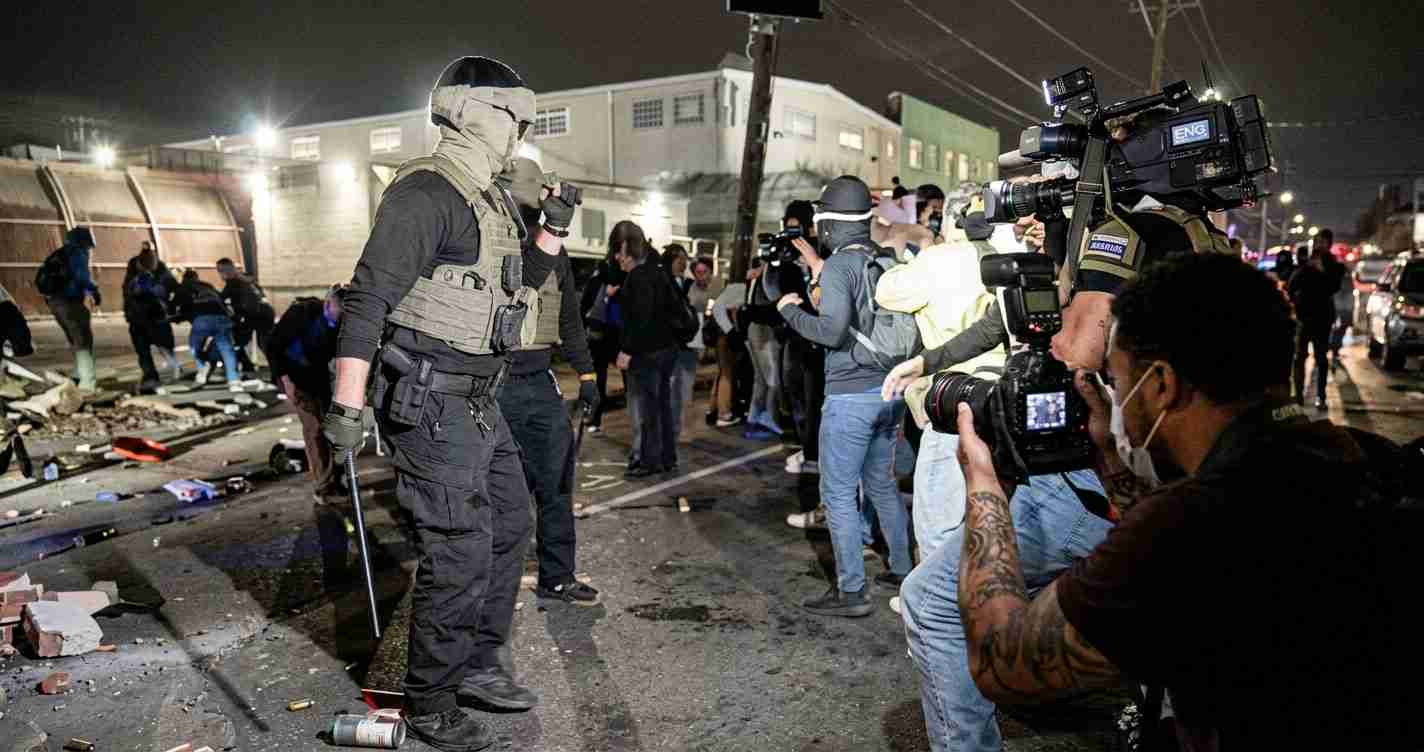
Late Wednesday, protesters filled the entrance areas around Delaney Hall, a private detention center operated by GEO Group. Video and reporting from the scene show crowds gathered near the sally port vehicle entrance and along the other entrance where lawmakers had legally entered earlier in the day. Protesters in reflective vests — calling themselves “protester police” — reduced Doremus Avenue to a single lane and at times blocked southbound traffic altogether (WHYY; on-scene video).
As unmarked transport vehicles approached with flashing blue lights, protesters moved toward the entrance. Some threw objects into the roadway — mattresses, a shredded highway bollard and other debris — while others passed out goggles and tape, apparently preparing for chemical irritants. ICE agents responded by deploying pepper spray or a similar irritant after a federal vehicle attempted to enter the facility, according to field reporting (on-scene reporting). An Irvington-bound NJ Transit bus became briefly trapped in the unmanaged lane as agents sprayed the crowd.
Several accounts and video showed no visible Newark Police Department vehicles or officers controlling the escalation. An Essex County Sheriff’s deputy did drive through and instructed protesters to move to the sidewalk, but left shortly afterward. Local reporting notes that the crowd itself had taken over many roles usually performed by police (WHYY).
Delaney Hall, GEO Group and the political dispute
Delaney Hall is a privately run immigration detention facility managed by GEO Group, a company operating detention centers nationwide. Advocates and Newark officials have criticized the center’s presence and raised concerns about conditions inside. Detention Watch Network and local leaders report Delaney Hall can hold more than 1,000 detainees and at times held over 750 people (Detention Watch Network).
Legal fights have ensued over municipal ordinances, inspections and the company’s compliance with city rules. Mayor Ras Baraka has led public opposition, participated in demonstrations, and was arrested during a prior protest that drew national attention; charges were later dropped and civil-rights groups criticized federal enforcement actions tied to that arrest (Detention Watch Network; ACLU-NJ).
Congressional oversight and allegations about conditions
Members of Congress made a separate oversight visit the same day. Democratic lawmakers, including Reps. Jerrold Nadler, Daniel Goldman and Adriano Espaillat, were reported to have legally entered the facility during daytime inspections. Lawmakers and immigrant-rights advocates have alleged poor conditions inside — including claims of inadequate medical care and contaminated food — while the Department of Homeland Security has denied widespread abuse and disputed some allegations. These competing claims have heightened tensions between local officials, advocates and federal authorities (Detention Watch Network; WHYY; on-scene video).
Public safety, policing and accountability concerns
The scene raised questions about which agencies should manage public order during contentious protests that confront federal operations. Newark city officials have clashed with both GEO Group and federal authorities for months. Local reporting and advocacy groups say the lack of visible Newark police at the late-night disturbance left protesters and federal agents to confront one another without a clear municipal response, sparking debate about overlapping jurisdictional responsibilities (WHYY; Newark municipal statement).
Legal actions and ongoing litigation
Newark has pursued litigation and regulatory steps related to Delaney Hall’s operation, citing municipal code and inspection concerns. Advocacy groups have filed complaints and public records requests. GEO Group has defended its operations publicly and through legal counsel in other jurisdictions; the dispute appears likely to continue in courts and in the streets (Newark municipal page; Detention Watch Network).
Who said what (selected)
- Newark mayor’s office: The city has publicly opposed Delaney Hall and sought enforcement and legal remedies to close or limit the facility’s operation (Newark municipal statement).
- Immigrant-rights advocates: Groups on the ground and in advocacy networks described harsh conditions and rallied to push for closure (Detention Watch Network).
- Federal officials: DHS and ICE disputed some activist claims and defended their practices, while federal agents acted to protect vehicle entry during the oversight activity (WHYY; on-scene reporting).
Sources and documentation
- Detention Watch Network press release on Newark actions and Mayor Baraka’s arrest
- WHYY reporting on the protest and conditions outside Delaney Hall
- Newark municipal statement on city actions and position
- On-scene video and reporting documenting the altercation and pepper-spray use
- ACLU-NJ response to Mayor Baraka’s prior arrest
Implications for Las Vegas, Nevada
Economic impact
Private detention operators like GEO Group operate nationwide. Local debates about contracting with private firms, transparency and oversight have budget and contract implications in Nevada. If protests and litigation affect GEO Group’s national business, that could ripple into local contracting decisions, audits and procurement scrutiny.
Political consequences
Urban moderates in Las Vegas who prioritize public safety and civil oversight may see parallels in balancing protest, policing and federal authority. The Delaney Hall standoff highlights tensions elected officials face when opposing federal facilities in their cities and can influence debates about public-safety resource allocation and mayoral roles in high-profile demonstrations.
Social effects
The Newark protests show how immigration and detention issues can mobilize broad coalitions — from immigrant-rights groups to faith leaders and elected officials. In Las Vegas, with a large immigrant community and active advocacy networks, similar disputes could drive organizing, public forums and partnerships pushing for policy changes on immigrant services and oversight.
Cultural relevance
The episode raises questions about community values, accountability and how cities respond to perceived humanitarian concerns. National stories about detention centers can shape local narratives and public sympathy for immigrant-rights causes, influencing cultural debates and media coverage in Las Vegas.
Practical applications for residents
- Lawmakers and city managers in Las Vegas can review emergency response plans that clarify roles when federal facilities draw demonstrations.
- Local police and sheriff’s offices may benefit from updated protocols for coordinating with federal agencies while protecting constitutional protest rights and public safety.
- Community groups and service providers can use the Newark example to push for transparency in local contracts with private custodial providers and expand legal and medical support for detained people and families.
Reporting based on Times Media Service compilation of local reporting and advocacy statements; sources listed above.