Survey finds Americans prefer Southern accent AI voices — warmth and human character beat robotic neutrality
A nationwide survey of 3,023 users by The Word Finder survey finds Americans favor AI voices with regional warmth and human character—especially Southern accents—over sterile neutrality, reshaping trust and emotional connection to voice interfaces.
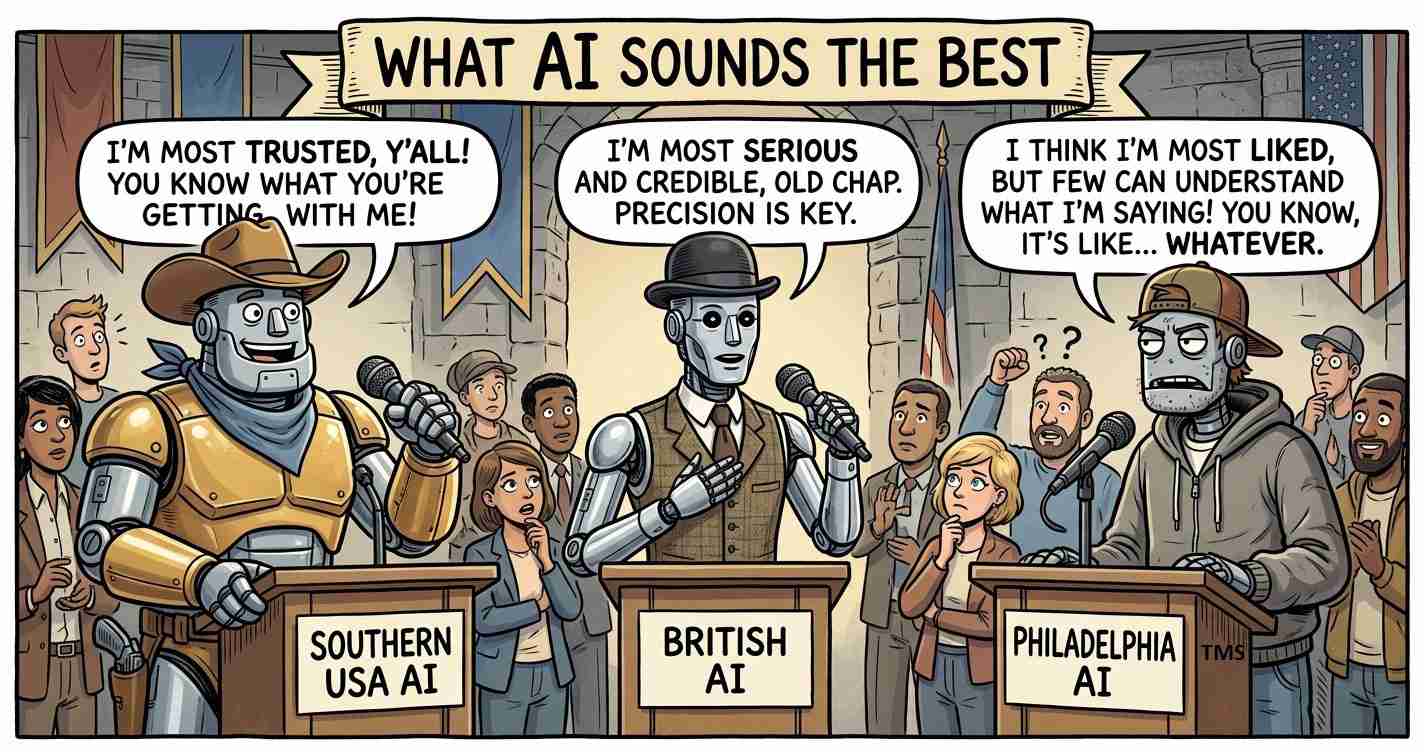
- People want personality: Respondents preferred regionally flavored, human-sounding voices over flat, neutral speech, with the Southern accent rated most comforting and authoritative (The Word Finder survey).
- Context matters: Warm, friendly tones suit casual interactions while neutral Midwestern voices led in perceived trust for high‑stakes topics like finance.
- Consistency and humanity: 73% want one consistent accent for devices, 75% prefer human-sounding speech, and only 2% want their voice cloned.
- Regional options unlock use cases: Businesses and services can match voice style to setting to increase comfort and credibility.
Why Southern voices lead
Survey participants described Southern-accented voices as approachable, slightly theatrical in a positive way, and imbued with a calm, reassuring authority. Respondents compared the tone to a friendly neighbor or a relaxed advisor — imagine Matthew McConaughey-style delivery giving life advice or a welcoming librarian recommending a book. That blend of warmth and credibility made the Southern accent the clear favorite for everyday interactions with technology.
Source: The Word Finder survey
Other top accents and what they convey
- New York City: Confidence and efficiency — brisk, decisive, get‑things‑done energy.
- BBC English: Trust and intelligence — the crisp, learned voice often equated with authority.
- New England: Realism and blunt charm — honest, direct, with a hint of sardonic wit.
- SoCal/Valley: Relaxed friendliness — casual, upbeat, easygoing.
- Texas drawl: Storytelling confidence — slow, warm, as if it has time to explain.
The study also documents a long tail of regional flavors — New Jersey’s feisty grit, Philadelphia’s straight-talking heart, Chicago’s no-nonsense reliability, and Louisiana’s soulful spice — each adding a different kind of “humanized” tech voice. Source: The Word Finder survey
Follow-up insights: trust, smarts and context
The research probed which accents suit different situations. Southerners were rated the most trusted overall and nearly tied with British accents for perceived intelligence — a surprising pairing of charm and credibility. For serious, high‑stakes topics such as finance, the Midwestern or “neutral American” accent led in trustworthiness. The takeaway: people expect voice to match the moment — warm for a weather check, plainspoken for money matters.
Source: The Word Finder survey
What people want — and don’t want
Key metrics: 73% of respondents want a single, consistent accent for their devices; 75% prefer human‑sounding speech; and just 2% want their own voice cloned. These figures point to a clear appetite for humanlike, regionally adapted AI rather than perfect mimicry or experimental oddities.
Source: The Word Finder survey
Voice as emotional bridge
“Voice isn’t just audio — it’s the emotional bridge to technology,” said Praveen Latchamsetty, founder of The Word Finder. His comment captures the study’s core: how a drawl or a lilt can shape feelings about a device and the company behind it.
Source: The Word Finder survey
Implications for Las Vegas, Nevada
Las Vegas businesses — casinos, hotels, ride‑share services and tourism providers — could benefit from matching voice to setting:
- Southern-accented concierge bots might make tourists feel instantly at ease.
- Midwestern, neutral tones could build trust for local banks or fintech services handling sensitive information.
- SoCal-style voices can reinforce a laid‑back, hospitality-first vibe across leisure experiences.
Socially, accessible voice tech that sounds human may assist older residents and visitors who prefer clear, warm guidance. Practically, Las Vegas’s tourism-driven economy offers pilots such as voice-guided tours, multilingual kiosks with regional tones, and emergency notifications designed to convey calm authority rather than alarm.
Source: The Word Finder survey
Conclusion
As AI gets smarter, how it sounds may become as influential as what it says. The study underscores that voice is not merely a product feature but a core part of user experience — shaping trust, warmth, and personality in everyday technology.
Source: The Word Finder survey