Chevron warns California’s clean-energy rules could shutter refineries, worsen fuel shortages and lift gas prices
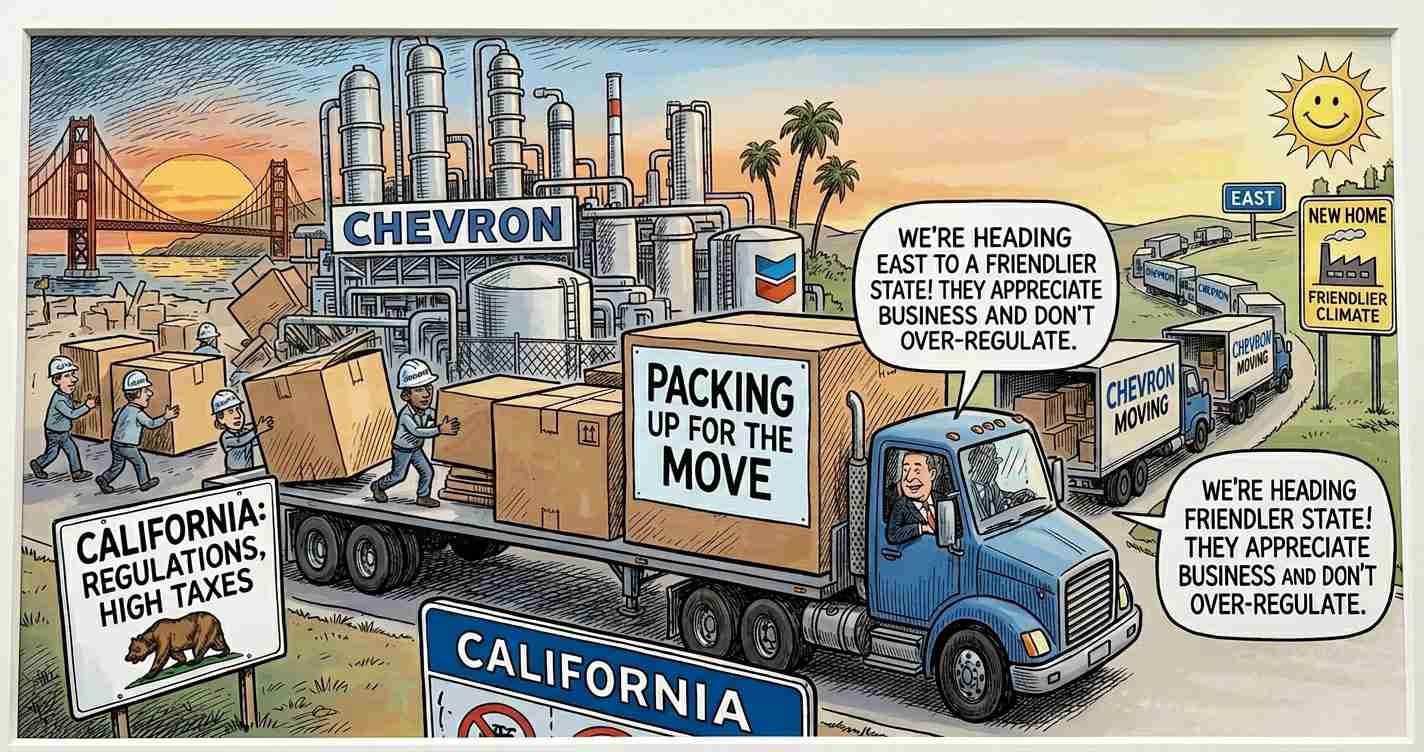
Chevron President Andy Walz warns California’s proposed Cap-and-Invest amendments could close the state’s refineries within a decade, risking fuel shortages, up to $1 per gallon higher gas and more than 500,000 jobs amid global oil volatility and Middle East tensions.
- Chevron says tighter emissions rules under California’s Cap-and-Invest plan could force refinery closures over the next 10 years — source: Fox Business.
- Company officials link global oil shocks and regional volatility to the risk of local supply shortfalls — see the Walz interview.
- Chevron operates two of California’s largest refineries; their shutdown would cut statewide refining capacity significantly, according to a Fox Business summary.
Why Chevron says the rules could force refinery closures
Chevron’s president, Andy Walz, wrote to Governor Gavin Newsom and warned amendments to California’s Cap-and-Invest program would remove millions of carbon allowances and tighten emission goals, making refinery operations financially unsustainable. The company says the plan would cut 118.3 million carbon allowances between 2027 and 2030 and target about a 90% reduction in certain emissions by 2045 — changes Chevron says would raise compliance costs and weaken the economics of large refinery investments (summary in Fox Business).
Walz told reporters that the combination of stricter rules and current global oil-market volatility could push refiners to leave the state. He warned: “we won’t have any refineries in 10 years” if policy and market pressures continue (Walz interview).
Chevron projects the regulatory changes could add as much as $1 per gallon to pump prices by 2030 and imperil more than 500,000 jobs across energy, transportation, aviation and freight, according to the company’s public statements summarized in Fox Business.
Supply risks, import reliance and the “energy island”
Structural exposure: Chevron and others point to two structural weaknesses that make California particularly vulnerable. First, the state is relatively separated from national pipeline networks and regional U.S. refinery supply — a situation critics call an “energy island.” Much of California’s gasoline and diesel is produced by in‑state refineries fed by foreign crude shipments; when a major local refiner closes, regional supply and prices can move quickly (Fox Business).
Global links: Second, Chevron notes global events — including higher oil prices tied to Middle East tensions and shipping chokepoints such as the Strait of Hormuz — can strain feedstock supplies and raise volatility. Walz referenced these risks in public remarks (Walz interview).
Some numbers and claims have limited public verification
Industry and allied groups have cited figures including that 70% of California’s crude supplies are foreign-sourced (attributed in reporting to the advocacy group Californians for Energy Independence) and that a Chevron shutdown would remove about 34% of statewide refining capacity (figures cited in industry statements and media summaries). Reporting to date is centered on Chevron’s letter and interviews; independent verification of some specific percentages and projections was not found in the publicly available coverage. Readers should treat those figures as company or group statements pending confirmation from state agencies (see full coverage in Fox Business).
Regulators push back — hearings, outreach and policy goals
The California Air Resources Board (CARB) frames the Cap-and-Invest amendments as part of the state’s long-term plan to reduce pollution and meet climate targets. Newsom’s office has directed questions to CARB, which says it plans public hearings, open industry meetings and possible adjustments based on feedback before finalizing changes (Fox Business).
CARB’s stated aim is to lower total pollution caps and accelerate emissions reductions across sectors. Industry groups contend abrupt cuts in allowances will raise costs, discourage investment and reduce refining capacity — outcomes they say would increase burdens on consumers and services like aviation and freight.
Economic stakes and the worker impact
Chevron emphasizes potential job losses and local economic harm if refineries close. Company estimates cited in media suggest hundreds of thousands of downstream jobs could be affected and that higher fuel costs could reduce consumer purchasing power and state tax revenue. These are high-level projections; independent analyses would be needed to quantify net effects, mitigation measures or gains from cleaner fuels and green investments (Fox Business).
What industry officials say about national security
Chevron and industry officials warn that reduced West Coast refining resilience could carry national security risks. A thinner regional fuel supply may affect military readiness and emergency response if domestic or international supply lines are disrupted — part of the company’s broader appeal to policymakers to weigh trade-offs between emissions goals and fuel reliability (Fox Business).
Implications for Las Vegas, Nevada
Economic impact
- Fuel-price ripple: California refinery outages or closures that raise West Coast wholesale prices could push Nevada pump prices higher. Arizona and Nevada already pay premiums when regional supply tightens.
- Tourism and transport costs: Higher aviation fuel and diesel prices can raise airline and shipping costs, potentially increasing travel and operating costs for Las Vegas hotels and casinos.
Political consequences
- Regional debate: Nevada policymakers could face pressure to balance climate goals with concerns about fuel reliability and costs.
- Cross-state coordination: There may be renewed calls for Western coordination on energy policy, contingency planning and supply diversification.
Social effects
- Household budgets: Sustained gas-price jumps can reduce discretionary spending and affect local retail and services.
- Workforce impact: Rising transport and goods costs can hurt lower-wage sectors central to Las Vegas’ economy, like hospitality and logistics.
Cultural relevance
Energy and lifestyle trade-offs matter in Las Vegas, where affordable travel and entertainment are culturally important. Debates over the pace of clean-energy policy versus investments in supply resilience or alternative fuels could shift public opinion.
Practical applications for residents
- Watch local prices and plan: Expect possible short-term gas-price spikes; consider filling up before major travel.
- Policy engagement: Local leaders can pursue contingency measures like regional fuel reserves, rail or pipeline links, or incentives for alternative fuels.
- Business planning: Hotels, casinos and transport firms should model fuel-price scenarios and consider hedging or operational adjustments.
Sources and further reading
- Fox Business coverage of Chevron’s letter and warnings
- Interview with Chevron President Andy Walz (Varney & Co. clip)
Notes on reporting
This article is based on Chevron’s public letter to California officials and interviews with company leadership as covered in the sources above. Some data points cited by industry groups — such as the share of foreign-sourced crude and specific percentages of statewide capacity loss — reflect company or group claims; independent verification of those precise figures was not available in the reporting reviewed. State agencies, including the California Air Resources Board and the California Energy Commission, are scheduled to hold public processes and may provide more definitive data during that review (Fox Business).