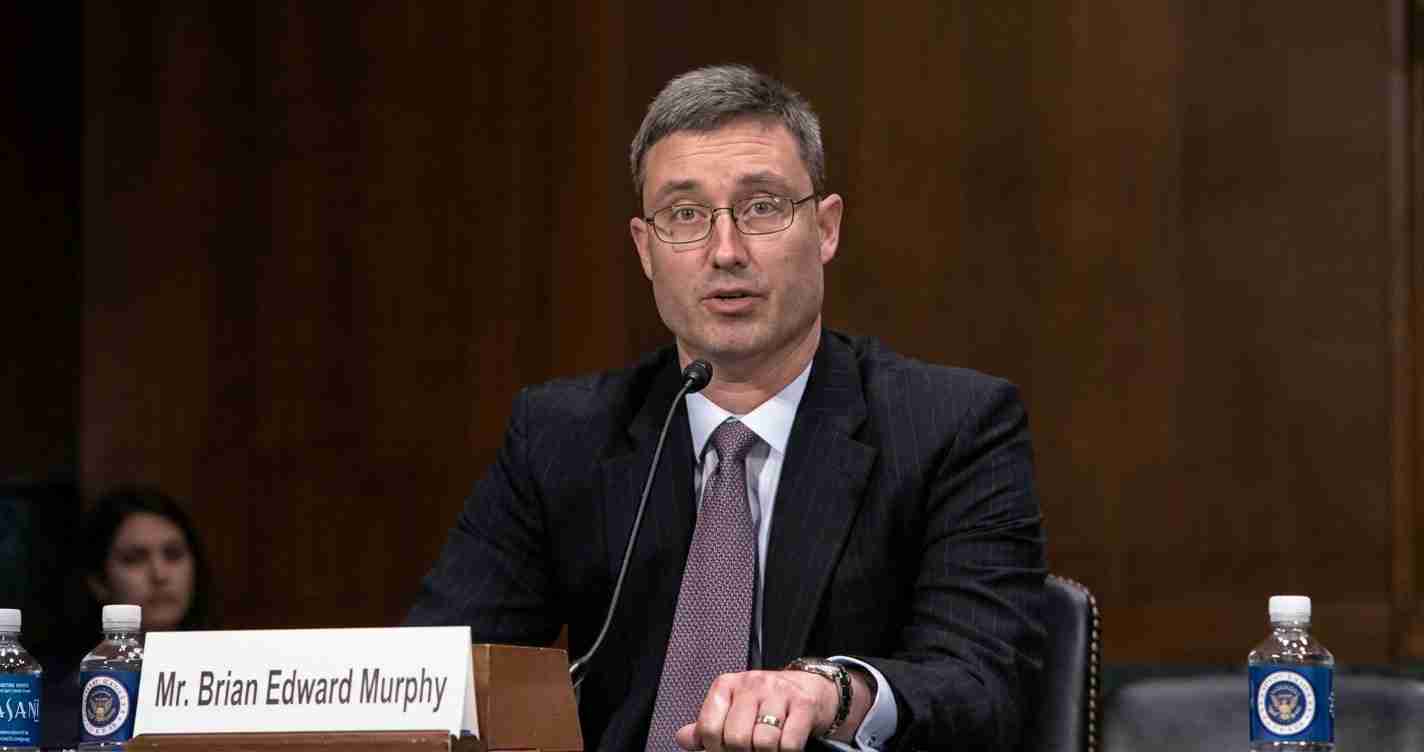
Biden-Appointed Judge Brian Murphy Draws Fresh Conservative Fire After Blocking Trump Vaccine Rules, Following Multiple Supreme Court Reversals
U.S. District Judge Brian Murphy, a Biden appointee, has faced rapid appellate intervention and Supreme Court reversals after blocking Trump-era immigration policies and sweeping vaccine and CDC rule changes, prompting sharp DOJ criticism and legal scrutiny nationwide.
- Judge Brian Murphy — confirmed Dec. 2, 2024 — issued sweeping injunctions that led to rare, rapid Supreme Court intervention and appellate stays.
- Contested rulings include blocking the Department of Homeland Security’s third-country deportation policy and pausing a January 2026 CDC immunization schedule.
- Department of Justice and legal academics have publicly criticized Murphy’s decisions as activist and inconsistent with higher-court directives.
- Local impact — changes to immigration and vaccine policy could affect Las Vegas health costs, labor markets, and school compliance.
Background and appointment
Brian Edward Murphy was born in 1979 in Columbia, Maryland. He earned a B.A. from the College of the Holy Cross (2002) and a J.D. from Columbia Law School (2006). Murphy began as a public defender with the Committee for Public Counsel Services in Worcester, Massachusetts, later working in private practice and as a partner at Murphy & Rudolph LLP.
Biographical and career details are drawn from the Federal Judicial Center biography and a longer career summary.
Nomination timeline: President Biden nominated Murphy on March 21, 2024; the Senate confirmed him Dec. 2, 2024, and he received his commission Dec. 6, 2024 (Federal Judicial Center).
Controversial rulings that drew fast appeals
Third-country deportation policy
What Murphy did: He blocked the Department of Homeland Security’s third-country deportation policy — an order that, according to filings, could have prevented DHS from deporting thousands.
Immediate response: The ruling prompted rapid appeals and higher-court intervention. The U.S. Court of Appeals for the 1st Circuit later paused Murphy’s order, and the Supreme Court first stayed the injunction with a 6–3 order in June 2025. A week later the high court issued a rare second order (7–2) explicitly criticizing Murphy’s handling of the case.
Reporting and timelines are detailed in news coverage (Reporting on rulings and appeals).
Vaccine policy injunction
Case overview: Medical organizations sued over sweeping changes to CDC vaccine rules implemented by HHS Secretary Robert F. Kennedy Jr. Judge Murphy issued a preliminary injunction staying a January 2026 immunization schedule, halting reductions in child vaccine requirements and invalidating decisions from a newly appointed vaccine advisory committee while the lawsuit proceeds.
In his written opinion Murphy quoted Carl Sagan and defended science as “the best we have,” emphasizing the public-health role of vaccines. Coverage of this ruling is available in recent reporting (Reporting).
Department of Justice response
Public criticism: Deputy Attorney General Todd Blanche publicly criticized Murphy’s rulings on social media, writing:
“How many times can Judge Murphy get reversed in one year? The same day he is stayed for repeatedly refusing to follow the law, he issues another activist decision. We will keep appealing these lawless decisions, and we will keep winning.”
The DOJ has labeled the rulings “activist” and “lawless” as it pursues further appeals (DOJ criticism reported).
Legal scholars weigh in
Academic commentary: Critics include Jonathan Turley (George Washington University), who warned the system cannot function with “rogue operators at the trial level,” and Ilan Wurman (University of Minnesota), who highlighted a perceived “double standard” in the judge’s handling of higher-court orders.
Scholarly and public commentary is summarized in recent coverage (Commentary cited).
Confirmation questions and disclosure issues
Disclosure scrutiny: During confirmation, Republican senators questioned Murphy after finding his name on letterhead for a June 2020 Massachusetts Association of Criminal Defense Lawyers (MACDL) letter advocating reforms some senators described as radical. Murphy apologized at his hearing for failing to disclose the letter on his questionnaire as required (Senate Judiciary statement).
How these cases reached national attention
What makes Murphy’s rulings notable is the frequency and speed of higher-court intervention. It is rare for the Supreme Court to issue multiple emergency orders in the same matter and to explicitly admonish a trial judge. The interplay between district-court discretion and higher-court enforcement has made Murphy’s name familiar to legal watchers and political insiders (Overview and timeline).
Implications for Las Vegas, Nevada
Economic impact
Court rulings that change immigration policy or vaccine rules can affect local health costs and labor markets in Las Vegas. A pause on deportations or changes to vaccine mandates could shift hospital workloads, public-health funding, and school vaccination compliance. Employers in tourism and hospitality may face sudden staffing and benefit-cost changes (See broader reporting on policy effects).
Political consequences
Las Vegas voters are often moderate and pragmatic; high-profile federal rulings can become local campaign issues in mayoral or legislative races. The DOJ’s public criticism of a judge nominated by a Democratic president may be used in local debates about judicial independence and accountability.
Social effects
Diverse Las Vegas communities could feel direct effects: families with mixed immigration status may face uncertainty from deportation rulings, while shifting vaccine guidance could put parents and schools in a difficult position. Local community health groups and legal-aid organizations are likely to monitor developments closely.
Cultural relevance
Public trust in health guidance matters in a city reliant on tourism and a large service workforce. Murphy’s use of scientific language in his vaccine order — notably quoting Carl Sagan and defending vaccine efficacy — may bolster pro-vaccine public-health messaging, while critics emphasize deference to agencies and faster appellate review (Order language and public-health framing).
Practical applications for residents
Residents and officials should watch for operational changes: school immunization rules, public-health clinic protocols, and hospital policies could shift if orders stand or are stayed. Legal services may see increased demand if immigration rulings affect families; employers should consult counsel about compliance with evolving federal guidance (Policy monitoring and local readiness linked to national decisions).
Sources and reporting
This article draws on public biographical material from the Federal Judicial Center (Biography), reporting on recent rulings and reactions (Coverage), career context from Vetting Room (career context), and confirmation documents from the Senate Judiciary Committee.
Reporting note: All original facts, information, and URLs from the cited public sources are preserved and linked above for verification.