Pacemaker data offers a narrow but crucial timeline in Nancy Guthrie disappearance, experts say
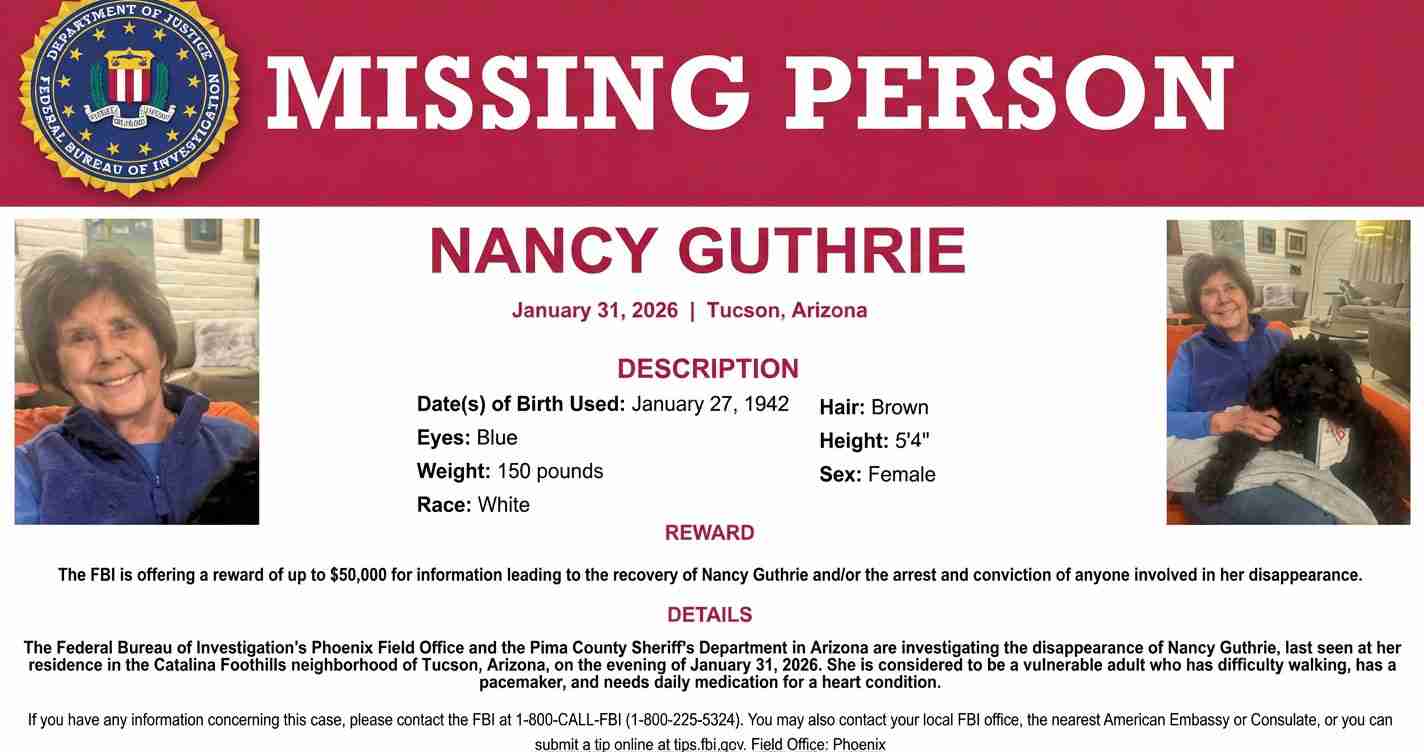
Pacemaker data has provided a narrow but crucial timeline in the disappearance of Nancy Guthrie on Feb. 1, revealing a 41‑minute window of heart-rate records that investigators hope will clarify when a medical event or abduction began.
Key takeaways
- App disconnected: Guthrie’s pacemaker app reportedly disconnected from her phone at 2:28 a.m. on Feb. 1, about 41 minutes after a doorbell camera was disabled.
- Device limits: Pacemakers record cardiac signals and device function but do not provide GPS location, so they can narrow timing but not position (report).
- Investigative value: Experts say analyzing the 41‑minute heart-rate window could show spikes or drops consistent with stress, exertion, or cardiac events — data referenced in a law‑enforcement briefing (news briefing).
What the pacemaker data showed in Guthrie’s case
Investigators say the pacemaker app on Guthrie’s phone disconnected at 2:28 a.m. on Feb. 1. That timestamp sits roughly 41 minutes after Guthrie’s doorbell camera was disabled at 1:47 a.m., creating a focused window investigators are examining for heart-rate changes.
Why that window matters: cybersecurity and medical-device experts say a spike in rate or irregular rhythms in that interval could indicate stress, a struggle, or a sudden medical event; a steady rate could point investigators in a different direction (news briefing).
“If the device logged a spike in heart rate or other irregular data in that period, it could indicate stress or a struggle. If the heart rate stayed steady, it could suggest a different timeline or medical condition,” said cybersecurity expert Morgan Wright in a public briefing (video).
How pacemakers work and what data they provide
Pacemakers are small, battery-powered devices implanted under the skin that prevent the heart from beating too slowly by sending electrical impulses as needed. Many modern systems connect to a home monitor or smartphone app to enable remote monitoring and clinic alerts.
Remote monitoring: Clinics can receive timely alerts for serious events — for example, a sudden loss of rhythm — if a device remains connected. Amy Kleinhans, lead nurse practitioner at HonorHealth Heart Care, notes clinics that monitor thousands of devices rely on those connections to be alerted to potentially life‑threatening issues (report).
What pacemakers cannot do: location tracking and other limits
A critical limitation is geographic tracking: pacemakers do not include GPS chips and cannot report a wearer’s location. They record cardiac signals and device function, but they cannot substitute for phone location logs, doorbell or traffic cameras, or vehicle trackers.
If a monitoring app or home unit disconnects — as investigators say happened in Guthrie’s case at 2:28 a.m. — the clinic will no longer receive real-time alerts or external logging. The implanted device typically continues to function internally, but outside monitoring and timely alerts cease (report).
Historical precedent: timing revealed in other cases
Pacemaker and implanted-device records have previously helped set timelines in investigations. For example, officials in New Mexico cited device records to suggest an individual may have died days before discovery. Such precedent illustrates how device logs can narrow a window for when a medical event occurred, even though they cannot show location (report).
How pacemaker heart rate data is used by investigators
When available, heart-rate logs from pacemakers are examined for:
- Sudden drops that could indicate loss of rhythm or cardiac arrest.
- Sharp rises that may reflect stress, exertion, pain, or a physical altercation.
- Changes in pacing behavior that suggest device intervention or malfunction.
Forensic teams and medical examiners compare those signals with other evidence — camera footage, witness statements, and phone records — to build a coherent timeline, while acknowledging the intrinsic limits of device-only data (report).
Sources and access to device records
How records are obtained: Access typically requires coordination with the device manufacturer or the clinic that handles remote monitoring. Medical privacy rules mean law enforcement usually needs legal authorization — such as a subpoena or warrant — and the pace of responses depends on vendor and clinic practices, as well as whether the device remained connected when the event occurred (report).
Implications for Las Vegas, Nevada
Public safety and investigations: Las Vegas law enforcement and courts handle many missing-person and criminal probes annually. The Guthrie case underscores that pacemaker heart-rate data can narrow timing but cannot replace location evidence; investigators should continue multi-source evidence collection.
Hospitals and clinics: Area cardiology clinics that monitor implanted devices may want to review monitoring protocols and patient education to reduce unintended disconnects and preserve logs for potential investigations (report).
Residents who rely on devices: Clear guidance on keeping apps updated and recognizing disconnection alerts can improve safety for older adults and patients who use remote monitoring as a safety net.
Legal and privacy questions: Policymakers may need to balance privacy protections with investigative needs by clarifying emergency-access procedures, data retention standards, and vendor cooperation to expedite lawful requests without eroding patient rights.
Cultural impact: High-profile disappearances can affect community trust. Public education about the capabilities and limits of medical-device data may help manage expectations during active investigations.
Reporting and next steps
Investigators in Tucson continue to integrate physical evidence, surveillance footage, witness leads, and device logs. The pacemaker heart‑rate data may narrow a window of activity, but detectives emphasize it is one part of a broader evidentiary mosaic needed to determine what occurred (report; video briefing).
For further reading
Local coverage and investigators’ briefings are available through the Times Media Service partner reports and video statements: Times Media Service partner report and the investigators’ video briefing.