Bolt hits 22 mph: MirrorMe Technology’s humanoid robot outpaces most human sprinters
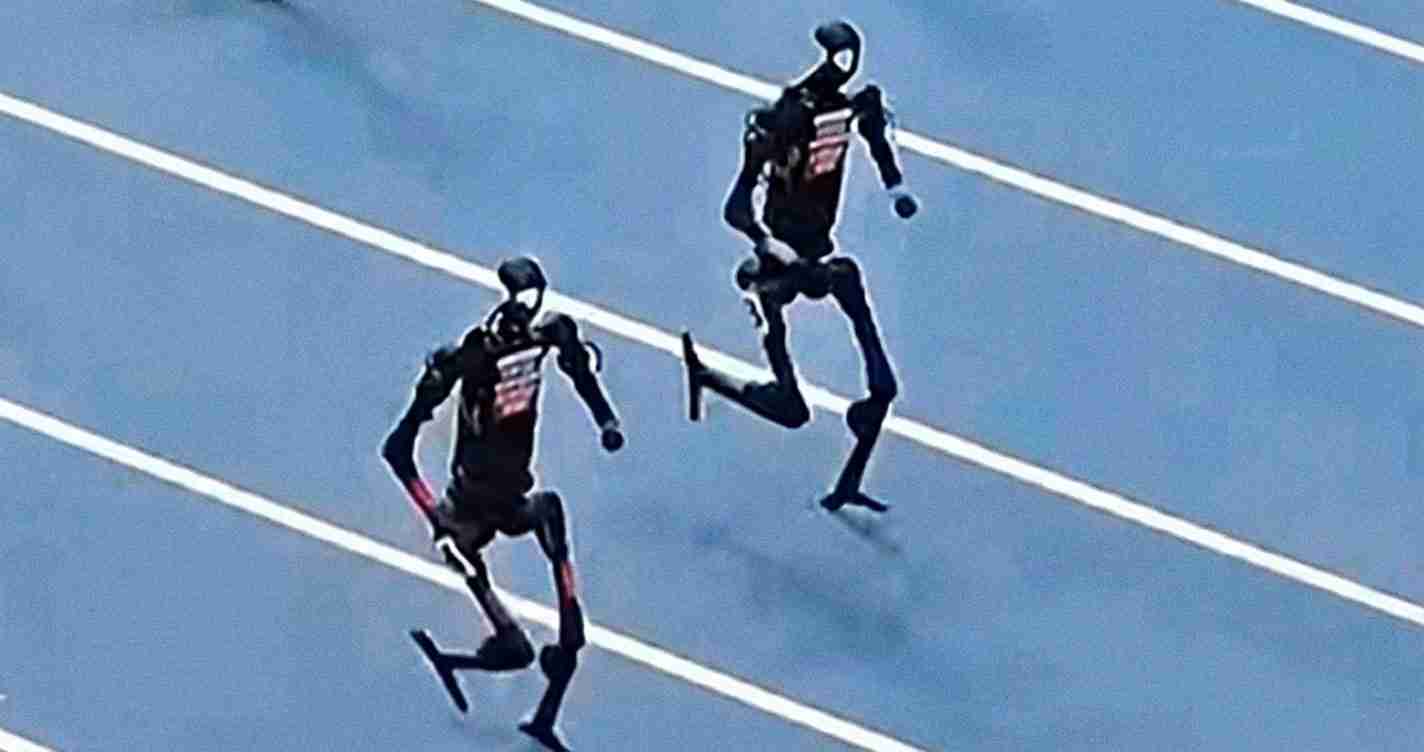
MirrorMe Technology’s humanoid runner Bolt reached 10 m/s (about 22 mph) in a real-world test, standing 175 cm tall and weighing 75 kg, designed as a high-speed, human-form training partner for elite athletes and sports scientists.
- Top speed: Bolt recorded 10 m/s (~22 mph) in a real-world treadmill test.
- Design goal: Human-like proportions (175 cm, 75 kg) to act as an elite athletic “steel sparring partner.”
- Technical advance: Key breakthroughs are dynamic balance, fast control loops, and new joint/power systems rather than speed alone.
- Verification needed: Demo footage is company-provided; independent third-party testing and safety rules are still outstanding.
Key information
Bolt is a humanoid robot built by MirrorMe Technology and covered by outlets including Mugglehead, Interesting Engineering, and Fox News.
Top speed: MirrorMe reports Bolt ran 10 meters per second (~22 miles per hour) in a real-world treadmill test, not a simulation (Fox News).
Size and weight: About 175 cm (5’7″) and ~75 kg (165 lb), close to average adult human proportions (Fox News).
Public demo: Company footage shows a split-screen treadmill video of MirrorMe founder Wang Hongtao running beside Bolt; as speed increases, Wang slows and stops while Bolt continues at higher cadence (Fox News).
Intended use: MirrorMe markets Bolt as a precision training partner — a “steel sparring partner” for elite athletes — rather than a consumer toy (Mugglehead).
Company background: MirrorMe launched in May 2024 with team members from Zhejiang University; earlier models include Black Panther II, which ran 100 m in 13.17 seconds on live TV (Mugglehead; Interesting Engineering).
Bolt’s design and how it runs
MirrorMe says Bolt uses newly engineered joints and an optimized power system to mimic human movement while operating at much faster stride rates. Instead of lengthening stride, Bolt shortens each step and raises stride rhythm to gain speed, which helps it maintain balance at very high cadence (Mugglehead; Fox News).
The company deliberately matched Bolt’s height and mass to human proportions, calling that the “ideal humanoid form”. The aim: a realistic partner that can run beside athletes and collect precise motion data for training.
What the demonstration showed — and what it did not
MirrorMe posted a split-screen video comparing founder Wang Hongtao and Bolt running on treadmills under the same conditions. The clip shows Bolt maintaining and increasing cadence as Wang slows and stops; MirrorMe states the footage was recorded in a controlled testing facility and is not computer-generated (Fox News).
Editorial note: Company footage can be persuasive but is promotional by nature — independent verification from outside labs or third-party testers is not yet available in published reports.
Why engineers call balance and control the bigger breakthrough
Experts emphasize that top speed is notable, but the real engineering advance is maintaining dynamic balance and precise control at high velocity. Fast running without falling requires split-second joint torque adjustments, center-of-mass control, and low-latency sensor feedback. MirrorMe says Bolt’s systems perform those tasks at speeds not previously demonstrated in full-size humanoids in real-world conditions (Fox News).
Past work and the path to Bolt
MirrorMe has pursued speed since 2016. The company’s earlier Black Panther II impressed last year with a 100 m sprint in 13.17 seconds (~9.7 m/s) on live television — a result compared by some reports to other firms’ tests and cited as a foundation for Bolt’s development (Mugglehead; Interesting Engineering).
Intended applications: Humanoid robot athletic training
MirrorMe positions Bolt as a practical tool rather than a stunt. As a steel sparring partner, Bolt could hold steady paces, mimic racing lines, repeat drills consistently, and collect precise timing and motion metrics that coaches and sports scientists may use to refine form, pacing, and endurance (Mugglehead).
MirrorMe says next steps include improving endurance and repeat-sprint performance in more realistic settings beyond controlled tracks — a necessary move for safe operation around human athletes.
Company profile and context
MirrorMe Technology formally launched in May 2024 and is headquartered in Shanghai. The firm’s team draws heavily on researchers and engineers from Zhejiang University. Product lines include earlier humanoids such as Baobao, Apollo, and Black Panther II (Mugglehead; Interesting Engineering).
Verification, safety and regulation — open questions
Key open issues for scientists, coaches, regulators and the public:
- Independent testing: Third-party verification is needed for speed, repeatability, and performance in non-controlled environments.
- Safety and liability: Rules must be set for robots operating near humans at high speed — who is liable for collisions?
- Sports ethics: Could robotic partners create unfair advantages, and how will governing bodies treat machine-collected data?
- Privacy and security: Sensitive performance metrics recorded and stored by robots raise privacy and data-protection concerns.
Sources and reporting notes
This article draws on MirrorMe’s demo footage and reporting by several technology outlets. Specific reports used include:
- Fox News: “World’s fastest humanoid robot runs 22 mph”
- Mugglehead: “Humanoid robot Bolt hits 10 metres per second in real world test”
- Interesting Engineering: “Fastest humanoid robot Bolt unveiled”
- Ziegler Substack: analysis/commentary on humanoid speed
Implications for Las Vegas, Nevada
Bolt’s demonstration is a technical milestone with potential local impacts across economy, policy, social life and culture in Las Vegas.
Economic impact
Las Vegas’ sports, fitness and entertainment economy could gain new business from advanced training tools: local teams, university programs (such as UNLV), private performance centers and resorts could contract for robot access, creating vendor opportunities and service jobs.
Political consequences
City and state officials may need to consider permitting, safety standards, and whether athletic commissions should regulate robotic training aids. Workforce development programs might be needed to prepare technicians and programmers.
Social effects
Athletes and coaches could benefit from precise, repeatable partners, but concerns include reduced human contact in coaching, data privacy, and unequal access if only elite programs can afford robots.
Cultural relevance
Las Vegas’ appetite for spectacle and innovation could embrace robot exhibitions, demonstration races, and entertainment partnerships — Bolt’s human-like form and athletic focus fit the city’s mix of sports, shows and tourism (Interesting Engineering).
Practical applications for residents
- Training: Pacing drills and biomechanical data if costs fall and safety is proven.
- Jobs: Roles in maintenance, programming and safety oversight may grow.
- Tourism & events: Hotels and arenas might use robots in shows or attractions.
- Policy & safety: Clear rules about where and how robots may operate near people will be needed.
Next steps for Nevada stakeholders
Local sports administrators, university athletic directors and regulators should monitor independent test results and safety data. Partnerships with robotics researchers can help assess benefits and risks. Pilot contracts should require safety reviews, data protections, and community-access provisions to avoid widening access gaps.
Summary: Bolt’s 22 mph run marks a technical milestone that raises practical, regulatory and ethical questions as robot demonstrations move toward real-world adoption. Las Vegas stakeholders will need to weigh innovation against safety, equity and privacy.