
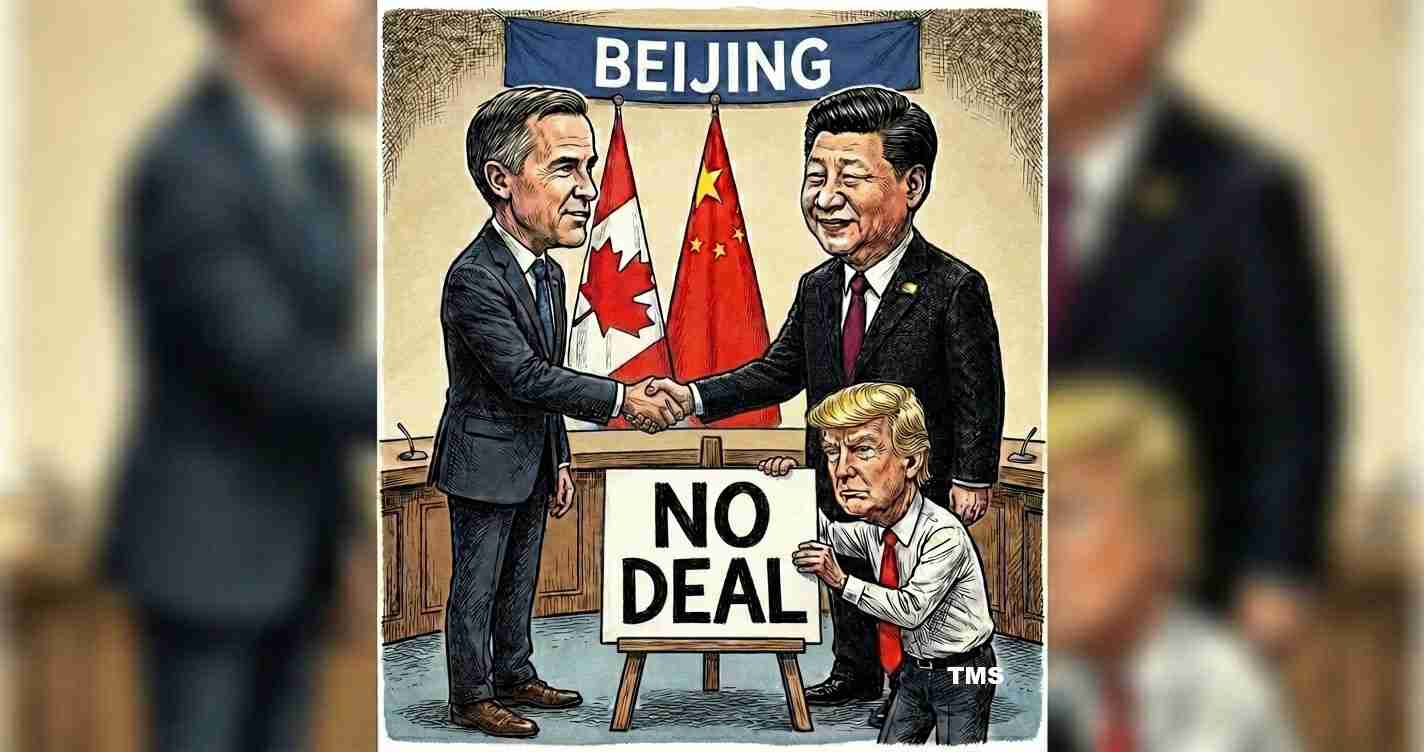
Trump threatens 100% tariffs if Canada signs deal with China, calling leader “Governor” and sparking diplomatic pushback
Former President Donald Trump warned on Truth Social he would impose 100% tariffs on Canadian goods if Canada finalizes a trade deal with China, a post that prompted swift diplomatic pushback from Canadian officials and raised legal and economic concerns.
- Threat: Trump posted that Canada would face a 100% tariff on all goods if it “makes a deal with China,” escalating tensions between two close allies.
- Clarification: Canadian officials say they are not pursuing a free trade agreement with China and described recent changes as limited tariff adjustments.
- Legal and economic hurdles: Experts say an across-the-board 100% tariff would face significant legal, political and supply-chain consequences.
- Local impact: Las Vegas businesses could see higher costs, supply disruptions, and tourism shifts if tensions rise.
Trump’s post and the trade deal at issue
On Saturday, former President Donald Trump used Truth Social to warn of a sweeping tariff if Canada completes what he characterized as a deal with China. He wrote:
“If Canada makes a deal with China, it will immediately be hit with a 100% Tariff against all Canadian goods and products coming into the U.S.A. Thank you for your attention to this matter!”
Coverage of the post and the surrounding reporting was documented by ABC News, which also noted the tariff changes between Canada and China involved a rollback of a 100% tariff on Chinese electric vehicles in exchange for lower Chinese tariffs on some Canadian agricultural products. Canadian officials characterized the exchange as a limited, technical adjustment rather than a comprehensive free trade agreement.
Trump’s language: “Governor” and past threats
Trump has repeatedly used the term “Governor” when referring to Canada’s leader — a provocative label he has used in prior remarks. News segments, including CBS Evening News coverage, highlighted both the slur and comparisons to earlier tariff threats and territorial comments.
Clarification about names: Some online posts and searches invoked the phrase “Mark Carney Governor,” which is misleading: Mark Carney is a former central banker, while the current prime minister is Justin Trudeau. Journalists noted the public confusion and mislabeling in social posts.
Canadian response
Canadian officials swiftly pushed back. Dominic LeBlanc, minister for Canada-U.S. trade, said there is “no pursuit of a free trade agreement with China” and emphasized the strength of the Canada–U.S. partnership. Prime Minister Justin Trudeau, speaking from Davos, rejected the suggestion that Canada would serve as a simple conduit for Chinese goods and affirmed that Canada “thrives because we are Canadian.” Reporters and outlets covered these rebuttals, including reporting by ABC News and televised segments such as CBS Evening News.
Practical and legal questions about a 100% tariff
Trade experts and legal analysts note several major hurdles to implementing a blanket 100% tariff on an allied country:
- Legal authority: Imposing sweeping tariffs typically requires formal trade actions, investigations, or national-security justifications; a blanket 100% tariff would likely face court challenges and possible conflict with World Trade Organization rules.
- Economic fallout: Canada is the United States’ second-largest trading partner; integrated supply chains mean many U.S. businesses would be affected, increasing prices and disrupting inputs.
- Political consequences: Retaliation, diplomatic backlash, and domestic political cost would be likely outcomes of such an extreme measure.
News analyses pointed to parallels with previous episodes in which Trump threatened tariffs or took action against allies; coverage of those patterns appeared in reporting such as ABC News and television segments like CBS Evening News.
Media coverage and verification
Major outlets reported on the Truth Social post and the Canadian response. Reporting and video segments from ABC News, CBS Evening News, and CNN-News18 documented the statements and provided context about the limited tariff adjustments between Canada and China.
Reporter note: There is no public record that the U.S. government has taken steps to impose the 100% tariff described in the post, nor evidence that Canada is negotiating a formal free trade agreement with China; officials described the reported exchange as a targeted rollback on Chinese electric-vehicle tariffs in return for reduced Chinese tariffs on some agricultural goods (ABC News).
Implications for Las Vegas, Nevada
Economic Impact
- Higher tariffs could increase costs for hotels, casinos and restaurants by making agricultural imports, furniture and equipment more expensive.
- Interruption to North American supply chains could delay parts and raise replacement costs for casino floor equipment and construction materials.
Political Consequences
- Nevada, a battleground state, could see elected leaders and voters react strongly to trade escalations that threaten regional jobs and economic stability.
- Tariff threats may become a prominent issue in federal and local campaigns in Las Vegas.
Social Effects
- Consumers may face higher prices for some goods and food items, affecting families already dealing with inflation and housing costs.
- Any reduction in Canadian tourism or diplomatic friction could lower bookings and revenue for Las Vegas hotels and entertainment venues.
Cultural Relevance
Las Vegas’ service and event economy relies on cross-border visitors and international participation; strained U.S.–Canada relations could indirectly affect cultural events and entertainment bookings.
Practical applications for local businesses and residents:
- Monitor supply-chain notices and diversify suppliers to reduce exposure.
- Review contracts for price-adjustment clauses and consider inventory hedging if tariff threats persist.
- Local policymakers and business groups should press federal officials for clarity and support if tariffs begin to affect Nevada industries.



