Spain high-speed train crash near Adamuz kills dozens as investigators probe cause
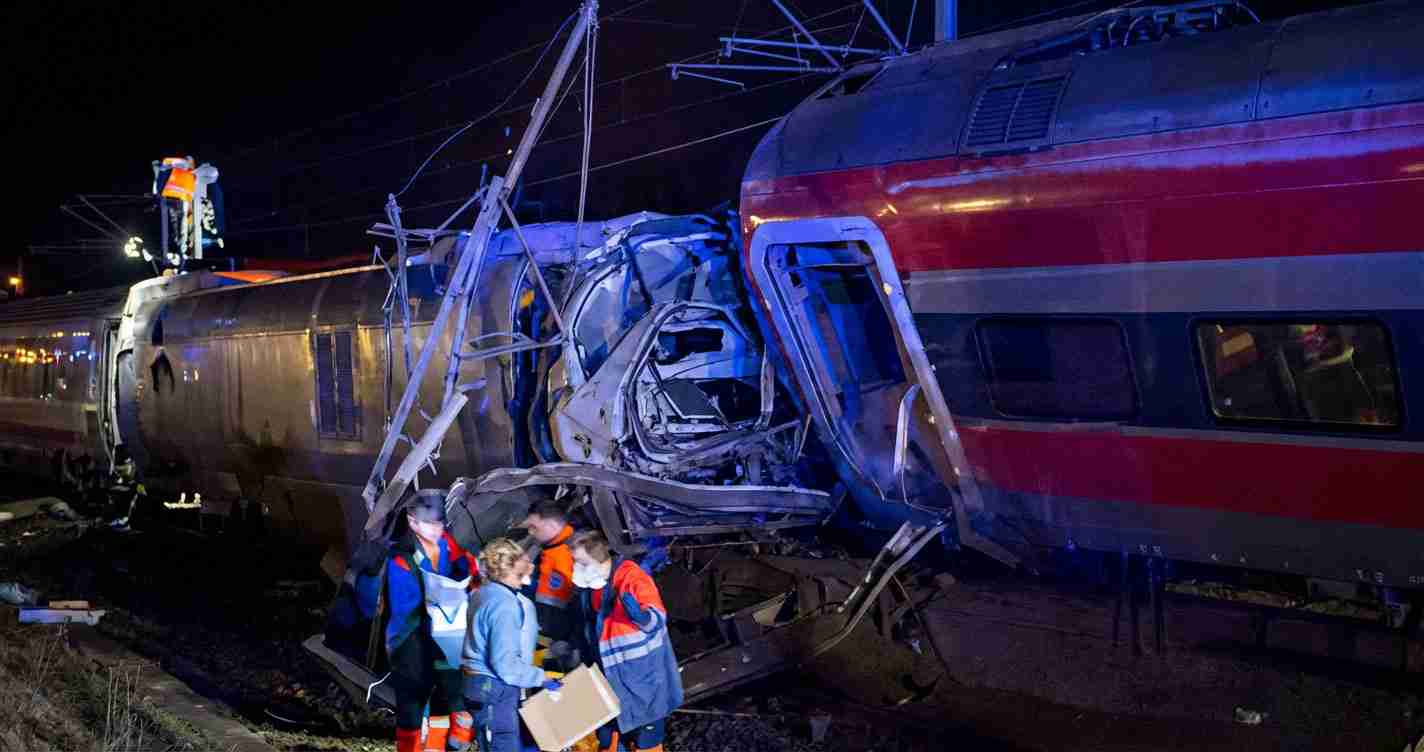
At least 39 people were killed and more than 240 injured after two high-speed trains derailed and collided near Adamuz, Córdoba, on January 18, 2026, prompting a large rescue effort and a national investigation into the cause.
- Fatalities and injuries: At least 39 dead and ~245 injured, including dozens with serious wounds.
- Collision details: An Iryo high-speed service derailed and struck an adjacent Renfe Alvia on a straight, recently refurbished section of track.
- National response: Civil Guard, Military Emergencies Unit, Spanish Red Cross and Adif led rescue, victim support and service suspensions.
- Investigation open: Officials call the incident “very strange”; Transport Minister Óscar Puente said conclusions may take at least a month.
Main reporting and timeline
What happened: On the evening of January 18, 2026 (between about 6:40–7:45 p.m. CET), an Iryo high-speed train (service 6189) traveling from Málaga to Madrid derailed on a straight section of track near Adamuz and struck an adjacent Renfe Alvia bound from Madrid to Huelva. Witnesses and officials reported high speed at impact, and both trains suffered heavy damage, with the Renfe’s front carriages plunging down an embankment.
Casualties and immediate rescue
Casualties: Authorities reported at least 39 people killed and about 245 injured, including many with serious wounds. Early counts varied as rescuers worked to recover victims from wreckage in difficult terrain. Hospital officials in Córdoba received most of the wounded; emergency teams prioritized those with life-threatening injuries and dozens were hospitalized, with more than a dozen in critical condition.
Rescue operations: Local officials described chaotic scenes. Adamuz’s mayor, Rafael Moreno, called the site “horrific” and reported seeing badly injured victims and at least one deceased person near the tracks. Rescue workers required heavy machinery to reach some wreckage, and the Spanish Red Cross established a help center in Adamuz to support survivors and families.
Trains, speed and track
Trains involved: The Iryo 6189 — a train about four years old — derailed and crossed onto the opposite track, striking the Renfe Alvia. Accounts vary on whether the derailed section was the tail or another carriage, but Adif confirmed the Iryo derailed and hit the Renfe, triggering the second derailment.
Track condition: The stretch had been refurbished in May 2025 with an investment reported at €700 million and was described by officials as “supposedly in perfect condition,” which deepens investigators’ concern about the causes of a derailment on a straight, upgraded section.
Official response and service suspensions
National actions: Spain deployed the Civil Guard, civil defense teams, the Military Emergencies Unit and the Spanish Red Cross. Prime Minister Pedro Sánchez cleared his schedule to work with emergency services and expressed national mourning. Adif suspended Madrid–Andalusia high-speed services on January 19 while investigators surveyed the scene and inspected infrastructure. Adif also set up victim support centers at major stations including Atocha in Madrid, and in Seville, Córdoba, Málaga and Huelva.
International alerts: The U.S. Embassy in Spain issued an alert confirming the derailment and advised U.S. citizens to follow local instructions.
Transport Minister Óscar Puente called the impact “terrible” and warned that the inquiry could take at least a month to reach firm conclusions.
What investigators say and what remains unclear
Investigators are examining mechanical failure, signaling, track conditions and possible human factors. Officials emphasized that the derailment on a straight, recently refurbished stretch is “very strange,” and Adif confirmed the initial derailment of the Iryo train that led to the Renfe collision. Early reports suggest the Iryo left Córdoba-Julio Anguita station roughly 10 minutes before the derailment.
Eyewitness and media coverage
Television, local media and international outlets carried scenes of rescue teams working through the night. Video posted online showed damaged carriages and emergency workers removing victims; media noted that early details varied as rescue teams worked and investigators examined wreckage. See broader coverage from The Independent and regional reports such as WGLT. Public video coverage is available in examples of public video coverage.
Sources and ongoing reporting
This article draws on reporting from The Independent, WGLT, the English-language compilation on Wikipedia, and the U.S. Embassy alert. Authorities have said the investigation is active and ongoing; more definitive findings on cause and responsibility may take weeks.
Implications for Las Vegas, Nevada
While the Adamuz derailment is geographically distant, it carries lessons for planners and officials considering high-speed or intercity rail in Las Vegas and Nevada generally. Below are implications across several domains.
Economic and political consequences
- Economic: Likely little direct economic effect on Las Vegas, but potential for increased investor scrutiny of rail projects and safety funding.
- Political: Local supporters of rail expansion may face tougher questions on safety, transparency and independent oversight.
Social and cultural effects
The tragedy highlights the human cost of transit failures and may prompt increased community dialogue in Las Vegas about emergency preparedness, passenger safety and support systems for victims’ families. Residents with international ties may feel the event more personally.
Practical applications for Nevada agencies
- Emergency readiness: Review coordination among hospitals, EMS and transport authorities for mass-casualty events; ensure access to heavy equipment and rapid triage protocols.
- Infrastructure audits: Require rigorous third-party audits of track work, signaling and maintenance before high-speed service begins.
- Victim support: Plan clear family notification and victim support centers modeled on Adif’s response.
- Public communication: Ensure transparent, timely updates to limit confusion and misinformation during incidents.
Reporting note
Numbers and details in the hours and days after major disasters can change as rescue teams work and investigators gather facts. This article reflects reporting available from the sources listed above at the time of publication; investigators and emergency services continue to provide new information on the Adamuz derailment and the national inquiry into its cause.