Protesters swarm downtown Minneapolis Canopy by Hilton amid outrage over Renee Good shooting
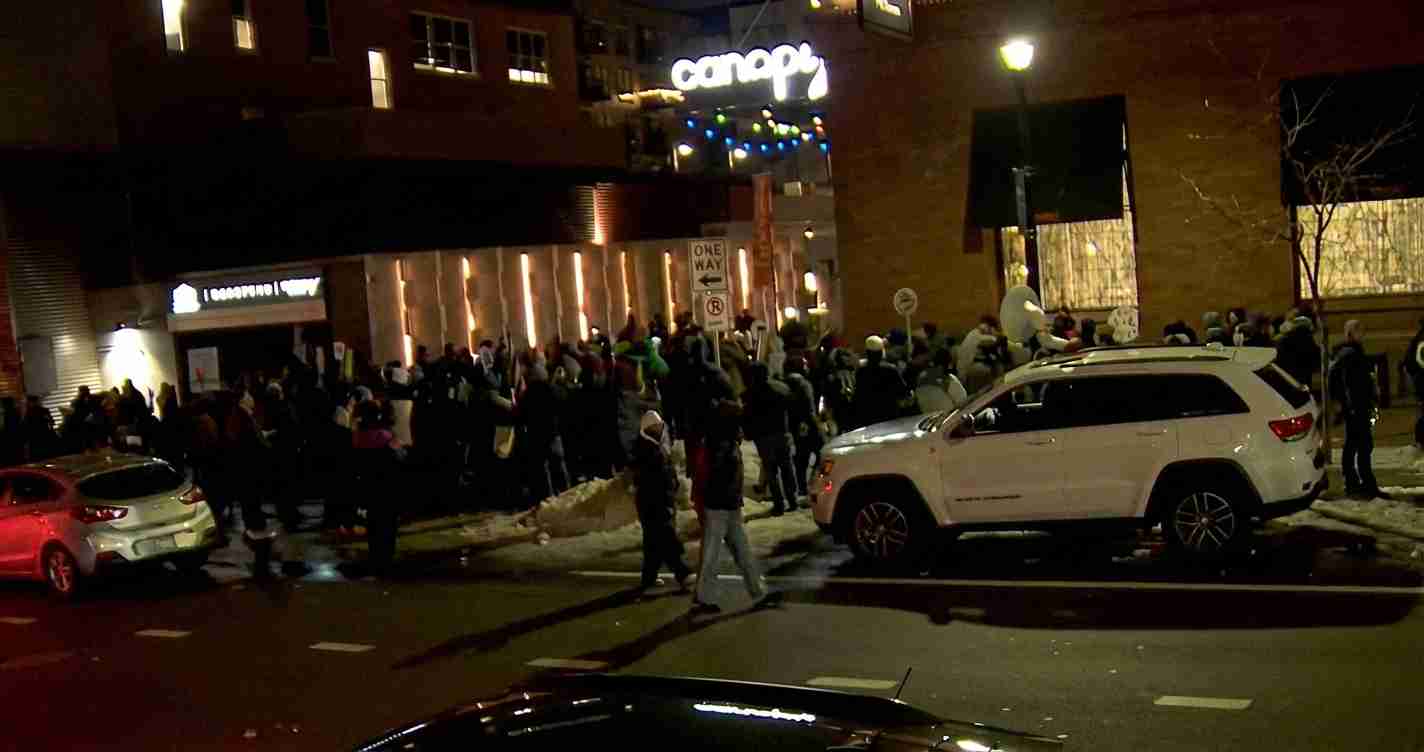
Hundreds of protesters converged at downtown Minneapolis’s Canopy by Hilton Friday, demanding ICE leave Minnesota and calling for investigations after ICE agent Jonathan Ross fatally shot 37-year-old Renee Nicole Good during an enforcement action on Jan. 7.
Key takeaways
- An ICE agent, Jonathan Ross, shot and killed 37-year-old Renee Nicole Good on Jan. 7 — reporting by Star Tribune and MPR.
- Protests moved downtown with hundreds marching and confronting a federal presence; officials at times declared an unlawful assembly (Star Tribune; video reporting).
- Demonstrators targeted a Canopy by Hilton believing federal agents were lodged there after a Hampton Inn cancellation, though open reporting does not confirm ICE agents stayed at that specific property (Star Tribune).
Main
What happened: the shooting that set off protests
On the morning of Wednesday, Jan. 7, an ICE agent identified in reporting as Jonathan Ross shot and killed 37-year-old Renee Nicole Good during an enforcement action called “Operation Metro Surge.” Good lived a few blocks from the scene and was a mother of three. The death sparked immediate and sustained demonstrations across Minneapolis and elsewhere in Minnesota, with protesters demanding transparency and for ICE to leave the state. Reporting and statements on the incident are available from the Star Tribune and MPR.
Protests move downtown and focus on hotels
By Friday, demonstrations that began near the south Minneapolis shooting site shifted downtown, where federal offices and personnel had a visible presence. Local reporting described large crowds confronting federal officers and local police. At least one march converged on a downtown Hilton-branded property after participants sought to find where incoming federal agents were staying; live and recorded coverage showed tense standoffs, chanting crowds, and police lines. See live coverage and reporting from the Star Tribune and accompanying video reporting.
Why protesters targeted the Canopy by Hilton
The focal point on Hilton-branded hotels stemmed from public reporting that a Hampton Inn by Hilton in Lakeville canceled a block of reservations for federal personnel earlier in the week. That cancellation prompted federal officials to rebook agents at other hotels in the Twin Cities metro area and fueled speculation among residents and activists about where agents were staying. Local coverage and on-the-ground footage reported demonstrators gathering outside what they identified as the Canopy by Hilton in downtown Minneapolis, believing agents were lodged there; hotel guests watched chants and police barricades unfold in lobbies and rooms (Star Tribune).
Uncertainty over whether ICE agents were at the Canopy
Open-source reporting confirms demonstrators believed federal agents were lodged at a downtown Hilton-branded hotel, but it does not verify that the Canopy by Hilton specifically hosted ICE or other federal officers. Coverage shows the crowd’s belief and the resulting confrontation, but journalists note no confirmed guest lists or official lodging disclosures identifying which hotels housed which agencies. Officials arranged alternative housing after the Lakeville cancellation, yet records of exact hotel assignments remain undisclosed, and media accounts caution the targeting may have been driven by speculation and online chatter (Star Tribune).
Hampton Inn cancellation and federal rebooking
According to local reporting, the Lakeville Hampton Inn canceled a block of reservations tied to the federal deployment. That decision came before or during the arrival of additional federal agents for Operation Metro Surge, and DHS or ICE arranged rooms at other hotels across the metro. The cancellation amplified confusion about lodging and intensified efforts by protesters to locate deployed personnel. Detailed public records on how many rooms were booked, which agencies stayed where, and the timeline for rebooking have not been released (Star Tribune).
Scale and character of the demonstrations
Across multiple days, protests after the Renee Good shooting drew hundreds at several sites: the south Minneapolis shooting scene, government buildings, ICE facilities, and downtown locations. Demonstrators chanted Good’s name and anti-ICE slogans, accused federal authorities of blocking local investigators from co-investigating the case, and urged that ICE leave Minnesota. Videos of downtown protests show loud, energetic crowds and a significant police and federal presence. Authorities at times declared an unlawful assembly as tensions rose (Star Tribune; BCA statement; video reporting).
“They chanted Good’s name and repeatedly demanded ICE leave the state,” eyewitness footage and reporting show.
What remains unclear
Key questions remain unresolved in public reporting. Most notably, there is no confirmed public record showing ICE or other federal agents were staying at the Canopy by Hilton specifically. Coverage documents protesters’ belief that federal personnel were at a downtown Hilton-branded property, but which hotels DHS or ICE ultimately used after the Lakeville cancellation — how many rooms were booked, which agencies stayed where, and related contracting details — have not been released. Officials have described investigative steps, but public records on housing for the deployment remain limited (Star Tribune).
Sources and reporting
This article draws on local reporting, live coverage of downtown protests, reporting on the Renee Good shooting, and official statements by investigative agencies. Key items include reporting and live updates from the Star Tribune and its coverage of the raids; video and broadcast coverage (video, video); reporting from MPR; the Minnesota Bureau of Criminal Apprehension’s BCA statement; and analysis from the American Immigration Council.
Implications for Las Vegas, Nevada
Economic impact: Hospitality and tourism businesses in Las Vegas should monitor how hotels and brands respond. The Lakeville Hampton Inn cancellation shows how hotels may decline government bookings during charged disputes; sudden cancellations or public backlash could affect bookings for government or security contracts and spur debate about hotels’ roles in hosting federal teams.
Political consequences: Urban moderates and local officials in Las Vegas may view the Minneapolis events through a lens of public safety and accountability. Officials and candidates could face pressure to clarify policies on cooperation with federal agencies and to explain how local law enforcement interacts with federal immigration efforts.
Social effects: The Minneapolis unrest underlines how quickly community anger can mobilize. In Las Vegas, organizers in immigrant communities or activist networks could draw inspiration from Minneapolis protests to demand accountability or greater transparency in investigations involving law enforcement.
Cultural relevance: Las Vegas’s diverse communities and many hospitality workers may identify with concerns about federal enforcement actions. The focus on hotel involvement — whether hosting agents or canceling block reservations — intersects with local conversations about corporate responsibility and guest safety.
Practical applications: City officials, hotel managers, and event planners in Las Vegas could review contingency plans: guest communication strategies during protests, policies for block bookings by government agencies, and coordination with local law enforcement to ensure guest safety and clear public messaging.
Reporting: Times Media Service; additional sources as cited.