More New Nevada Laws Take Effect Jan. 1, 2026: What Nevadans Need to Know
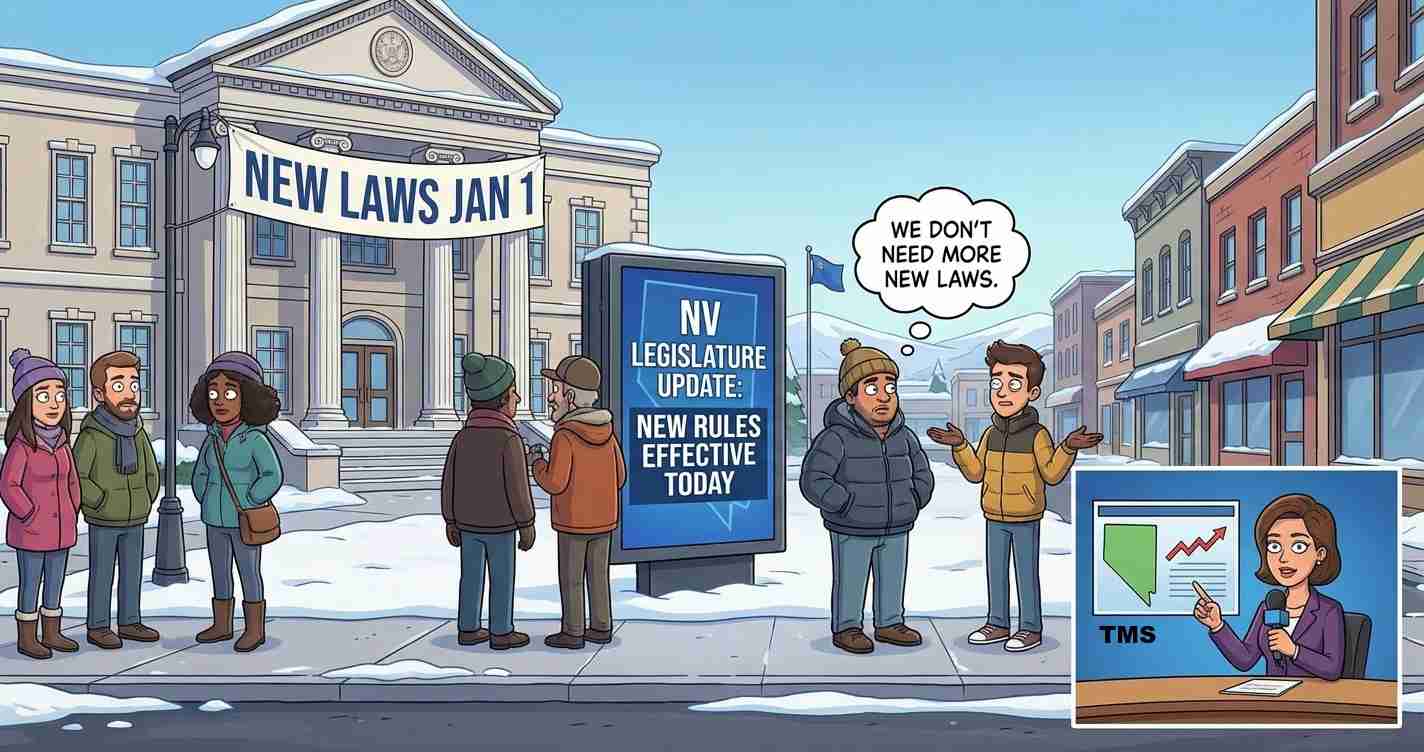
More than 50 new Nevada laws from the 2025 legislative and November special sessions went into effect Jan. 1, 2026, affecting public health, crime, AI in campaigns, consumer protections and services for homelessness across Nevada.
Key takeaways
- Over 50 bills from the 2025 session and a November special session took effect Jan. 1, 2026; more than 500 bills passed in 2025 overall. See the Nevada Independent roundup and the Nevada Legislature bill list.
- The package covers crime and public safety, reproductive rights, health coverage (including stuttering treatment), homelessness services, consumer protections for food delivery and party rentals, and AI disclosure in campaigns.
- News summaries are useful overviews; residents and businesses should consult full bill texts or state agencies for implementation specifics.
What changed: crime, public safety and the Strip corridor
One of the most visible measures is Gov. Joe Lombardo’s Safe Streets and Neighborhoods Act, a broad crime bill tightening penalties for offenses such as DUI (with increased penalties where a death occurs), stalking, harassment, and battery against hospitality employees.
The law also revives a special court program for cases tied to the Las Vegas Strip and gives courts power to ban offenders from the Strip corridor for up to one year, a move supporters say will protect workers and tourists.
Supporters: Emphasize worker and visitor protection. Critics: Warn tougher penalties won’t solve substance use or homelessness and could strain courts and jails.
Reproductive rights: AB176 and related protections
Lawmakers enacted AB176, the Right to Contraception and Family Planning Services Act, which bars government restrictions on reproductive treatments and is intended to secure Nevada reproductive rights amid shifting national rulings.
Health providers and clinics are expected to rely on AB176 to shield access to contraception and family planning services, though questions remain about how state agencies will interpret the statute when issuing rules and guidance.
Residents seeking care should check with local clinics or the Nevada Department of Health and Human Services for details.
Health insurance and stuttering treatment coverage
A significant coverage change requires public and private insurers, including Medicaid, to cover stuttering treatments without annual limits or restrictions based on cause. This expands access to speech therapy for children and adults and prevents arbitrary coverage caps that had limited long-term care.
Prisoner tracking for redistricting
The Nevada Department of Corrections must now track and report the last known address, age and ethnicity of released prisoners to the State Demographer for redistricting purposes. The law extends address collection for people released after July 1, 2030.
Proponents say this will improve census and redistricting accuracy; civil liberties advocates may raise privacy concerns.
Safety rules for bounce houses and party rentals
New regulations for bounce houses and similar inflatables place responsibilities on renters and operators to ensure proper setup and safety, including staff training, anchoring standards and clearer rental contracts.
Operators must update practices to meet state safety standards following past incidents and complaints; see local reporting and video summaries for context (video overview, additional coverage).
AI, deepfakes and campaign materials
Legislators adopted rules to curb deceptive uses of artificial intelligence in political communications, focusing on deepfakes and other AI-generated content that could mislead voters.
Campaign materials that use AI-generated images, audio or video that alter a candidate’s likeness must include disclosures to help preserve trust in elections.
Ghost kitchens, delivery apps and food industry oversight
Several laws target “ghost kitchens” (virtual restaurants operating from shared spaces) and third-party delivery platforms to improve consumer protections, labeling, and oversight of food safety and business practices.
- Restaurants, virtual operators and delivery apps must update contracts and consumer disclosures.
- Expect changes to labeling, safety checks and business practices that could affect delivery fees and menus.
Homelessness ID cards and service access
The Department of Health and Human Services may now issue identification cards to people experiencing homelessness under certain conditions, intended to help residents access benefits and services requiring official ID.
Advocates note this could reduce barriers to care and housing but will require secure processes and outreach to protect vulnerable people.
Where to find the full list and bill texts
The Nevada Legislature maintains a searchable list of bills effective Jan. 1, 2026, with full bill texts. Residents, businesses and local governments should consult the official repository for precise legal language and implementation dates.
Reporting and public reaction
Local reporting and summaries, including a detailed roundup by The Nevada Independent, provide accessible explanations of many new laws.
Reaction was mixed: supporters emphasized public safety and reproductive protections; critics worried about enforcement costs and unintended consequences.
Implications for Las Vegas, Nevada
Economic impact
The Safe Streets and Neighborhoods Act aims to make the Strip safer for visitors and workers through stricter penalties and corridor bans, which may reassure tourists and employers but could increase enforcement costs and arrests.
Political consequences
Prisoner address reporting could influence redistricting in Clark County; AI disclosure rules will affect local campaign strategy; AB176 may become a campaign issue in municipal and congressional races.
Social effects
Homelessness ID cards may increase access to services if implemented well; conversely, tougher criminal penalties risk disproportionately affecting vulnerable groups unless paired with social services.
Cultural relevance
Laws protecting hospitality workers and targeting assault and harassment connect to Las Vegas’s economy and identity. Bounce-house regulations and ghost kitchen rules also touch family events, nightlife and late-night dining culture.
Practical applications for residents and businesses
- Hospitality employers: Review safety protocols and coordinate with legal counsel on banning orders and enforcement.
- Restaurants and virtual food operators: Examine contracts with delivery platforms and update labeling and safety practices.
- Health providers and insurers: Review AB176 and stuttering coverage rules for billing and patient guidance.
- Homeless service providers: Consult DHHS guidance on ID issuance to support clients.
Sources and further reading
- The Nevada Independent roundup: “More than 50 new Nevada laws go into effect today. Here’s what to know.”
- Nevada Legislature — bills effective Jan. 1, 2026
- Session reporting and video summary (video)
- Additional session video coverage
Residents with specific concerns — from business owners to patients and advocates — should consult the full text of relevant bills and contact state agencies for guidance on implementation and enforcement.