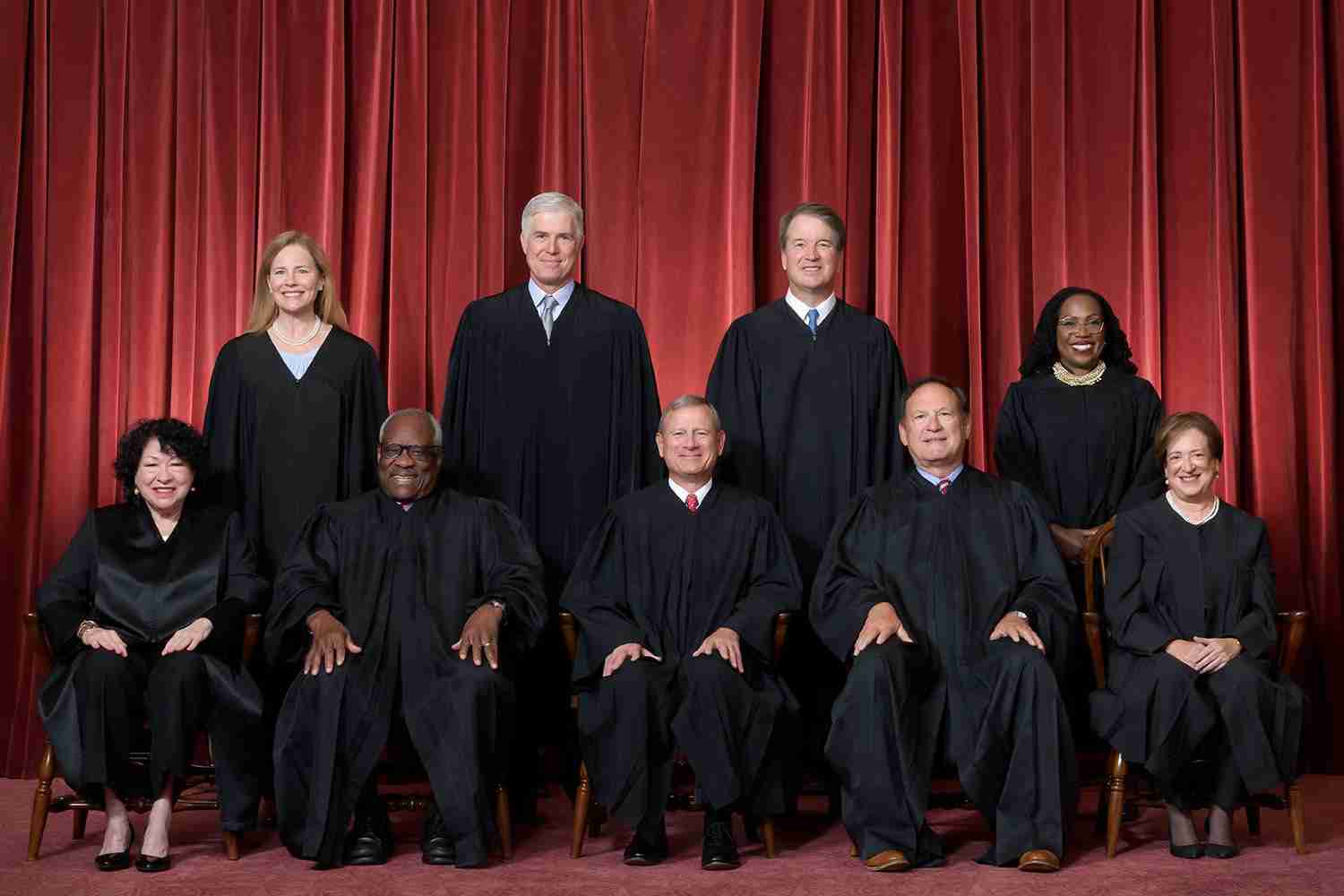
Supreme Court blocks Trump’s bid to federalize Illinois National Guard in Chicago deployment
The U.S. Supreme Court on Dec. 23, 2025, denied the administration’s emergency request to federalize about 300 Illinois (and some Texas) National Guard members for Chicago operations, leaving lower-court injunctions in place while litigation continues.
Key takeaways
- Emergency request denied. The Court issued a 6-3 unsigned order on Dec. 23, 2025, leaving lower-court injunctions blocking the federalization and deployment intact (Supreme Court order).
- No identified legal authority. The Court said the government “failed to identify a source of authority” allowing the military to execute the laws in Illinois, calling such measures “exceptional” (Supreme Court order).
- Three-justice dissent. Justices Alito, Thomas and Gorsuch dissented from the denial, while the majority left the Seventh Circuit and district-court rulings intact (Supreme Court order).
- Political and legal fallout. The White House framed the move as protection for federal personnel and immigration enforcement; Illinois and civil-rights groups called it a pretext to federalize Democratic-led cities (Axios reporting, ACLU-Illinois press release).
Main story
Summary of the order
On Dec. 23, 2025, the U.S. Supreme Court denied an emergency application by the administration to federalize roughly 300 Illinois National Guard members (with related Texas activations), issuing a 6-3 unsigned order that left lower-court injunctions intact. The Court emphasized that deploying the military to execute federal laws within a state is “exceptional” and requires a clear statutory basis (Supreme Court order).
Background and timeline
On Oct. 4, 2025, President Trump invoked 10 U.S.C. §12406(3) to federalize about 300 Illinois National Guard members; Texas Guard members were activated the following day under related authority. The White House said the forces would protect federal officials, property and immigration operations in and around Chicago (Supreme Court order).
Illinois sued in federal court. U.S. District Judge April Perry issued a temporary restraining order blocking the deployment. The Seventh Circuit denied the full stay requested by the government, which then sought emergency relief from the Supreme Court; the high court took over two months before denying that request on Dec. 23, 2025 (Supreme Court order, Axios reporting).
Legal reasoning in the order
The unsigned order left Judge Perry’s finding intact: the federal government had not shown a lawful basis to federalize the Guardsmen under the statute cited. The Court stressed that sending military forces to execute federal law within a state is an exceptional measure that requires a clear statutory grant of authority, which the government did not identify (Supreme Court order).
Importantly, the decision was an emergency denial of relief and did not resolve the merits of the underlying lawsuit; the injunction remains while litigation proceeds in the lower courts (Supreme Court order).
Dissent and split decision
Three justices — Samuel Alito, Clarence Thomas and Neil Gorsuch — publicly dissented from the denial. Their views signal a clear three-justice bloc that would have granted the emergency relief; the unsigned 6-3 order constitutes a notable rebuke for an administration that had prevailed in other emergency appeals earlier in 2025 (Supreme Court order, Axios reporting).
Reactions from officials and advocates
White House: A spokesperson, Abigail Jackson, defended the activation as necessary to enforce immigration laws and protect federal personnel and property, saying it aimed to safeguard officers and facilities (Axios reporting).
“The President is committed to enforcing immigration laws and protecting federal workers from ‘violent rioters,’” the White House said, according to public statements.
Illinois: Governor J.B. Pritzker praised the ruling as protecting state sovereignty and allowing local leaders to manage public safety (Governor Pritzker statement).
Civil liberties groups: The ACLU called the administration’s rationale “manufactured,” applauded the block and said the order prevents roughly 500 Guard members from being federalized across Illinois and Texas (ACLU-Illinois press release, ACLU statement).
National outlets framed the order as part of broader tensions between federal authorities and Democratic-led cities over immigration and law enforcement, with critics warning that such deployments risk becoming tools to assert federal control over local policy disputes (Axios reporting, ABC News report).
What happens next in the courts
This was an emergency denial; the underlying lawsuit continues in the lower courts. For now, the injunction prevents the militarized deployment from proceeding while the litigation proceeds, and the eventual merits decision will determine whether the administration can lawfully federalize National Guard units under the statute invoked (Supreme Court order).
Implications for Las Vegas, Nevada
Nevada officials and Las Vegas stakeholders should note several practical and political implications of the ruling:
- Authority over the Guard: The governor retains control of the Nevada National Guard unless the President properly federalizes units under valid legal authority; this ruling reinforces the need for a clear legal test (Supreme Court order).
- Federal operations in Las Vegas: Federal facilities and personnel in Las Vegas may have to rely more on local cooperation for protection unless courts later permit federalization; the ruling narrows circumstances for unilateral federal activations (Axios reporting).
- Local policing and community response: The block reduces the near-term chance of military-style Guard deployments during federal immigration operations, potentially easing fears in immigrant communities (ACLU-Illinois press release).
- Operational readiness and funding: Legal limits on federal activations without clear authority could affect planning for joint exercises or federal missions; Nevada leaders may push for clearer guidance so commanders know when Guard units can be federalized (Supreme Court order).
Reporting notes and sources
This article is based on the Supreme Court’s unsigned emergency order and related filings, plus reporting and public statements from federal and state officials and civil liberties groups. Primary and supporting sources include the Supreme Court order, Axios reporting, ABC News report, the ACLU-Illinois press release, the ACLU statement, and a Governor Pritzker statement.
Litigation remains ongoing in the lower courts; the legal standards cited by the Supreme Court could shape future disputes over the federalization of state National Guard units and the scope of federal authority in state public-safety operations.