Trump witnesses Cambodia-Thailand peace deal as leaders sign Kuala Lumpur Peace Accord expanding ceasefire
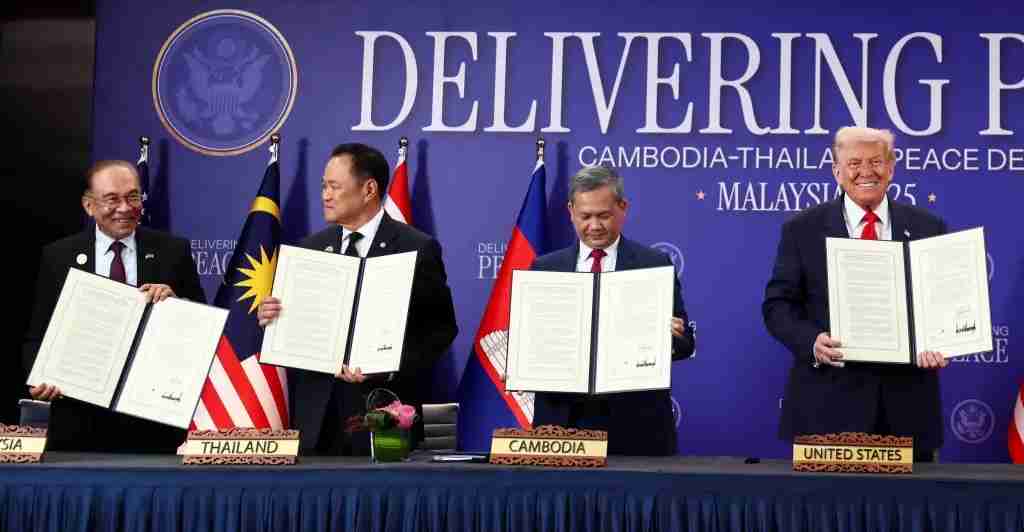
Cambodia and Thailand signed the Kuala Lumpur Peace Accord on October 26, 2025, witnessed by former U.S. President Donald Trump at the ASEAN Summit, pledging a full halt to hostilities, withdrawal of heavy arms and release of prisoners to stabilize the border.
- Kuala Lumpur Peace Accord (signed Oct. 26, 2025) mandates ceasefire, weapon removals and prisoner releases.
- Former President Donald Trump served as a witness and tied economic incentives to continued peace.
- Hun Manet and Anutin Charnvirakul signed the joint declaration; ASEAN will field observer teams.
- The accord has measurable local implications — trade, tourism, critical-minerals supply and humanitarian concerns for places like Las Vegas.
What the Kuala Lumpur Peace Accord says
The expanded ceasefire signed by Hun Manet and Anutin Charnvirakul aims to turn a fragile truce into a durable peace. Under the terms, both sides pledged an immediate and complete cessation of hostilities, withdrawal of heavy weapons from frontline positions, and the release of detainees held since fighting flared in July 2025. (See reporting by Channel News Asia and coverage of the signing such as Fox News.)
Thailand agreed to free 18 Cambodian soldiers detained after early clashes — a step Cambodian leaders described as a sign of goodwill. ASEAN will lead observer teams, including Malaysian representatives, to monitor compliance and report violations, as set out in the joint declaration. (White House joint declaration.)
Background: how the crisis escalated
The border conflict erupted into open fighting in July 2025 over long-running territorial disputes. Military movements, contested claims and skirmishes caused dozens of deaths and forced hundreds of thousands to flee their homes, producing a broad humanitarian crisis across border communities. (Context: 2025 Cambodian–Thai border crisis (Wikipedia).)
Initial mediation produced a truce in July but clashes persisted sporadically. Rising diplomatic pressure through the fall culminated in the expanded agreement at the ASEAN annual gathering in Kuala Lumpur.
International players and mediation
Visible mediation: Former President Donald Trump traveled to the summit and served as a witness. Reports say U.S. diplomatic and economic pressure — including potential tariff threats — helped push both sides toward de-escalation. Trump called the pact “an incredible job for humanity” and linked deeper trade and critical-minerals talks to continued peace. (Channel News Asia.)
Malaysia, under ASEAN chair Anwar Ibrahim, played a facilitative role. Malaysian diplomats helped shepherd talks and will participate in observer teams verifying compliance. Some diplomatic sensitivity surrounded the signing; media reported arrangements made without Chinese officials present to accommodate conditions tied to certain attendees. (Channel News Asia.)
Implementation steps and enforcement
The Kuala Lumpur Peace Accord outlines practical measures intended to prevent a return to fighting. Key elements include:
- ASEAN Observer Team (AOT) to monitor the ceasefire and report violations. (White House document.)
- Removal of heavy weapons and withdrawal of military machinery from disputed areas to reduce escalation risks. (Channel News Asia.)
- Clearing landmines where feasible and restoring humanitarian access to displaced civilians.
- Commitment to peaceful dispute settlement grounded in respect for borders and international law.
Leaders’ statements on the deal
Cambodian Prime Minister Hun Manet said the removal of weapons demonstrates goodwill and sincere intent to follow the joint declaration. Thai Prime Minister Anutin Charnvirakul emphasized rebuilding trust and pledged faithful implementation. Both leaders framed the accord as a first step toward restoring safety and normal life in border communities. (Channel News Asia.)
“An incredible job for humanity,” said Donald Trump, linking the deal to potential trade and critical-minerals cooperation if the ceasefire holds. (Channel News Asia.)
Questions and uncertainties
Despite specific steps, major questions remain:
- Can observers verify compliance across rugged and remote border terrain?
- Will both governments follow through on weapons removal and mine clearance in a timely manner?
- How will local communities be protected while security forces reposition?
- Durable peace will require trust-building, rapid violation-response mechanisms and clear verification protocols.
Documentation and sources
Reporting and official statements are available from regional and U.S. outlets and official briefings:
- Channel News Asia — coverage of the accord and leaders’ comments
- Fox News — coverage of Trump’s role and the signing
- White House — joint declaration text and outcomes
- Background on the 2025 border crisis (Wikipedia)
- Video coverage of the signing ceremony (YouTube)
Implications for Las Vegas, Nevada
Economic and trade links: Improved stability in Southeast Asia can affect U.S. trade and supply chains. The accord could ease cross-border commerce and influence potential U.S.-backed critical-minerals deals — significant for Nevada’s mining sector and Las Vegas-area companies that rely on such supply chains. (Channel News Asia.)
Tourism and community ties: Las Vegas hosts sizable Southeast Asian communities and attracts visitors from Thailand and Cambodia. A sustained peace could revive tourism, benefiting hotels, restaurants and entertainment venues that cater to Asian visitors.
Humanitarian and diaspora concerns: Hundreds of thousands were displaced in the border crisis. Las Vegas’ humanitarian groups and faith communities may face renewed calls for aid or resettlement support; local officials should be prepared to coordinate housing, health, and legal assistance. (Background.)
Politics and public interest: The visible role of former President Trump at the summit and his association with the deal may draw attention among Las Vegas voters and political circles, prompting local debate on the intersection of diplomacy and economic benefit.
Local-watch recommendations
- Economic development: City and state offices should track trade negotiations and any U.S.-led critical-minerals initiatives citing the peace accord. (Joint declaration.)
- Community preparedness: Groups working with Southeast Asian populations should prepare outreach and resources for potential displaced persons or refugees.
- Media and civic monitoring: Local media and civic organizations should follow ASEAN observer reports to assess the accord’s durability and possible local ripple effects.
For direct access to original reporting and official texts, see the sources listed above: Channel News Asia, Fox News, the White House, background context at Wikipedia and ceremony video on YouTube.