
Trump signs Whole Milk for Healthy Kids Act, restoring whole and 2% milk to school lunches and widening milk choices
President Donald Trump on January 14, 2026 signed the Whole Milk for Healthy Kids Act of 2025, allowing whole and 2% (flavored and unflavored) milk in the National School Lunch Program while expanding plant‑based access and allergy training.
Key takeaways
- Whole and 2% milk restored: Schools may serve whole, 2%, 1% and fat‑free milk, including flavored options.
- Easier plant‑based access: Parents can request nondairy alternatives without a doctor’s note; extra state notification steps removed.
- Allergy protections: The law requires food allergy training for school nutrition staff through the Protecting Children with Food Allergies Act.
- USDA action: Immediate guidance issued and proposed rulemaking begun to align child‑nutrition rules with the 2025–2030 Dietary Guidelines.
What the new law does
The Whole Milk for Healthy Kids Act (S. 222) amends USDA regulations stemming from the 2010 Healthy, Hunger‑Free Kids Act. Under the prior rule, school meals programs were limited to fat‑free and 1% milk choices and many districts narrowed flavored options. The new law restores flavored and unflavored whole milk and 2% milk alongside lower‑fat options to better reflect what families drink at home. (See White House statement; FoodBev.)
Plant‑based milk changes
Previously, students generally needed a medical statement to receive nutritionally equivalent plant‑based milks through school programs. The new law lets parents or guardians request plant‑based milk alternatives for non‑medical reasons without a physician’s note and removes prior state notification steps — a change proponents say respects family choice and helps students with lactose intolerance. (See FoodBev; DTN/Progressive Farmer.)
Food allergy training and program changes
S. 222 packages multiple child‑nutrition items, including the Protecting Children with Food Allergies Act, which mandates training for school food workers to prevent, spot and respond to allergic reactions. USDA issued same‑day guidance to nutrition officials and said it will revise Child Nutrition Program rules to reflect the Dietary Guidelines for Americans, 2025–2030, which the department says support full‑fat dairy for certain age groups. (See DTN/Progressive Farmer; USDA press release; FNS implementation guidance.)
Signing ceremony and administration message
The bill was signed at the White House with U.S. Secretary of Agriculture Brooke L. Rollins, HHS Secretary Robert F. Kennedy Jr., USDA nutrition advisers and dairy representatives present. Secretary Rollins said,
“Thanks to President Trump’s leadership, whole milk is back – and it’s the right move for kids, for parents, and for America’s dairy farmers,” calling whole milk a nutrient‑dense option.
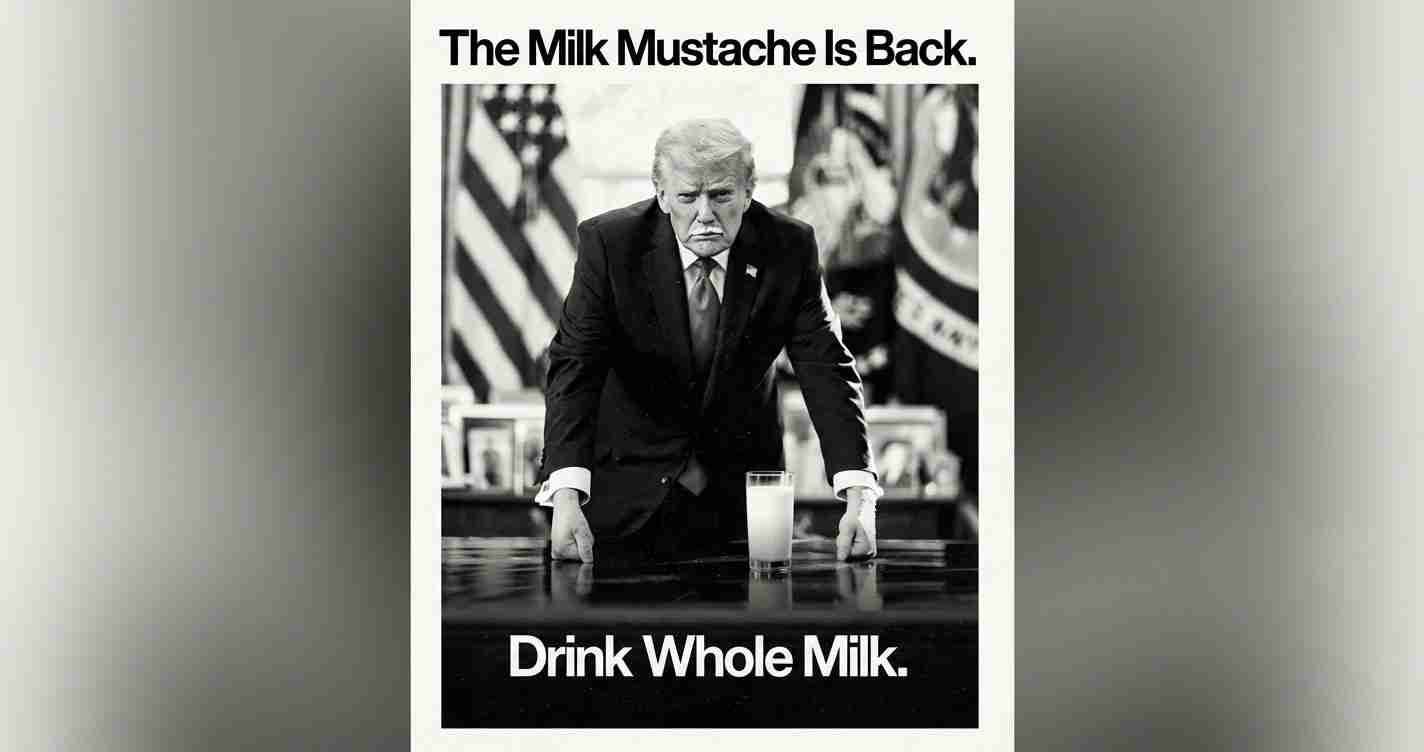
USDA also launched a promotional push, including a short video reviving milk‑mustache imagery to promote the change. (See USDA press release; ABC News.)
Reactions from industry groups and advocates
The dairy industry applauded the law: Dairy Farmers of America called it “a win for children’s health and for America’s dairy farm families,” and the National Milk Producers Federation described dairy as a “nutrition powerhouse.” Plant‑based food groups and allergy advocates also praised aspects of the law for expanding choice and easing access to nondairy options. (See FoodBev; DTN/Progressive Farmer.)
Not all experts agree: some nutrition researchers say evidence is mixed on whether serving whole milk in schools will improve child health overall; health experts remain divided. (See Education Week.)
Policy context: reversing a prior rule
The Healthy, Hunger‑Free Kids Act of 2010 shifted school meals toward lower‑fat dairy; S. 222 reverses that constraint, aligning federal school‑meal policy with recent federal dietary guidance and the administration’s agenda promoting whole dairy and elevated protein. The White House and USDA provided live streams and materials related to the signing and passage. (See White House statement; USDA press release.)
Implementation and next steps for schools
USDA Food and Nutrition Service issued guidance to school nutrition directors on January 14, 2026 and will begin formal rulemaking to update program regulations. That process will include public comment periods and timelines state and local districts must follow before changing menus. Participating schools can offer the wider range of milk options once state agencies implement guidance and updated rules. (See FNS implementation guidance; USDA press release.)
Implications for Las Vegas, Nevada
Economic impact
Nevada’s local dairy supply chain is limited, so Las Vegas schools will likely source most milk from regional or national distributors. Large districts such as Clark County School District (CCSD) must weigh costs, storage and procurement changes; local vendors and regional dairy suppliers could see increased demand if districts alter offerings. (See USDA press release; FoodBev.)
Political consequences
Urban moderate voters may view the change through both health and choice lenses. Local leaders and school boards will face pressure from parent groups and health advocates to balance federal flexibility with local nutrition goals. CCSD and Nevada education officials will interpret USDA guidance for area schools. (See FNS implementation guidance; Education Week.)
Social effects and cultural relevance
Las Vegas’ diverse student population includes many families for whom lactose intolerance is common. Expanded access to plant‑based alternatives without a physician’s note could reduce stigma and make meal choices easier for students with dietary needs. Required food allergy training may also lower on‑campus emergency risks for nurses and staff. Parents who recall old milk‑mustache ads may welcome whole milk’s return, while others will seek clear information about nutrition differences. (See DTN/Progressive Farmer; ABC News.)
Practical applications for parents and schools
Las Vegas families should monitor CCSD and Nevada Department of Education notices for details on when whole milk and nondairy options will appear in cafeterias and whether flavored options will be available. Schools must follow USDA rulemaking and local procurement rules before full roll‑out; parents wanting plant‑based milk should check new district request procedures once published. (See FNS implementation guidance; FoodBev.)
Reporting and sources
This report draws on federal announcements and contemporaneous coverage. Sources:



