
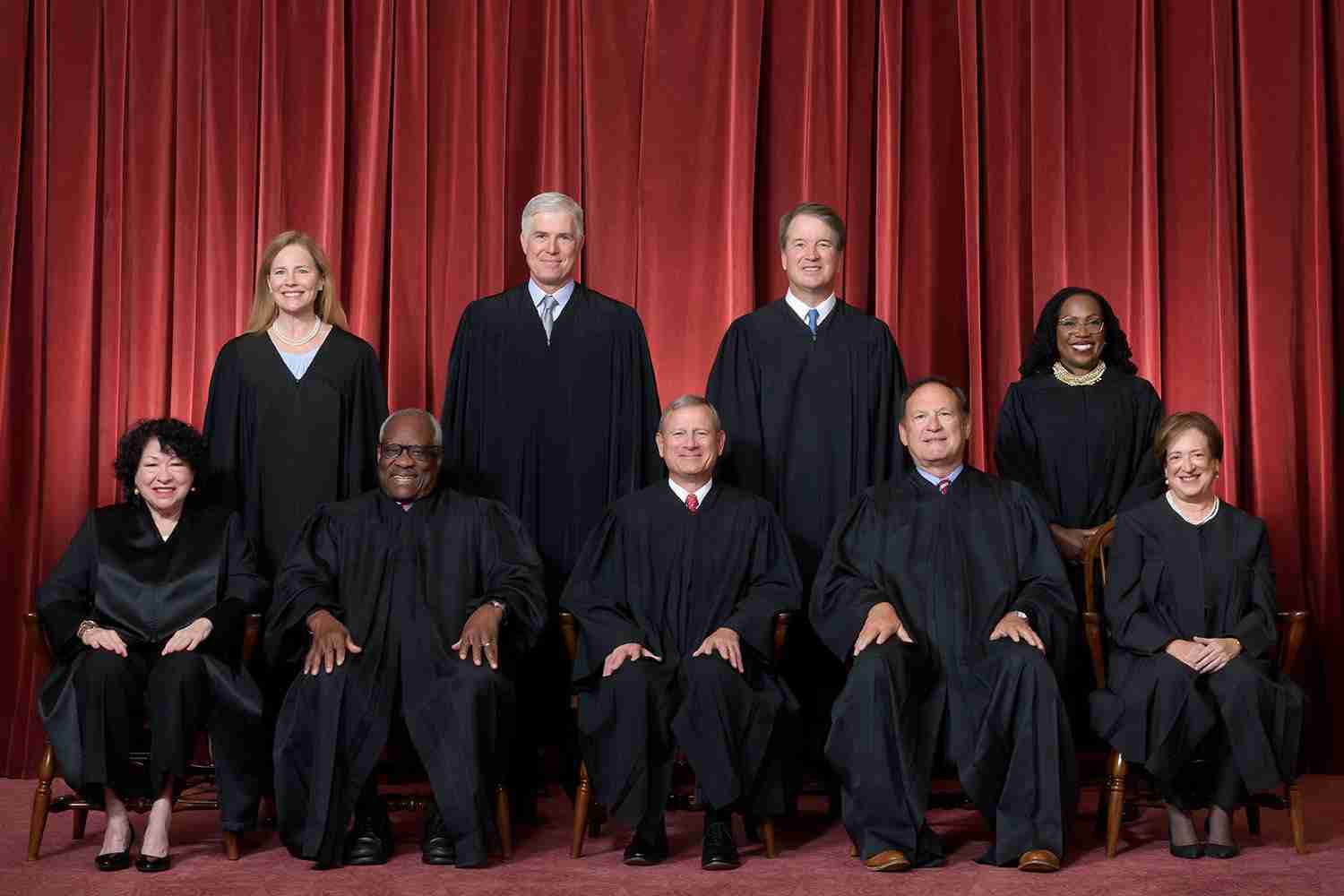
Supreme Court Extends Trump Administration’s $5 Billion Foreign Aid Freeze in High-Stakes Emergency Ruling
The Supreme Court on Friday extended President Trump’s freeze on roughly $5 billion in congressionally approved foreign aid, temporarily keeping funds blocked despite a lower court’s finding the withholding was likely unlawful as the dispute proceeds through expedited review.
Key takeaways
- Emergency stay: The conservative majority granted an emergency appeal that keeps nearly $5 billion in congressionally approved foreign aid frozen while the matter moves forward on appeal (coverage).
- Dissent: All three liberal justices dissented from the emergency order, which is temporary and does not decide the case on the merits.
- Humanitarian disruption: Aid groups report major program interruptions — medical, food and public health projects have been affected (GV Wire).
- Constitutional stakes: The core dispute raises lasting separation-of-powers questions about presidential authority over spending and Congress’s power of the purse (analysis).
Background: how the freeze began
President Trump invoked emergency presidential authority to withhold almost $5 billion in foreign assistance that Congress had approved. That kind of unilateral withholding at this scale is rare. Critics argue the move overstepped constitutional limits, since the Constitution vests appropriations power in Congress, while supporters contend the president has broad authority over foreign policy and may delay spending for national security reasons — a point noted in reporting by The Daily Record and the Los Angeles Times.
District court ruling and early appeals
U.S. District Judge Amir Ali reviewed the administration’s withholding decision and found it was likely unlawful, ordering the funds released. The administration immediately appealed. A federal appeals court in Washington initially declined to pause Judge Ali’s order; the administration then sought emergency relief from the Supreme Court.
Chief Justice Roberts’ stay and the Supreme Court’s extension
On Sept. 9, Chief Justice John Roberts issued an administrative stay that paused Judge Ali’s release order while appeals proceeded. On Friday the full Court extended that stay after granting the administration’s emergency appeal, allowing the freeze to remain in place pending expedited review. The court’s conservative majority acted without a full opinion; The Daily Record reported the procedural posture, and the Los Angeles Times noted the three dissenting justices.
Emergency appeals: a fast track with limits
The administration has relied on emergency appeals to secure rapid relief from the high court. These orders are designed to handle urgent legal questions but do not resolve the underlying legal disputes. The Supreme Court often issues short orders in such cases — which leaves significant legal questions unsettled until the full case is briefed and argued (reporting).
Humanitarian impact and international concerns
Relief organizations warn the freeze has disrupted programs funded by the blocked money: medical clinics, food deliveries and vaccination campaigns in multiple countries have been slowed or halted. Aid groups say these interruptions can have life-or-death consequences and may damage U.S. standing abroad, creating longer-term instability in fragile regions (GV Wire, LA Times).
Legal questions remain: constitutional controversy at the center
At the heart of the litigation is a separation-of-powers conflict: how far may the president reach in withholding funds that Congress has appropriated? The Constitution vests appropriations power in Congress, while the president controls foreign policy. The emergency order leaves open a spectrum of outcomes — from narrow, case-specific authority to broader precedents that could reshape executive-legislative relations (coverage, analysis).
Political stakes and recent history
This dispute is part of a broader pattern of emergency appeals tied to major executive actions. Earlier in 2025 the Court rejected a bid to freeze nearly $2 billion in foreign aid, a precedent noted by GV Wire. Lawmakers across the aisle are watching because any broad ruling could alter fiscal oversight and national-security decision-making.
What the court left unsaid
Emergency orders are often terse. The Court’s extension provided little guidance about its eventual ruling and issued no full written opinion, leaving open a wide range of possible outcomes — from narrow carve-outs to sweeping rulings that redefine spending authority (report).
Implications for Las Vegas, Nevada
Economic impact
Direct budget effects in Las Vegas are limited because this concerns foreign aid rather than domestic spending. Still, federal policy shifts can ripple through global markets and supply chains. Nevada firms that export goods or serve international clients could see indirect effects if global instability grows due to sudden aid changes. Local nonprofits and universities partnering on global health or development research may face delays if federal aid pathways change (GV Wire).
Political consequences
Urban and moderate voters in Nevada may view the Court’s action through a checks-and-balances lens. The state’s congressional delegation and local leaders could be prompted to clarify positions on executive power and congressional budget authority. This case may become a talking point in upcoming campaigns, especially around national security and fiscal oversight.
Social effects
Las Vegas is home to immigrant and refugee communities with ties to countries that receive U.S. aid. A prolonged freeze could heighten concerns about stability in those countries and the speed of humanitarian responses. Local resettlement and aid organizations that rely on federal or federally linked funding may face planning uncertainty (GV Wire).
Cultural relevance
As a globally connected tourism and convention hub, Las Vegas institutions and partners may be sensitive to shifts in U.S. foreign policy and humanitarian reputation. Changes in perceived U.S. commitments abroad could affect participation in international events and conferences.
Practical applications for residents
- Volunteers and donors: Expect possible delays in funding flows and program schedules; adapt to revised timelines.
- Businesses: Companies with international contracts should monitor federal policy and consult trade advisers if aid disruptions affect supply chains.
- Voters: Those concerned about the balance of power between branches may treat this case as a test of constitutional limits and should consider it when evaluating candidates and policy priorities.
Sources and further reading
– The Daily Record: Supreme Court extends Trump frozen foreign aid
– Los Angeles Times: Supreme Court keeps in place Trump funding freeze that threatens billions of dollars in foreign aid
– GV Wire: Supreme Court rejected earlier bid to freeze nearly $2 billion in foreign aid



