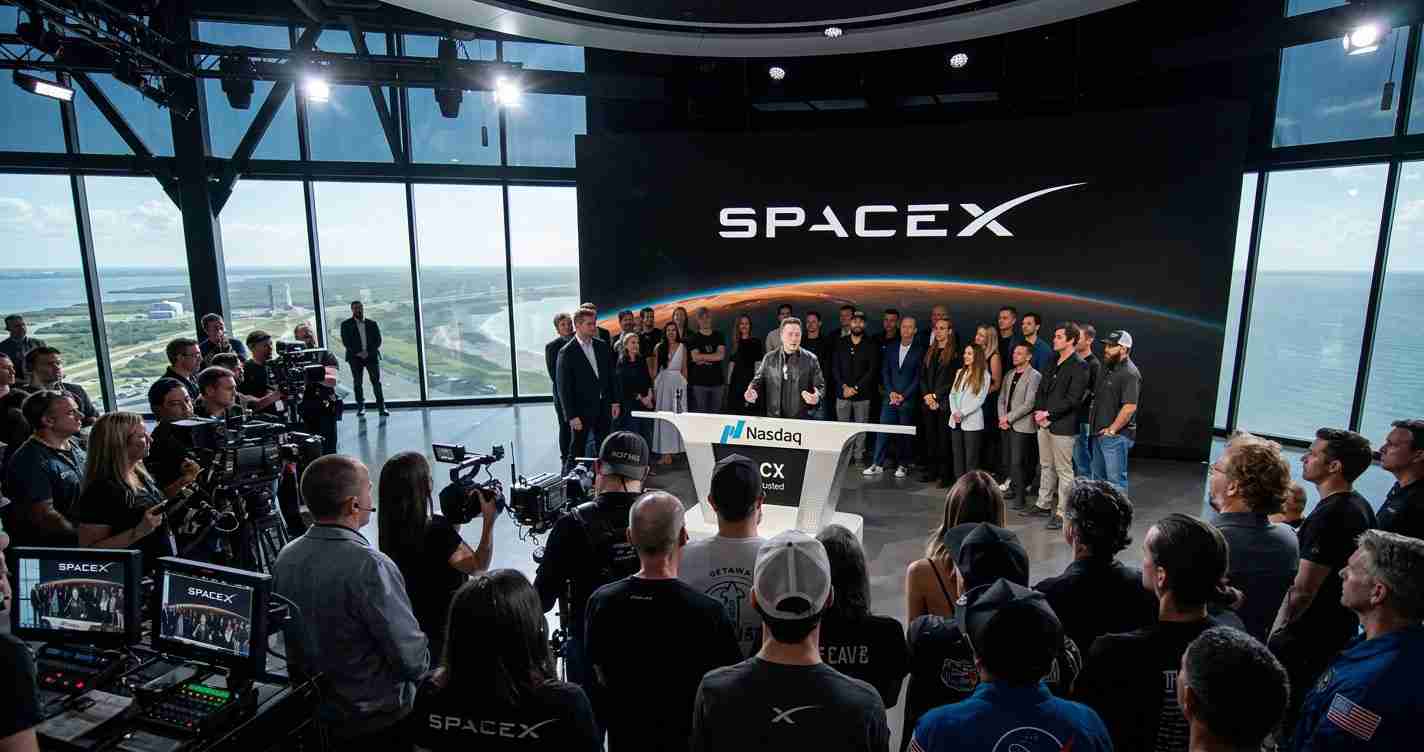
NEW YORK, June 13 (Our New York News) — SpaceX’s first day as a public company turned a $75 billion stock offering into a market value above $2 trillion, according to IPO terms announced by the company and Nasdaq trading data, while Forbes and Bloomberg wealth estimates placed founder Elon Musk above $1 trillion in net worth.
The rocket and satellite company began trading June 12 on the Nasdaq under the ticker SPCX. The offering was priced at $135 a share and raised $75 billion, according to SpaceX’s announced IPO terms. Shares opened around $150, climbed as high as about $176.50 during the session and closed near $161, according to Nasdaq market data cited in market coverage of the listing.
Those trading levels moved the company well above its IPO valuation, which was reported at roughly $1.77 trillion to $1.8 trillion based on the offering price. At the closing price near $161, the public market valued SpaceX at more than $2 trillion.
The listing immediately changed the paper wealth of SpaceX’s largest and best-known owner. Forbes and Bloomberg estimates put Musk’s total net worth at roughly $1.05 trillion to $1.11 trillion after the debut, making him the first person those wealth trackers have valued above $1 trillion.
The value of Musk’s SpaceX holdings depends on the share count, options treatment and market price used. Forbes-linked calculations and market-price estimates placed his SpaceX stake at about $688 billion at the IPO price. Other estimates put it around $690 billion, while calculations using higher trading prices placed the stake in a range from about $766 billion to about $800 billion.
Those figures are not cash proceeds. They are estimates tied to stock and options values, and they can rise or fall with the share price. They also depend on ownership details that are not fully settled in the public summaries reviewed for this article.
Records and reports reviewed for this story point to a major gap for investors: the exact ownership and voting structure could not be independently reconciled from the source material provided. Several accounts described a dual-class or special-share structure that leaves Musk with outsized control, but the reported figures conflict. Some summaries described Musk as owning about half the company, while others put his ownership at 42% or 38%. One account said he held about 85% voting power. The underlying prospectus or share-count filing was not included in the reviewed material.
The same evidence trail shows a wide gap between public-market enthusiasm and at least one independent valuation. Morningstar analysts, described in AP and PBS accounts as independent of investment-banking fees, estimated SpaceX’s value at about $780 billion and called the IPO “significantly overvalued.” That estimate was less than half the IPO valuation and far below the market value implied by the first-day close.
SpaceX was founded in 2002. In comments reported by The Associated Press, Musk said the company was going public to fund plans for satellites and data centers in space and, eventually, a human settlement on Mars.
For New York’s financial markets, the SpaceX listing was notable not only for its size but for how quickly public trading reset the company’s value. Investors who bought at the $135 IPO price had a first-day gain based on the close near $161. Investors who bought near the intraday high faced a lower value by the end of the session.
The company’s debut also created a new public benchmark for a business that had long been valued in private markets. The first public session showed strong demand for the shares, but the available records also show unresolved questions about control, valuation methods and the durability of wealth estimates tied to a volatile stock price.