Ransomware suspected as state, federal teams work to restore systems; officials confirm “some data” was taken but stress the probe is ongoing
Nevada (Times Media Service) – A Nevada cyber attack detected Sunday forced Nevada to close state offices, take websites and phone lines offline, and cancel many in-person services across the state, officials said Wednesday as recovery work continued with help from federal partners. Emergency services were not affected, but residents reported delays at the DMV and other agencies while investigators assess the scope of the breach.
What we know about the nevada cyber attack
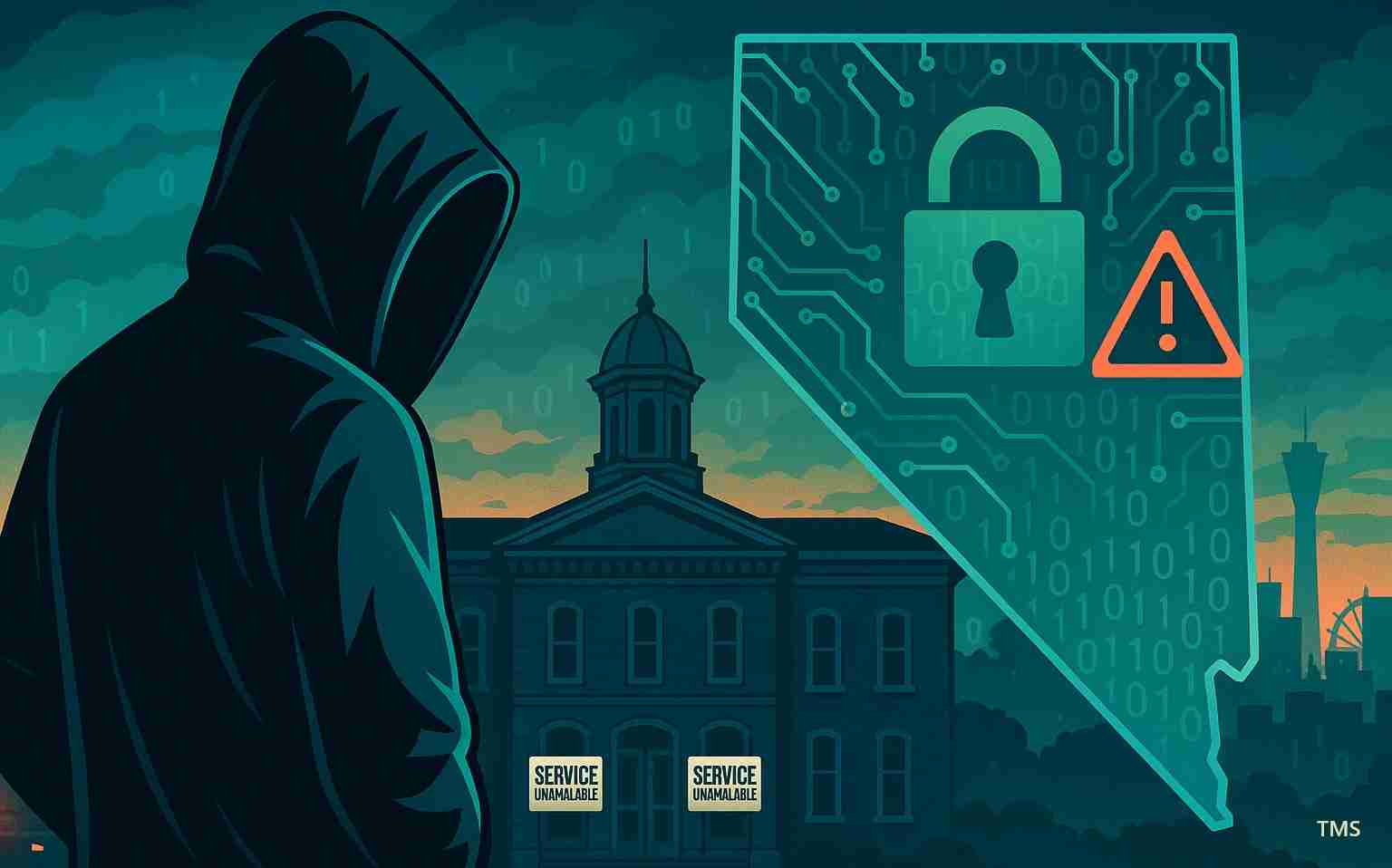
State leaders say the nevada cyber attack began early Sunday and triggered a precautionary shutdown of systems across multiple agencies. The governor’s office initially described a “network security incident,” then confirmed at a Wednesday briefing that malicious actors removed “some data” from the state’s network. Officials called the situation “fluid” and said analysis to pinpoint what was taken is ongoing.
On Monday and Tuesday, most in-person services were paused while teams worked around the clock to restore systems. By midweek, some websites and phone lines were still down or slow to respond. The governor’s office said thousands of state employees lost on-site work time during the outage.
At first, officials said there was no evidence of compromised personal information. By Wednesday, they confirmed some data was moved “outside the network,” but they have not determined whether any Nevadan’s personal information was included. An active criminal investigation led by state and federal partners limits what they can share.
Which state services were hit — and what’s open
The nevada cyber attack knocked out or slowed a range of state services, from public websites to office phone lines. The DMV closed statewide “until further notice,” canceling appointments and suspending online transactions; fees tied to the outage will be waived and canceled appointments will be honored as walk-ins once offices reopen.
Human services leaders warned of delays in processing new clients but said they’re working to prevent disruptions in benefits like SNAP. Emergency services, including 911, never went offline, according to officials. The Department of Employment, Training and Rehabilitation (unemployment) also reported normal operations.
Some agencies found workarounds to keep critical operations going while core systems were down. The state’s main portal and several agency pages were intermittently unreachable through midweek as restoration continued.
Was it a ransomware attack?
By Wednesday, state officials characterized the incident as a ransomware attack, with investigators and third-party forensics teams still piecing together the attackers’ methods. “The process of analyzing the information to determine exactly what was taken is complex, methodical and time-consuming,” said Tim Galluzi, executive director of the Governor’s Technology Office. He pledged to take “appropriate steps” if sensitive personal data is confirmed impacted.
The nevada cyber attack fits a pattern seen around the country, where ransomware groups have disrupted city and state systems, forcing closures and costly recovery. Analysts note financially motivated gangs often seek to exfiltrate data before encrypting networks to increase pressure. The state has not named a culprit.
Earlier reports compared the Nevada outage to past public-sector attacks that hampered services in Oregon and Baltimore. Those cases illustrate how even brief disruptions can ripple through emergency dispatch, permitting, and benefit programs.
Impact on Las Vegas: what residents are seeing
In Las Vegas, the nevada cyber attack has meant long waits, canceled DMV appointments, and confusion about which counters are open on a given day. People who arrived for scheduled visits this week found shuttered offices and “offline” signs on doors. The DMV says missed appointments will be honored as walk-ins when it reopens.
Residents who rely on state assistance told local reporters they fear delays in benefits and worry about the safety of their personal information, given officials’ acknowledgment that data left the network. That uncertainty has added stress for families counting on timely approvals.
State officials emphasized that core public safety functions remained intact, and unemployment services continued. Still, for Clark County families, the nevada cyber attack has been disruptive—especially for those needing license renewals, title work, or in-person certifications this week.
How the state and feds are responding
Nevada called in federal help early. The Cybersecurity and Infrastructure Security Agency (CISA) said it is providing “real-time incident response” with FBI and other partners to restore the most critical services first. That multi-agency push is designed to stabilize systems, collect evidence, and guide safe recovery.
Officials said the active investigation restricts technical details they can release. A Monday memo noted the “network security incident” continued to affect availability of state technology systems and warned of intermittent website and phone issues during recovery. The nevada cyber attack also prompted alternative workflows at some agencies to serve the public.
State leaders urged Nevadans to monitor official channels for reopening timelines and service updates as systems come back online in phases. Press briefings are being held to answer resident questions and set expectations for the days ahead.
What Nevadans should do now
While the investigation continues, cybersecurity officials recommend basic steps: use strong, unique passwords; enable multi-factor authentication; and keep software updated. If the state later confirms exposure of personal information, follow guidance it provides on credit monitoring, fraud alerts, and replacing compromised documents. The nevada cyber attack underscores why these habits matter.
Residents with urgent needs (like car registrations) should watch for agency-specific announcements about walk-in periods and fee waivers once counters reopen. Keep appointment confirmations handy; the DMV says canceled slots will be honored after systems are restored.
Finally, bookmark official state and county sites and local outlets for verified updates. Avoid clicking on unsolicited emails or texts about the nevada cyber attack, which criminals sometimes exploit to run phishing scams during high-profile incidents.
Reaction and local impact: what leaders, agencies are saying
At Wednesday’s briefing, officials reiterated they won’t speculate on stolen data until forensics work is complete. “Speculation… before we have definitive proof would be irresponsible,” Galluzi said, adding that the state would notify and assist citizens if sensitive information is confirmed compromised. That caution reflects the stakes of the nevada cyber attack for households and businesses.
Agency heads described workarounds to keep payments and licensing moving where possible, while acknowledging lingering slowdowns. Some offices have already restored partial functionality; others remain offline as engineers validate systems. For many Las Vegans, the nevada cyber attack has turned routine errands into a waiting game.
CISA framed the response as a unified effort across governments and private-sector partners. The goal is to bring critical services back online safely, then harden systems to reduce the chance of repeat outages.