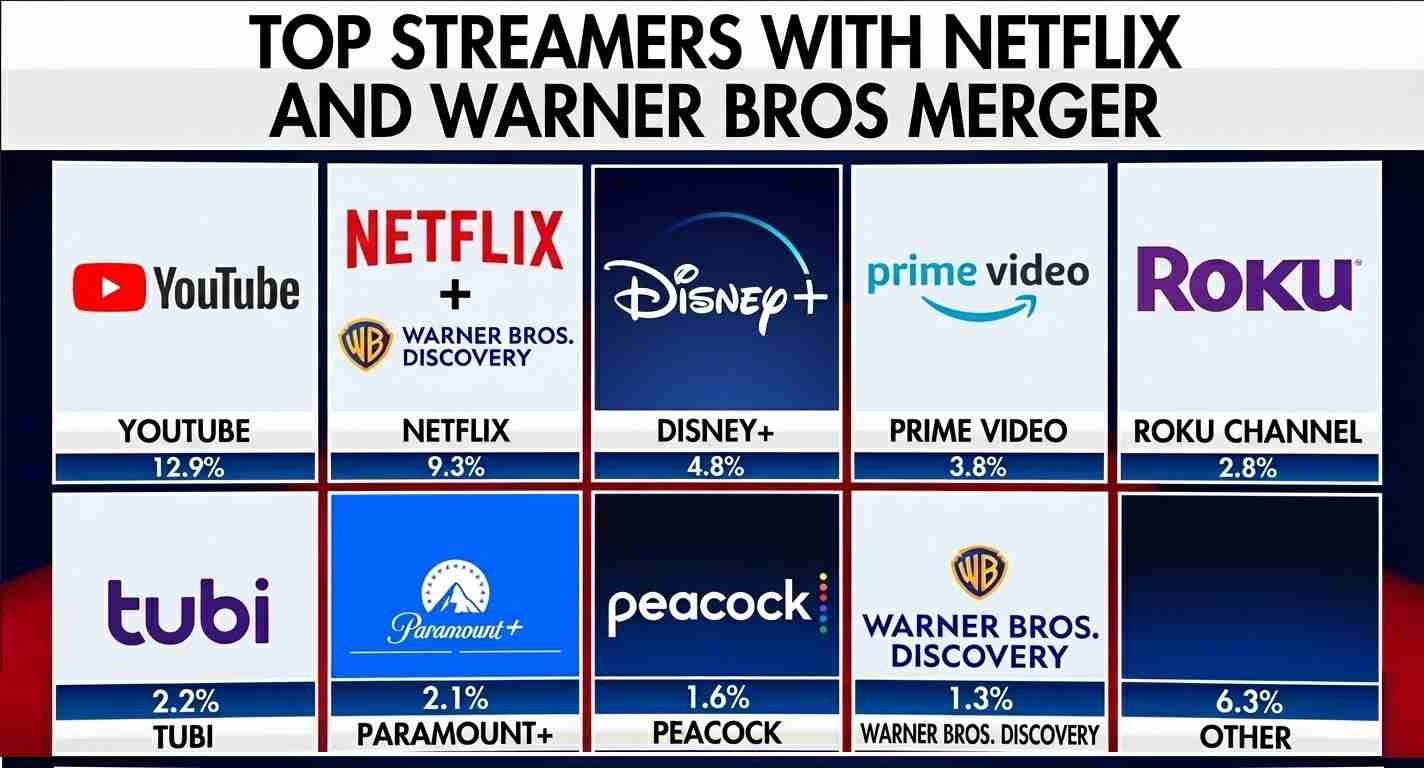
Trump administration reportedly skeptical of Netflix Warner Bros. $72B deal that would fold HBO Max and DC into Netflix
Los Gatos, California (Times Media Service) – Netflix has agreed to buy Warner Bros. Discovery’s studio and streaming assets in a roughly $72 billion equity deal, but approval faces intense antitrust scrutiny — notably reported skepticism from the Trump administration and other regulators.
- Major transaction: Netflix’s offer values Warner’s studio-and-streaming half at about $72 billion in equity (~$82.7 billion including debt).
- Split strategy: Warner Bros. Discovery would spin off cable and news (including CNN and Discovery) into a separate company excluded from the deal.
- Regulatory hurdle: Reports highlight skepticism from the Trump administration and anticipated worldwide antitrust review, with political context favoring rivals such as the Ellison-backed Paramount.
- Industry stakes: The deal would add HBO, HBO Max, DC Studios and major franchises to Netflix’s catalog, reshaping competitive dynamics for studios, theaters and licensing.
Deal terms and timing
Reports indicate Netflix’s acquisition values the studio-and-streaming assets at roughly $72 billion in equity, with an enterprise value near $82.7 billion including debt. Warner Bros. Discovery shareholders would reportedly receive about $27.75 per share in a cash-and-stock mix.
Warner plans a two-way split in 2026 to separate the studio-and-streaming business from a new company—often referred to as Discovery Global—which would retain cable and news assets such as CNN and TNT Sports. Netflix expects a close about 12 to 18 months after the announcement, subject to regulatory approval.
What Netflix would gain
If approved, Netflix would acquire a vast library and franchise portfolio, reportedly including Warner Bros. Motion Picture Group, Warner Bros. Television, HBO and HBO Max, DC Studios (Batman, Superman and other characters), and franchises such as Game of Thrones and Harry Potter.
Analysts note this would mark a strategic shift for Netflix—moving from a reliance on originals and hit-driven cycles toward owning decades of “evergreen” IP that can reliably populate catalogs and licensing opportunities.
Strategic impact on the industry
At scale, the combination would create one of the world’s largest entertainment companies, bringing together two of the top global streaming reaches under one owner. Remaining major studio competitors would include Disney, Paramount, Sony Pictures and Universal.
Paramount—now linked with Skydance and backed by the Ellison family—was a reported strong bidder earlier and remains an influential rival in strategic and political discussions.
Competitive bidding and break-up fee
Reports say Netflix beat Comcast and Paramount after a months-long auction. Netflix’s offer reportedly combined cash and stock and included a large break-up fee, which would force Netflix to pay billions if regulators block the deal—a sign Netflix expects intense review and prepared to move aggressively.
Regulatory and political outlook
U.S. and foreign regulators are expected to scrutinize the transaction closely. Antitrust review will likely probe market power in streaming, control of premium content, effects on theaters, licensing markets and creative talent bargaining.
Politics: Much reporting emphasizes reported skepticism from the Trump administration and commentators who point to enforcement trends and political ties favoring other buyers such as the Ellison family at Paramount.
Industry and labor responses
Creative guilds and some producers have voiced concern that a combined Netflix–Warner could reduce demand for diverse and mid-budget projects. The Producers Guild of America and anonymous producers have urged lawmakers to seek safeguards for jobs, theatrical releases and creative diversity.
Economists warn smaller streamers and international broadcasters could find it harder to license Warner content, potentially prompting Netflix to raise prices, expand ad tiers or tighten password sharing to offset acquisition costs.
Corporate messages
Netflix: Co-CEO Ted Sarandos framed the deal as an opportunity to bring beloved stories together and continue adding value for subscribers.
Warner Bros. Discovery: Executives say the sale follows heavy bidding and aims to let Warner stories reach global audiences, while separating cable and news assets into a different company.
What it could mean for consumers and theaters
If regulators approve the deal, subscribers could find HBO shows, DC movies and Warner library titles available inside Netflix’s app—simplifying access for some viewers but reducing content competition. Netflix has pledged to keep theatrical releases, which may placate theater owners initially, but analysts warn long-term windowing strategies could favor streaming-first releases for many titles.
Implications for Las Vegas, Nevada
Economic impact: Las Vegas benefits from production and tourism tied to major Warner releases and HBO shows; integration could shift where projects shoot and how fan events are licensed.
Jobs and local businesses: Consolidation can produce overlap and job cuts in some roles, affecting crews, post houses, caterers and vendors — though a larger Netflix might greenlight major projects that hire locally.
Politics and culture: Nevada officials and voters monitor antitrust outcomes closely because changes in release strategies, licensing and franchise control can influence conventions, residencies and local fan events.
Reporting note and sources
This article draws on public reporting and industry analysis of the proposed Netflix–Warner transaction. Key sources include The New Indian Express, UrbanHollywood411, Illustrated Daily News and The Condia. Public statements from U.S. regulators or the Trump administration on this specific deal remain limited in available reporting.