Federal judge blocks Trump from sending National Guard to Portland, cites 10th Amendment limits on presidential power
A federal judge has permanently barred former President Trump from federalizing Oregon’s National Guard for Portland, ruling the order violated the 10th Amendment and exceeded presidential authority — a decision that takes effect immediately and is likely to be appealed.
Key takeaways
- Permanent injunction: Judge Karin Immergut issued a 106-page opinion finding the federalization unconstitutional.
- 10th Amendment central: The court held federal law thresholds for overriding state Guard control were not met.
- Parties: The case was brought by the City of Portland and the State of Oregon, later joined by California.
- Next steps: The ruling takes effect immediately and is expected to be appealed to the 9th Circuit.
What the ruling says
U.S. District Court Judge Karin Immergut concluded the federalization order exceeded the president’s authority under the Constitution and applicable federal statutes. The opinion emphasized the 10th Amendment and the balance between federal power and state sovereignty over the National Guard. The judge issued a 106-page opinion and a permanent injunction finding the president’s order unconstitutional (see OPB; City of Portland federal filings).
“This ruling does not mean that the President can never deploy the National Guard to Oregon, or to any other location, if conditions on the ground justify the Guard’s intervention,” the judge wrote — but found the evidence here insufficient (OPB).
Background of the dispute
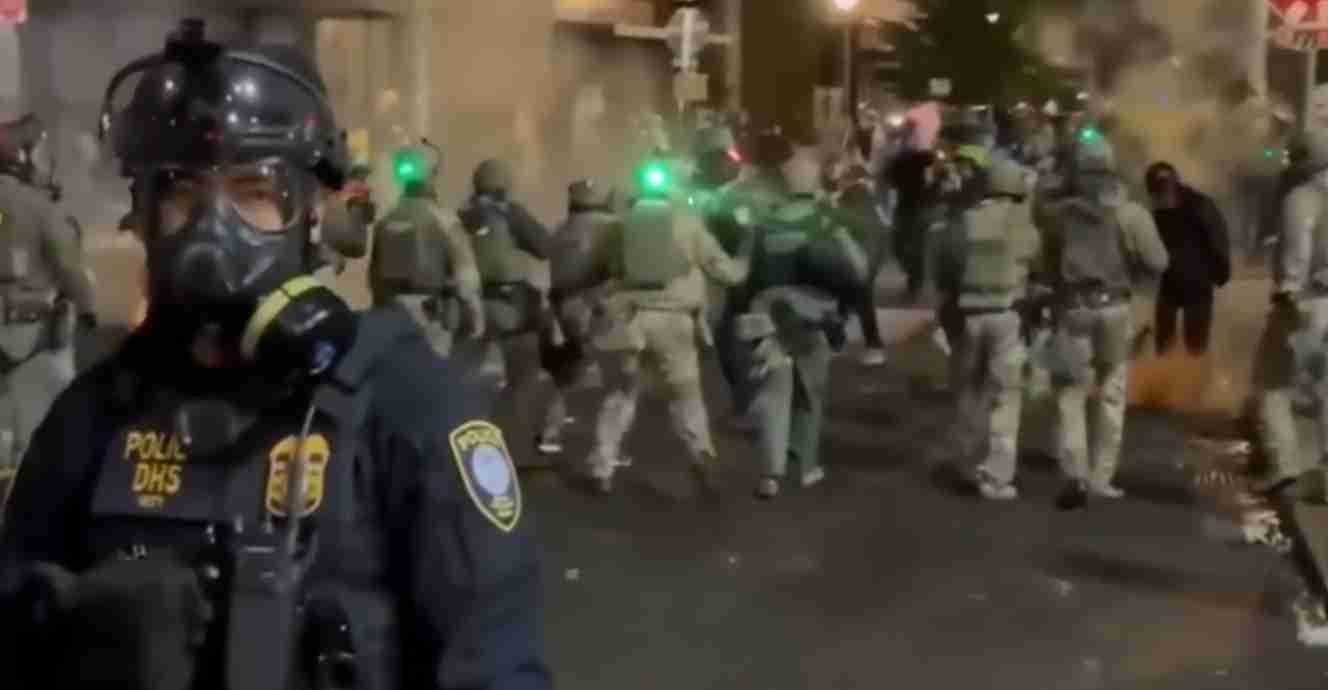
The dispute began when President Trump announced plans to federalize the Oregon National Guard to protect federal property amid months of protests. The administration and the Department of Justice argued threats to federal property and public safety justified federal intervention. Portland and Oregon argued protests had largely become peaceful, that local authorities could manage public-safety needs, and that unilateral federalization without meeting statutory thresholds would intrude on state authority (see OPB; Portland filing).
Legal reasoning: the 10th Amendment at the center
Judge Immergut’s analysis centered on the 10th Amendment, which reserves to the states powers not delegated to the federal government. The court reviewed federal statutes governing activation of the Guard — including authorities to suppress insurrection or aid civil authorities — and concluded those narrow legal conditions were not satisfied in this case (OPB; Portland filing).
How the court weighed evidence
The court acknowledged some violent incidents near the federal ICE building but described them as “isolated and sporadic,” not rising to the level of emergency required by federal law to override state control. Portland and Oregon presented evidence that local police and the Oregon National Guard under state control could handle the disturbances. The administration’s evidence did not persuade the court that federalization was legally necessary. The ruling is notable as the first trial to focus on the legality of federalizing the Guard itself, rather than only on troop conduct once deployed (OPB).
Reactions from officials and legal community
Oregon Attorney General Dan Rayfield called the decision “a check on presidential power.” Portland’s mayor said the ruling affirmed the city’s legal position and protected the rule of law. California Attorney General Rob Bonta criticized the administration’s approach as a “militarized vision” of law enforcement and welcomed the court’s rebuke (OPB).
Legal scholars expect an appeal to the U.S. Court of Appeals for the 9th Circuit, where courts will reexamine statutory text, precedent, and constitutional principles governing federal-state relations.
Why this matters: Presidential power limits and future crises
Grounding the decision in the 10th Amendment reinforces that presidential authority to federalize state forces is not unconstrained. The ruling signals that federal responses to civil unrest or threats to federal property must rest on clear statutory and constitutional foundations. Courts may use this opinion as a reference point in future disputes over domestic deployments of state-controlled forces (OPB).
Practical details: injunction, scope and limits
The injunction takes effect immediately and halts the specific federalization effort in Portland. It is not a blanket ban on all federal National Guard deployments: future federalization would need to meet the legal standards the court identified. The opinion notes this is the fourth time Judge Immergut has blocked a similar deployment order in related litigation (Portland filing).
Implications for Las Vegas, Nevada
Economic and public safety concerns
- Local and state officials in Las Vegas will remain the primary responders for protests and unrest unless federal law clearly authorizes intervention.
- For businesses and tourism, the decision reduces the risk of sudden federal military-style deployments that could disrupt events and visitor perception.
Political consequences
- The ruling may shape Nevada debates about federal intervention in local unrest, with officials using it to argue for state control or better federal-state coordination.
- As a swing-state region, Las Vegas voters may view the case as a test of checks and balances on federal authority.
Social and community impact
- Civil-rights groups and activists may see the decision as protecting local oversight of protests and policing.
- Residents concerned about civil liberties may feel reassured that federal power to intervene is not open-ended.
Cultural relevance
Las Vegas’ emphasis on local control of major events aligns with the court’s emphasis on state sovereignty. The ruling may prompt local leaders to review mutual-aid agreements and emergency plans to clarify use of state and federal resources.
Practical applications for local officials
- Review statutes and protocols governing Guard activation and federal coordination; establish clear triggers and legal review steps.
- Strengthen training and resourcing for local law enforcement to reduce the likelihood federal intervention will be necessary.
Sources and further reading
Full coverage and primary documents are available from:
- Oregon Public Broadcasting coverage and analysis
- City of Portland federal filings and Judge Immergut’s order
Preserved facts and source URLs above reflect the reporting and filings related to the case.