
Shutdown Threat Could Delay Social Security COLA 2026 Announcement as BLS Furloughs Loom
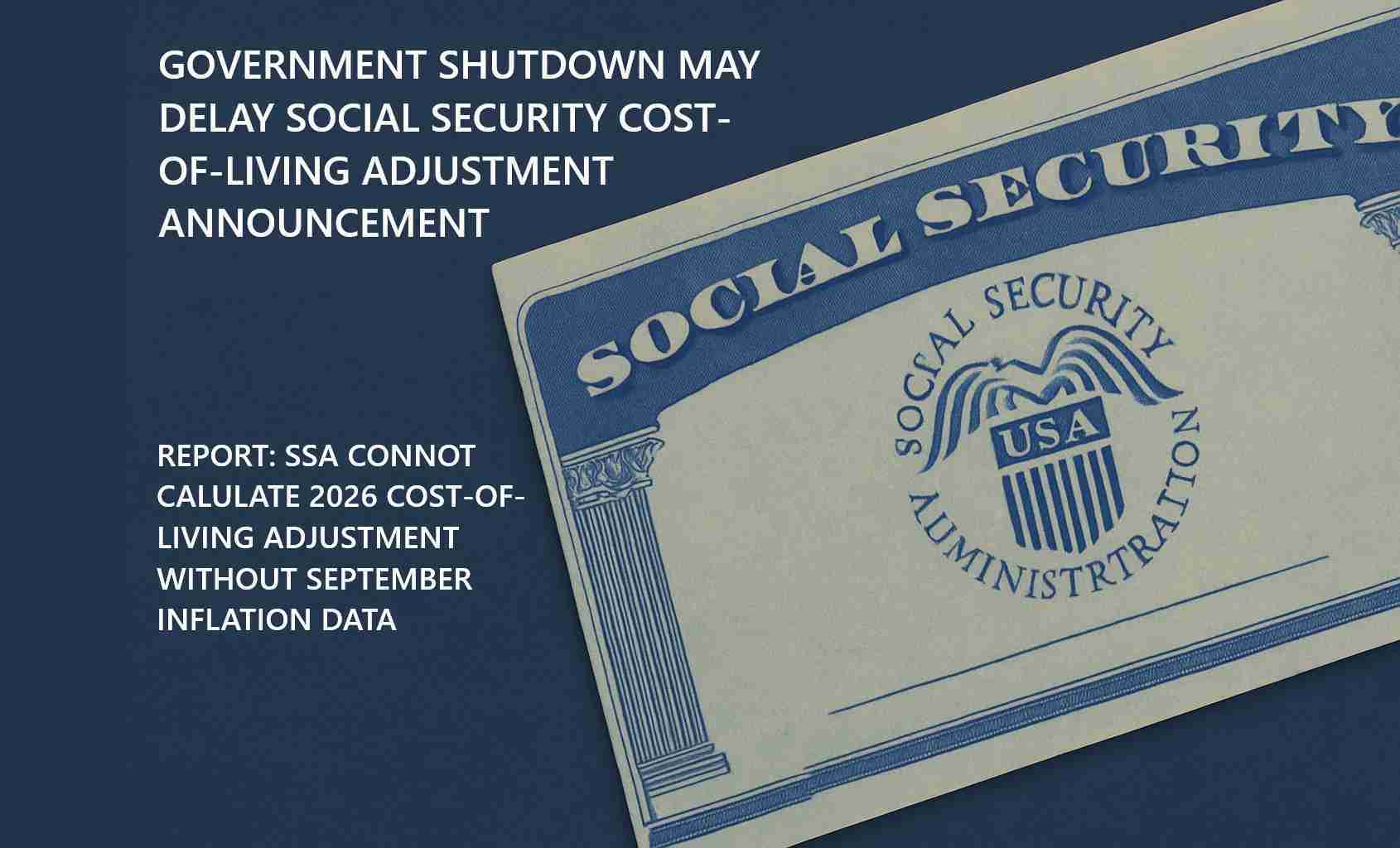
A potential federal shutdown in October 2025 could delay the Bureau of Labor Statistics’ September CPI release and, in turn, postpone the Social Security Administration’s usual mid‑October 2026 COLA announcement, though benefit payments themselves would continue uninterrupted.
Key takeaways
- The SSA needs September CPI data from the BLS to finalize the 2026 COLA; if the BLS is furloughed, the mid‑October announcement could be delayed. (Sources: Fox Business, AARP)
- Analysts currently estimate about a 2.7% COLA for 2026, roughly a $54 monthly increase for the average retired-worker benefit — but final figures depend on September CPI. (Sources: Fox Business, Globe Charter)
- Regular Social Security payments would continue even if the announcement is delayed; benefit funding is separate from annual appropriations. (Sources: Fox Business, Globe Charter)
How the COLA is calculated and why September matters
The COLA uses the Consumer Price Index for Urban Wage Earners and Clerical Workers (CPI‑W). The Social Security Administration compares the average CPI‑W for the third quarter (July, August, September) with the same period a year earlier. If that three‑month average rises, benefits increase the following year to help keep pace with inflation.
September is decisive because the BLS releases the September CPI in mid‑October; that number completes the third‑quarter average the SSA must use by law to calculate COLA.
BLS furlough risk and potential CPI release delay
A government shutdown in October 2025 could furlough most BLS staff and push back the Consumer Price Index release for September. The Department of Labor’s contingency plan warns that
“economic data releases, including the September CPI, will likely be delayed if the lapse is prolonged.”
(Source summary reported by AARP).
What a delay would look like
If the CPI release is delayed, the SSA cannot make its usual mid‑October COLA announcement. This would mostly affect timing and certainty — not benefit payments. Social Security checks are funded through payroll taxes and dedicated trust funds and are not dependent on the annual appropriations process. Payments are expected to continue on schedule even if the COLA announcement is postponed. (Sources: Fox Business, Globe Charter.)
The scale of the expected change
Analysts using available inflation data before September estimate a 2026 COLA of about 2.7%. On average, that would increase retired‑worker benefits by roughly $54 per month, from about $2,008 to $2,062. These are estimates made before the final September CPI and the official COLA could be higher or lower once the BLS releases the full data. (Sources: Fox Business, Globe Charter.)
Past precedent: 2013
This situation is not without precedent. During the federal shutdown in October 2013, agencies including the BLS were affected and the SSA’s COLA announcement was delayed — demonstrating how a lapse in funding can push back standard government schedules. Analysts and advocates reference the 2013 experience when warning of similar outcomes in 2025. (Source: Fox Business.)
Government shutdown impact on data and planning
The primary impact of a shutdown here is logistical: furloughs at the BLS would slow or pause release of key economic indicators like the CPI. The SSA is legally required to use BLS figures when calculating COLA and cannot substitute other data sources to finalize the 2026 adjustment. (Sources: AARP, Fox Business.)
What retirees and families should know now
- Social Security payments unaffected: Regular benefits should continue on schedule even if the COLA announcement is delayed. (Sources: Fox Business, Globe Charter.)
- Watch official channels: The SSA will post any COLA announcement on Social Security Administration official site for updates. Monitor the BLS for CPI timing at Bureau of Labor Statistics official site for CPI releases.
- Plan for uncertainty: Those relying on predictable increases may consider delaying major financial moves until the official COLA is announced; financial advisors can offer short‑term strategies.
Implications for Las Vegas, Nevada
Economic impact: Las Vegas has many retired residents and households on fixed incomes. A delayed COLA announcement could complicate budgeting for seniors and low‑income residents, potentially slowing discretionary spending that supports local businesses and medical providers.
Political consequences: Nevada’s congressional delegation and state leaders may face heightened pressure to resolve funding gaps quickly; a delayed COLA announcement would draw additional attention and could fuel calls for better contingency planning.
Social effects: Uncertainty about benefit increases can create anxiety for families relying on Social Security as primary income. Community groups and social‑service providers in southern Nevada may see more short‑term requests for help with food, utilities, or medical copays.
Practical steps: Local recipients should monitor SSA.gov and local news; contact financial counseling services, community centers, or Nevada aging services for short‑term planning assistance; and consider contacting congressional representatives to express concerns.
Sources and further reading
Reporting draws on multiple outlets and official agency guidance. See original pieces and official sites for full details:
- Fox Business: “Government shutdown may delay Social Security cost-of-living adjustment announcement 2026”
- AARP: “Will a government shutdown affect the COLA announcement?”
- Globe Charter: “Social Security’s 2026 COLA is forecast”
- Background explainer video on related reporting
- Social Security Administration official site for updates
- Bureau of Labor Statistics official site for CPI releases



