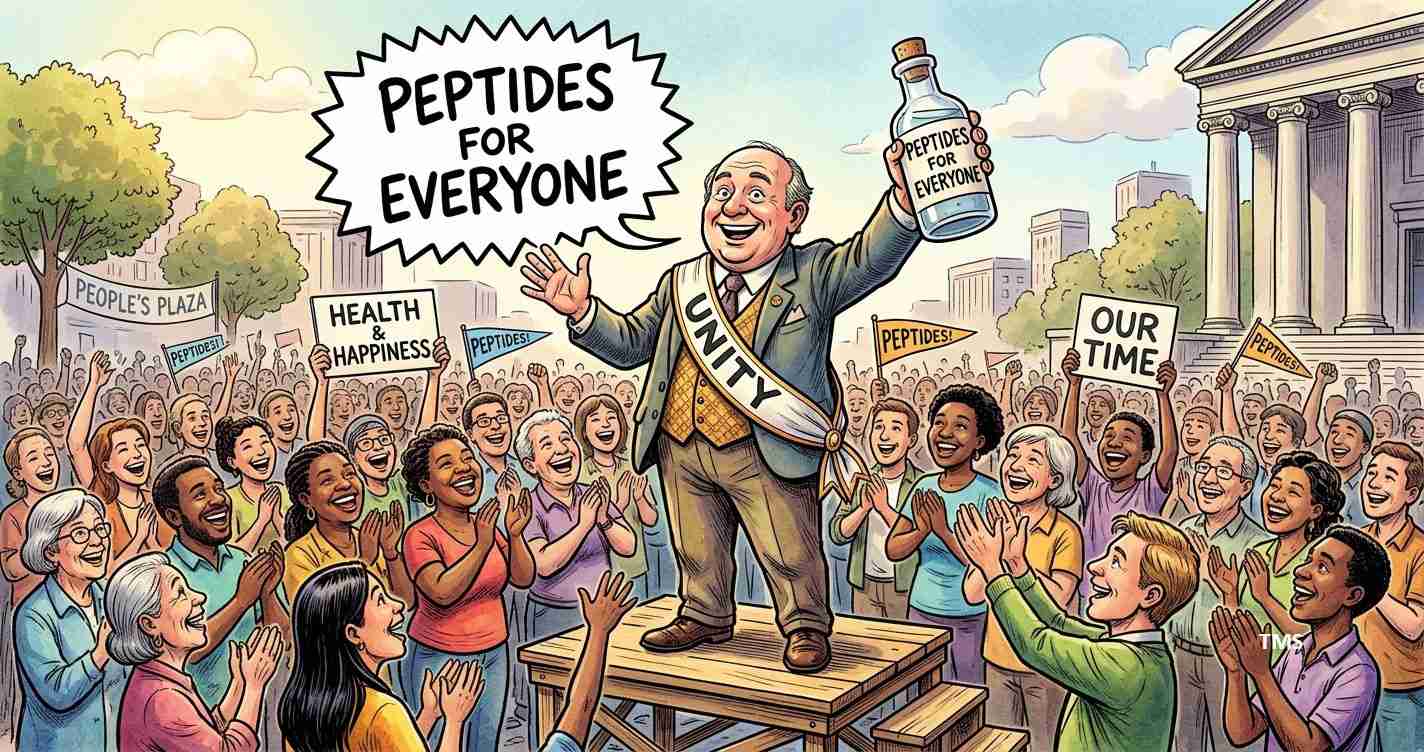
FDA advisory panel to reassess seven barred peptides after RFK Jr. advocacy
Federal health officials said the FDA’s Pharmacy Compounding Advisory Committee will meet in late July 2026 to review easing compounding bans on seven peptides—a move pushed by HHS Secretary Robert F. Kennedy Jr., despite prior FDA safety warnings.
Key takeaways
- Advisory review: The FDA posted a federal notice on April 15, 2026, asking advisers to reassess whether seven peptides should be removed from a restrictive compounding list (ABC News).
- Two named compounds: The list explicitly includes BPC-157 and TB-500; the five other peptides were not publicly detailed in reporting (ABC News).
- Policy push: HHS Secretary Robert F. Kennedy Jr. has publicly urged loosening limits and framed the 2023 restrictions as improper (FirstWordPharma; ABC News).
Background and the upcoming FDA meeting
The Pharmacy Compounding Advisory Committee, an outside panel that advises the FDA on compounding practices, will convene in late July 2026 to review whether seven peptides previously placed on a restrictive list can be allowed for compounding under specified conditions. The federal notice, posted April 15, 2026, invited external advisers to examine available evidence and advise the agency (ABC News).
Advisory committee meetings are a step in a long decision process; panelists will review evidence, hear testimony and make recommendations that the FDA may weigh alongside other scientific and public-health considerations.
Regulatory context: 2023 restrictions
In 2023 advisers previously recommended adding more than a dozen popular peptides to a list that barred routine compounding after finding what they described as “significant safety risks.” Those 2023 decisions effectively made routine compounding of those peptides illegal. The July 2026 meeting asks advisers to reassess seven of those barred peptides and consider whether tightly controlled compounding might be permitted (ABC News).
What are peptides and why they matter
Peptides are short chains of amino acids that act as building blocks of proteins and as biological signals. Scientists synthesize peptide drugs to mimic or modify these signals. Approved peptide medicines—such as insulin and some GLP-1 drugs—treat major medical conditions like diabetes and obesity, but many peptides on the market have not undergone full FDA safety reviews (see National Institutes of Health overview).
Wellness influencers and fitness groups promote unapproved peptides for muscle growth, injury recovery, gut healing and anti-aging. For example, BPC-157 is marketed for tendon and gut healing, and TB-500 is widely advertised for injury recovery. The FDA has repeatedly warned about unapproved peptide treatments sold online and in clinics due to unknown quality and dosing risks (ABC News).
RFK Jr.’s role and public advocacy
HHS Secretary Robert F. Kennedy Jr. has been an outspoken advocate for broader access to certain peptides. He has called the 2023 restrictions “illegal” and said he wants to make specific peptides available from what he terms “ethical suppliers.” In public remarks and interviews—including a recent appearance on The Joe Rogan Experience—Kennedy said,
“I’m a big fan of peptides… I’ve used them myself and with really good effect on a couple of injuries.”
Kennedy’s push has political allies in Congress and industry groups. Supporters of his Make America Healthy Again (MAHA) movement and some longevity entrepreneurs also promote peptide use commercially. While advocacy from the HHS secretary can shift departmental priorities, the FDA is expected to base decisions on scientific evidence and safety data (FirstWordPharma; ABC News).
Safety concerns and critics’ warnings
Scientists and former regulators warn that loosening compounding rules could increase public-health risks. In 2023 advisers flagged potential harms from unapproved peptides—including possible cancer risk and damage to the liver, kidneys and heart—and the FDA has cautioned that compounding pharmacies ignoring restrictions face fines and loss of licensure (ABC News).
Critic’s warning: Dr. Peter Lurie, former FDA official and now leader at the Center for Science in the Public Interest, told reporters easing rules could make a risky marketplace “wilder” and stressed that many peptides lack robust human safety data (reported via ABC News).
The market: why people buy peptides now
Social media, celebrity endorsements and wellness clinics have driven demand for peptides. Users seek faster recovery, anti-aging effects or off-label benefits such as weight loss and gut healing. That demand has created many suppliers, often operating without clear regulatory oversight, and peer-reviewed human studies for many marketed peptides are limited or absent (ABC News).
Implications for Las Vegas, Nevada
An easing of FDA compounding restrictions could have local effects in Las Vegas across economic, political and social dimensions:
- Economic impact: Clinics, medspas and compounding pharmacies could pursue new revenue offering compounded injections such as BPC-157 and TB-500, attracting out-of-town clients—but they would also face regulatory and legal risk if products lack approval or state pharmacy boards impose limits (ABC News).
- Political consequences: Nevada regulators and elected officials could face pressure from consumer advocates and business owners; the issue may surface in city council meetings and state legislative sessions.
- Social effects: Increased local marketing to residents and visitors could raise equity and safety concerns; hospitals and emergency rooms might see adverse events from contaminated or improperly used products.
- Practical applications: For patients with legitimate, individualized medical needs (complex wound care, rare conditions), clearer rules could improve access—but loosening rules without strict safeguards risks broader availability of unproven treatments.
Unanswered questions and reporting limits
Public reporting named only BPC-157 and TB-500 among the seven peptides under review; the five other compounds were not publicly detailed at the time of the federal notice (ABC News; FirstWordPharma).
Next steps to watch
Observers should track the committee roster, public testimony from medical experts and patient groups, and whether the FDA releases the full list of peptides under review. Any advisory recommendation will be public and could prompt further debate at the FDA and within HHS, especially given Secretary Kennedy’s visible advocacy (ABC News).
Reporting sources
Primary reporting and background: ABC News; FirstWordPharma; background on peptides: National Institutes of Health.