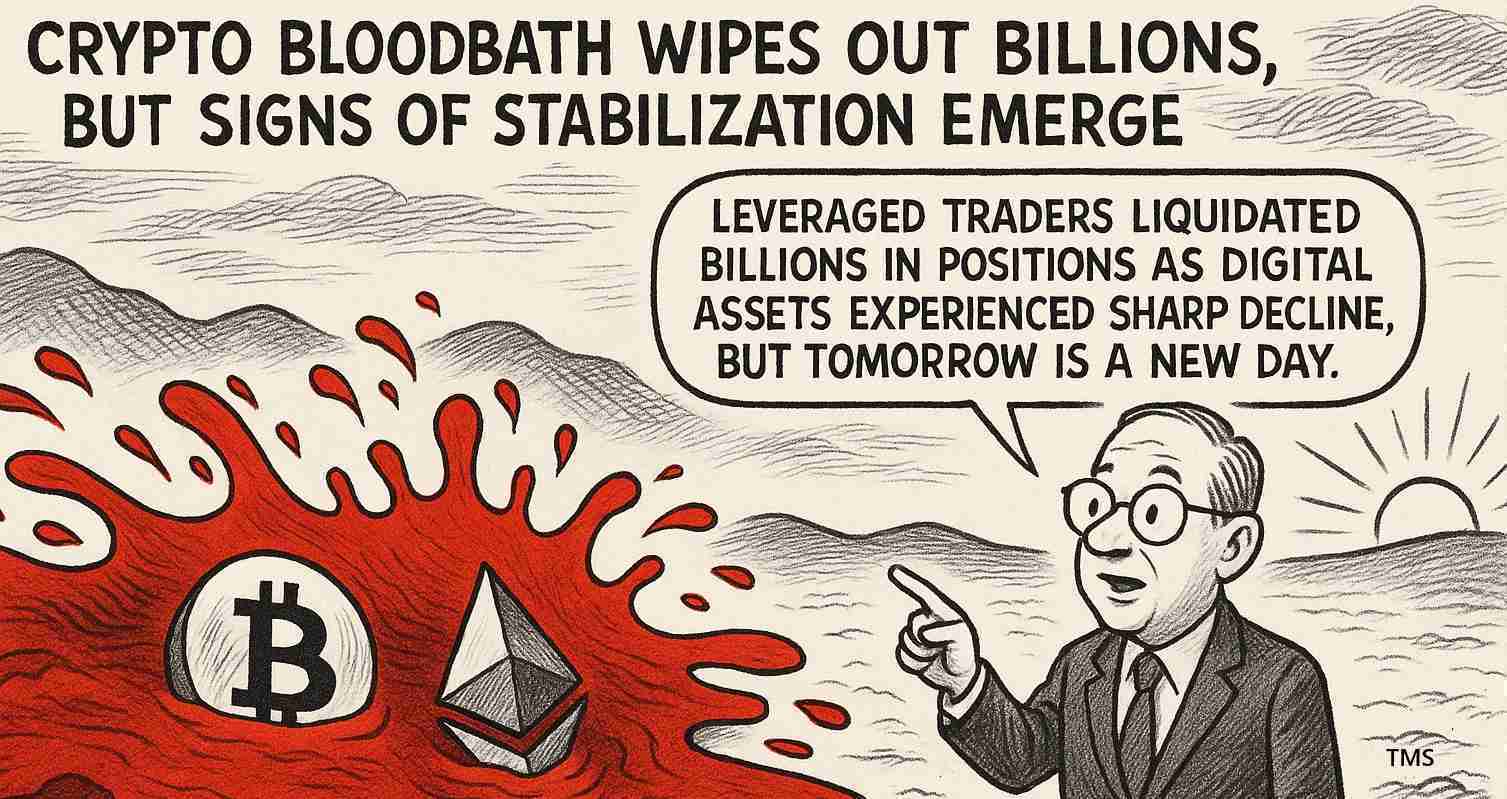
Crypto bloodbath wipes out billions after Trump tariffs; signs of stabilization emerge
The cryptocurrency market plunged Oct. 10, 2025, wiping out about $280 billion and sparking roughly $19 billion in leveraged liquidations after President Trump announced steep tariffs on Chinese tech, even as traders reported early signs of stabilization.
- Total market cap: Total market capitalization fell by about $280 billion on Oct. 10, 2025.
- Liquidations: Trading platforms recorded roughly $19 billion in leveraged liquidations within 24 hours.
- Trader impact: More than 1.6 million accounts were wiped out; exchange data cited by Coinglass showed $7 billion forced closed in under an hour.
- Price moves: Bitcoin tumbled from above $125,000 to below $102,000 while Ethereum dropped near $3,637.
The trigger: tariffs and a fast-moving market shock
On Oct. 10, President Trump posted a Truth Social message detailing aggressive trade measures targeting Chinese technology exports. That post — read by markets as a potential move toward 100% tariffs on certain tech goods plus tighter export controls — set off broad risk-off trading across assets, pressuring equities and digital assets alike. The Times of India reported the announcement.
Unprecedented liquidation scale
Liquidations reached record levels as rapid price moves collided with heavy leverage. Trackers showed more than 1.6 million trader accounts liquidated across spot and derivatives markets within 24 hours. Some platforms recorded roughly $19 billion in forced liquidations, and about $7 billion of positions were closed within an hour during peak stress. TradingView summarized exchange tracker data, and local reporting cited exchange numbers as well (Times of India).
“The liquidation tally could be even higher,” warned Brian Strugats of Multicoin Capital, noting potential contagion and counterparty risk as a key concern.
How the major coins moved
Bitcoin slid roughly 15% at the low point, falling from above $125,000 on Oct. 6 to below $102,000 during the rout; 247WallStreet documented the decline.
Ethereum dropped below $3,800 and traded near $3,637 at peak pressure, according to local reporting. Times of India covered intraday prices.
Altcoins also tumbled: Binance Coin fell ~6.6% toward $1,094.09, while XRP plunged roughly 23% to about $2.33, shedding significant market value during the day.
Signs of stabilization and early rebounds
After the sharp selloff, buyers stepped in at lower levels. Bitcoin recovered from the low-$102,000 trough to test the mid-$110,000s and stabilized around $104,782 by Saturday, demonstrating rapid sentiment swings when panic abates. Local coverage noted the rebound.
Experts weigh in: caution and cautious optimism
Mixed analyst views followed the rout. Edul Patel, CEO of Mudrex, emphasized historical patterns where deep October corrections can be followed by relief rallies and estimated potential rebounds up to 21%. Patel’s comments were reported locally.
Independent analyst Ash Crypto had earlier warned of a “pump-then-dump” setup and forecast a mid- to late-October reversal window, with a bullish scenario later in Q4 where Bitcoin could reach $150,000–$180,000 and Ethereum $8,000–$12,000 if a sustained recovery materializes. TradingView documented the forecast.
The leverage problem: why it got so bad
Analysts highlighted heavy leverage as a key amplifier. The market’s rapid run to all-time highs left many traders overexposed; when a macro shock arrived — here, tariff news and export-control risk — forced liquidations cascaded, amplifying price moves and raising platform counterparty concerns. Coverage characterized the episode as an example of the leverage boom’s “dark side.” DL News explored the leverage angle.
Implications for Las Vegas, Nevada
Economic impact: Las Vegas residents include retail investors, entrepreneurs and small businesses with crypto exposure; steep price swings can erode portfolios and temporarily reduce consumer spending.
Tourism & payments: Hotels, casinos and event promoters experimenting with crypto payments could see lower volumes or paused pilot programs as visitors and merchants reassess crypto-based transactions.
Startups & funding: Local blockchain startups may face tighter investor sentiment, slower fundraising or delayed launches — though long-term buyers might see selective entry opportunities at lower prices.
Regulatory attention: A crash of this scale can prompt regulators and state officials to demand clearer disclosures, liquidity safeguards and strengthened consumer protections for firms handling crypto in Nevada.
Household risk: Sudden losses, especially from leveraged positions, can ripple into budgets and increase demand for financial counseling or community support services.
What to watch locally
- Monitor local exchanges and service providers for policy changes, paused services or altered settlement practices.
- Community groups should share plain-language guidance on forced-liquidation mechanics and risk management.
- Residents impacted by large losses should seek financial counseling and verify consumer-protection options with regulators.
Sources and further reading
- TradingView: “Crypto crash prediction comes true — here’s what’s next for Bitcoin and Ethereum”
- Times of India: “Donald Trump’s China tariff announcement wipes billions from crypto market; sees biggest ever single day fall”
- 24/7 Wall St.: “Crypto’s $200 Billion Crash: Can Bitcoin Hope to Recover?”
- DL News: “Leverage and China tariffs drive $19bn crypto crash”