
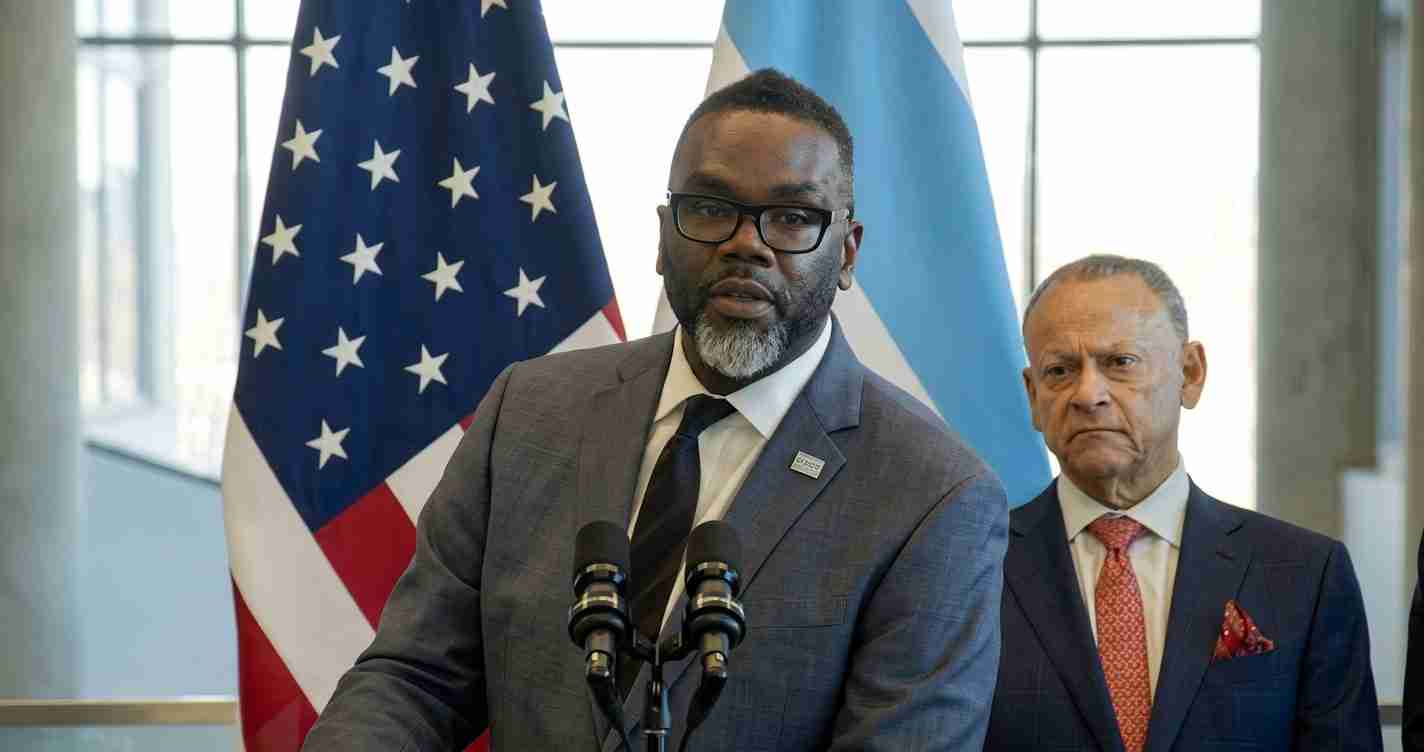
Chicago at a Crossroads: Mayor Brandon Johnson Faces Deepening Budget Crisis as Council, Markets and Pension Costs Push City Toward a Financial Breaking Point
Chicago faces a projected $1.2 billion FY2026 deficit as Mayor Brandon Johnson and the City Council clash over new tax proposals; soaring pension and debt costs risk a municipal shutdown unless urgent, sustainable revenue or cuts are approved.
Key takeaways
- FY2026 gap: Corporate fund shortfall estimated at $1.15–$1.2 billion, with FY2025 ending about $150 million in deficit — pensions and debt now consume roughly 40% of spending (Illinois Policy Institute).
- Political standoff: Mayor Johnson’s per-employee head tax and social-media user charge were rejected by the council, creating a veto/override showdown that could lead to a shutdown (Fox News).
- Long-term liabilities: Analysts warn pension increases could add roughly $11.1 billion by 2055, raising solvency concerns and pressuring ratings (Illinois Policy Institute).
- Market reaction: Investors and ratings agencies are widening spreads and downgrading the city amid structural revenue doubts (see sample video: sample video).
Main
Budget shortfall and projections
Chicago’s fiscal gap is not new, but officials now say it has reached a dangerous size. City and outside analysts place the Corporate Fund deficit for FY2026 at roughly $1.15 billion to $1.2 billion, with a lingering FY2025 hole near $150 million. Fixed costs — principally pension obligations and debt service — consume nearly 40% of city spending, limiting flexibility for services and emergencies (Illinois Policy Institute).
City officials describe a “revenue challenge” and warn of a “point of no return” without reliable, recurring income. Critics point to structural issues — past one-time fixes and deals that shifted revenue streams — and highlight projections that pension costs could add roughly $11.1 billion in obligations by 2055, straining fund solvency (Illinois Policy Institute).
Political standoff: Johnson, Council and the veto threat
Tensions between Mayor Brandon Johnson and the Chicago City Council have hardened as aldermen passed a 2026 budget the mayor called “morally bankrupt.” The council approved the plan by a 30–18 vote; Johnson has warned he could veto it, forcing an override that would require 38–40 votes before the December 30 deadline. If neither side yields, the city risks a municipal shutdown (Fox News).
Johnson’s revenue package included a per-employee head tax of $33 per worker per month and a $0.50-per-active-user social media tax, proposals the council rejected in part. Alternatives pitched by aldermen include expanded video gambling and raising the shopping-bag tax. Critics of the mayor’s plan also sought clearer cost estimates and detailed transition plans for positions initially funded with federal pandemic aid (Illinois Answers).
“If a veto and override fight persists, Chicago could face its first municipal shutdown,” municipal observers warn — underscoring the stakes of the political impasse.
Efforts to preserve federal-aid programs
Mayor Johnson is pushing to transition popular programs originally funded by the American Rescue Plan Act (ARPA) into the city budget. Chicago received $1.9 billion in ARPA funds; the administration proposed shifting 62 full-time mental health workers (~$7 million), $26 million for youth employment and victim services, $10 million to the Corporate Fund, and $13 million to a new Community Safety Fund backed by cannabis tax revenue (Illinois Answers).
Council members argue these transitions save less than 3% of the budget gap and demand clearer long-term cost estimates. Johnson contends the moves preserve mental-health and crime-prevention efforts credited with improving safety in some neighborhoods.
Analysts and markets sound the alarm
Outside analysts and market participants have grown uneasy. Austin Berg, executive director at the Illinois Policy Institute, said investors are pricing Chicago bonds with wider spreads because markets see structural fiscal problems. Berg criticized reliance on one-time federal COVID money for ongoing operations and borrowing to cover operating costs, calling a 2025 $830 million bond that delays principal payments for 20 years a troubling sign.
Ratings agencies have flagged budget friction and the lack of structural revenue solutions, prompting a recent credit downgrade that raises borrowing costs and deepens fiscal pressure. Market reactions can create a feedback loop: higher yields increase debt service, which worsens budget gaps and limits budgetary options (sample video).
Johnson’s public statements and external blame
Mayor Johnson has described the city as at a crossroads and said Chicago must “do more with less.” He has also blamed changing federal policies for complicating local revenue planning, and publicly rebutted national criticism of his business-tax proposals. State leaders including Gov. J.B. Pritzker warned a head tax could deter jobs and investment (Fox News).
Implications for Las Vegas, Nevada
Chicago’s crisis carries lessons and potential ripple effects for other cities, including Las Vegas:
- Municipal bond market: Wider yields on Chicago debt could prompt investors to re-evaluate risk broadly, nudging up borrowing costs for issuers in the Las Vegas area and potentially affecting funding for infrastructure and housing (Illinois Policy Institute).
- Competitive climate: High-profile tax debates can influence corporate decisions about expansion; Las Vegas leaders may emphasize predictable tax policy and stability when courting businesses (Fox News).
- Pensions and planning: Chicago stresses the cost of growing pension liabilities and one-time fixes; Nevada jurisdictions should avoid recurring services funded by one-time federal grants and be transparent about long-term obligations (Illinois Policy Institute).
- Service continuity: A municipal shutdown in a major city can disrupt travel and commerce; Las Vegas tourism depends on reliable transportation and public safety, so contingency planning is critical.
- Long-term deals: The parking-meter lease controversy serves as a warning about privatization that can lock future revenue — a caution for any large public-private deals in Las Vegas.
Reporting and sources
This story draws on municipal budget analysis, local reporting on council proceedings and market commentary, including the Illinois Policy Institute report Chicago Forward 2026, local coverage from Illinois Answers, national reporting on the mayor’s proposals from Fox News, and market commentary (see sample video).
Chicago’s fiscal picture is evolving rapidly. As aldermen and the mayor spar over taxes, spending and which programs to preserve, the city’s budget choices will shape services for millions of residents, investor confidence, and the policy lessons other cities — including Las Vegas — will take from the nation’s third-largest city.


