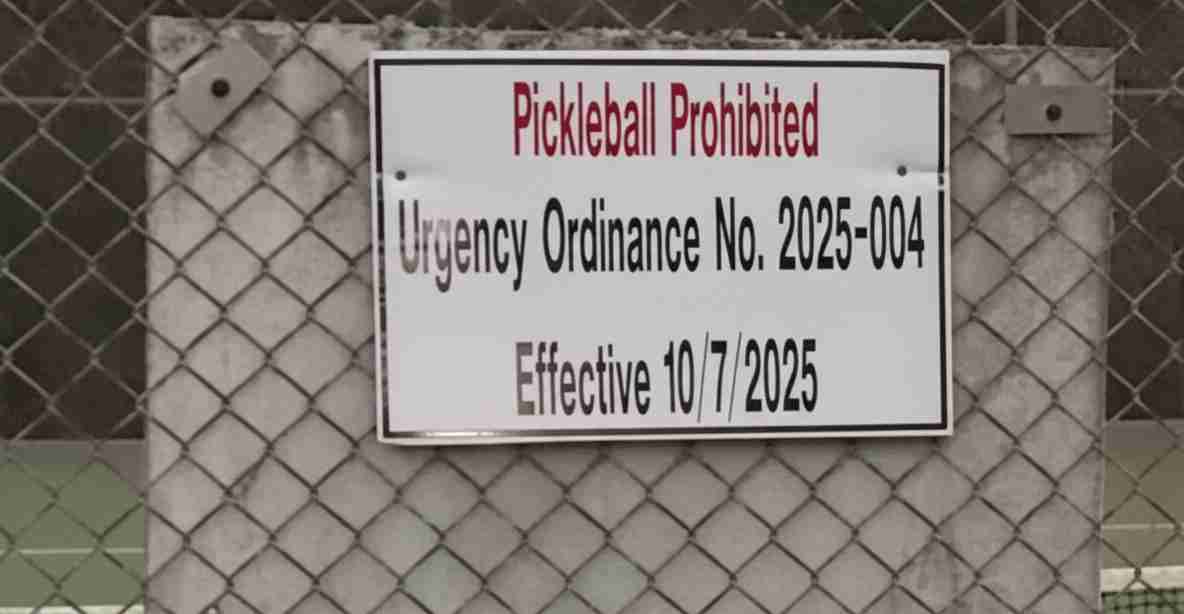
Wealthy Carmel Bans Pickleball at Forest Hill Park After Noise Complaints; Council Rejects Quieter-Equipment Compromise
Carmel’s City Council voted to permanently ban pickleball at Forest Hill Park amid repeated noise complaints, rejecting a quieter-equipment compromise and igniting community division as the city may become the first in California to outlaw the sport.
- City ban: The council approved a permanent prohibition on pickleball at Forest Hill Park; reporting included Fox News: Wealthy California town bans pickleball over noise complaints and AOL: Wealthy California town bans pickleball.
- Compromise rejected: Councilors voted down a pilot for quieter ball-and-paddle combinations and instead opted for a full ban after hearing enforcement concerns.
- Community split: Supporters cite neighborhood peace; opponents say the decision punishes older residents who use the sport for exercise and socializing (see The Independent: Community reaction to Carmel pickleball ban).
- Statewide significance: Observers note Carmel could be the first California city to enact an outright pickleball ban (Washington Times: California town could become first to ban pickleball outright).
What the council voted on
The vote closed a months-long debate over noise from pickleball play at Forest Hill Park. City officials said repeated complaints from neighbors focused on the distinctive clacking of paddles striking hard-bodied pickleball balls. After considering several options, the council approved an ordinance that permanently prohibits organized or casual pickleball play on the park’s public courts, effectively eliminating Forest Hill Park pickleball from city facilities. Reporting and meeting records document the deliberations and rationale (Fox News).
Alternatives presented and rejected
City staff outlined a range of options earlier in the process: limited hours, sound barriers, and a pilot for lower-noise equipment. One proposal would have permitted play only with a combined softer ball-and-paddle system marketed as quieter. Council members voted down that compromise, saying enforcement and monitoring would be difficult and that a full ban was the most enforceable path forward (local meeting records; regional reporting).
Why noise became the focus
Residents near Forest Hill Park described the repetitive paddle-on-ball sound as disruptive to daily life. Unlike the muted thump of a tennis ball, the clack of a standard pickleball ball can carry over fences and through neighborhoods. Officials cited repeated complaints and a determination that the park site was ill-suited to tolerate the sport’s characteristic noise (Fox News; AOL).
Community split and public reaction
The ban exposed a sharp divide in the small coastal community. Supporters framed the move as protecting neighborhood peace and property values. Opponents argued the decision punishes older and middle-aged residents who rely on the sport for exercise and social connection. Public meetings became heated; one quoted attendee warned,
“there’s gonna be a problem,”
reflecting fears the ban could deepen tensions (The Independent).
Local advocates argued the council ignored a reasonable middle ground. Quieter equipment—new paddle designs paired with softer balls—has been adopted elsewhere to retain play while reducing noise. City staff described that option, but councilors concluded enforcement and monitoring challenges made a ban preferable.
Broader context: a national debate
Carmel’s decision is part of a national pattern of conflicts over pickleball, a fast-growing sport valued for low cost, sociability, and low injury risk. Municipal responses elsewhere include limited hours, relocating courts away from housing, and equipment mandates. Carmel’s full prohibition places it at the stricter end of local policy responses (Washington Times).
Could this be the first California pickleball ban?
Observers and national outlets noted Carmel could become the first California municipality to enact an outright ban on pickleball at public facilities. That symbolic step may influence other communities watching how legal, social, and enforcement questions unfold (Washington Times).
Legal and practical questions
The ordinance raises immediate enforcement tasks: posting signage, notifying recreation groups, and monitoring park use. Opponents could pursue legal challenges or a referendum; supporters may press for strict enforcement to preserve neighborhood quiet. The city has not announced plans to relocate courts or provide municipal alternatives outside city limits (city records; regional coverage).
Forest Hill Park and alternatives
Forest Hill Park was the city’s public pickleball site. With the ban, players lose their primary public venue. Nearby towns and county parks may experience higher demand; some players could shift to private courts or informal play in surrounding communities. The council did not authorize a replacement-plan for court sports, leaving players without a clear municipal alternative.
Implications for Las Vegas, Nevada
Economic impact
Las Vegas-area parks could see indirect effects if displaced California players travel for competition or court access. Increased bookings at public and private facilities, expanded lessons, and higher membership demand are plausible outcomes.
Political consequences
Local officials in Las Vegas and Clark County may view Carmel’s case as a test of handling citizen complaints about recreational noise. Urban moderates often balance quality of life with access to amenities; the outcome could either embolden strict measures or encourage quieter-equipment pilots and buffer-zone rules.
Social and cultural effects
Pickleball’s popularity with older adults for exercise and socializing means Las Vegas centers could see demographic shifts if players relocate. That may prompt new programming, extended hours, or partnerships with private clubs to absorb demand.
Practical applications for planners
Park planners should assess noise at existing courts, pilot quieter equipment, and identify court sites away from dense housing. Proactive outreach and early engagement with both supporters and neighbors may prevent polarizing outcomes like Carmel’s.
Sources and coverage
Reporting on the Carmel pickleball ban has appeared in national and regional outlets. Key coverage includes:
- Fox News: Wealthy California town bans pickleball over noise complaints
- AOL: Wealthy California town bans pickleball
- Washington Times: California town could become first to ban pickleball outright
- The Independent: Community reaction to Carmel pickleball ban
Conclusion
Forest Hill Park pickleball has become the center of a wider national conversation about managing new recreational trends. As fallout continues, municipalities near Las Vegas and across the country may weigh quieter technology, relocation of courts, or stricter rules to avoid the polarizing outcome Carmel chose.