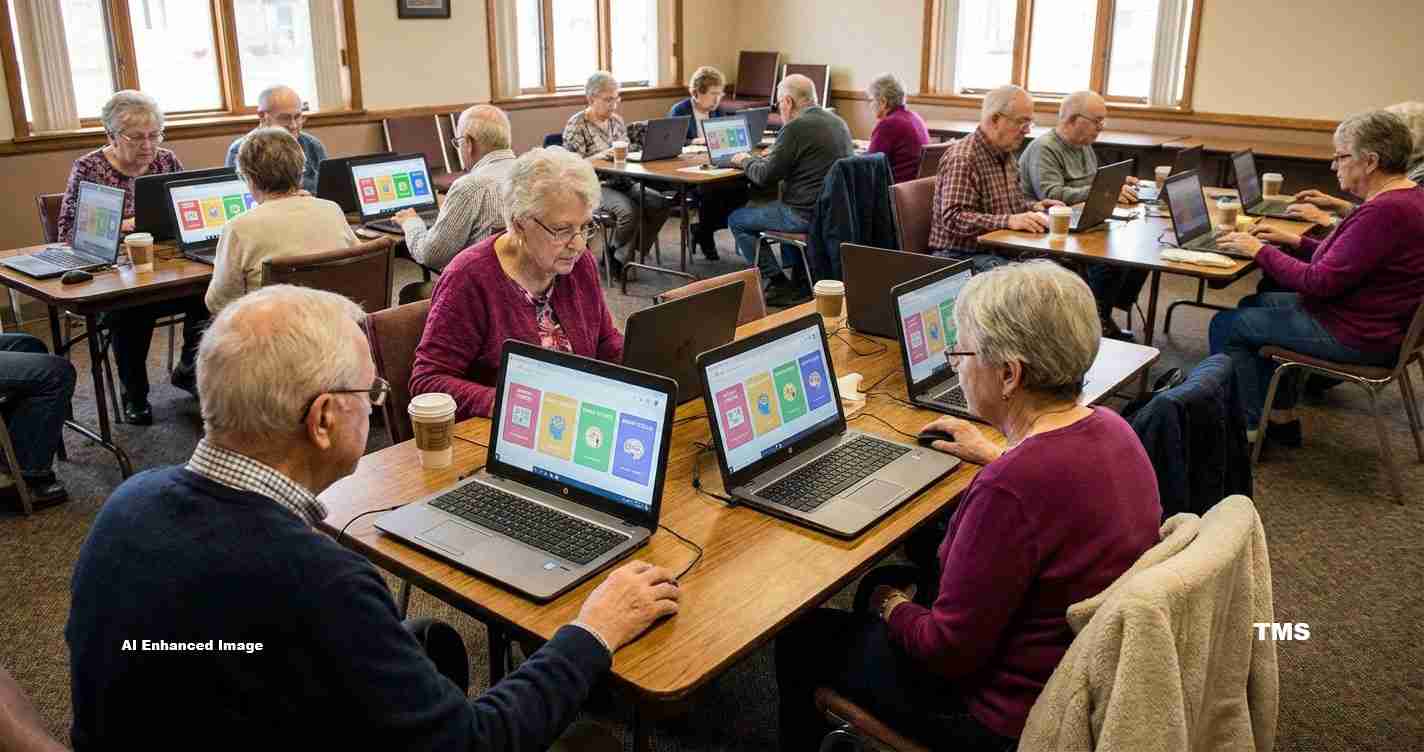
Decades-long ACTIVE study finds speed-of-processing brain training cuts dementia risk by 25%
A 20-year follow-up to the ACTIVE randomized trial found adaptive speed-of-processing brain training cut dementia incidence by 25% among older adults, offering the first long-term randomized evidence that a short, adaptive cognitive intervention can lower dementia risk.
Key takeaways
- Long-term benefit: Adaptive speed-of-processing training was associated with a 25% lower dementia incidence over 20 years (40% vs. 49% diagnosed).
- Study size and design: The ACTIVE randomized trial enrolled ~2,800 adults aged 65–94 in 1998–1999 and compared speed, memory, reasoning training and a no-training control.
- Sessions and boosters matter: The most benefit came for participants who completed boosters (up to 18 sessions over three years).
- Evidence source: Results are reported in Alzheimer’s & Dementia: Translational Research and Clinical Interventions and summarized by UF Health and the NIH.
Key information
Study: Advanced Cognitive Training for Independent and Vital Elderly (ACTIVE), launched 1998–1999.
Sample: About 2,800 adults aged 65 to 94 at enrollment, randomized to training or control arms (UF Health).
Intervention: Ten 60–75 minute sessions over six weeks in one of three training arms — speed-of-processing, memory, or reasoning — plus a no-training control group. Some participants received booster sessions at 11 and 35 months (ScienceDaily).
Main result: Participants who received adaptive speed-of-processing training, with booster sessions, were 25% less likely to be diagnosed with dementia over the next two decades (40% vs. 49% diagnosed; 105/264 trained vs. 239/491 controls) (ScienceDaily; UF Health).
Publication: Alzheimer’s & Dementia: Translational Research and Clinical Interventions (summary).
What the ACTIVE trial tested
The ACTIVE trial aimed to determine whether short, targeted cognitive training yields long-term changes in thinking, memory and daily functioning. Nearly 3,000 older adults were randomly assigned to one of four groups:
- Speed-of-processing training: Computer-based tasks training quick visual processing and attention; the software adaptively adjusted difficulty to match performance (ScienceDaily).
- Memory training: Strategy-focused lessons such as mnemonic techniques for lists and appointments (UF Health).
- Reasoning training: Exercises practicing pattern recognition and problem-solving (ScienceDaily).
- Control group: No training (ScienceDaily).
Each initial training series was roughly 10 sessions across six weeks. A subset received booster sessions at 11 and 35 months; those getting the greatest benefit often completed up to 18 sessions over three years (UF Health).
Long-term follow-up and main findings
ACTIVE is the first randomized clinical trial to report dementia outcomes out to 20 years after a cognitive training intervention. Earlier follow-ups showed persistent functional and cognitive benefits:
- Five years: Trained participants reported fewer problems with daily tasks (managing money, cooking, medications) versus controls (ScienceDaily).
- Ten years: Speed and reasoning training still showed cognitive benefits; speed training linked to a 29% lower dementia risk at that mark (ScienceDaily).
- Twenty years: Only speed-of-processing training combined with boosters showed a statistically significant reduction in dementia incidence — 25% lower risk versus no training; memory and reasoning did not show clear long-term dementia reductions in this follow-up (ScienceDaily; UF Health).
Why speed training might work
Authors propose several mechanisms that may explain the durable advantage from speed-of-processing training:
- Adaptive difficulty: Continuous adjustment may push the brain to build stronger neural networks (ScienceDaily).
- Targeting core processes: Tasks focused on visual processing and divided attention could help preserve broader cognitive systems.
- Dose and spacing: Repeated, spaced practice with boosters (up to 18 sessions) produced the greatest advantage, suggesting timing and dose matter (UF Health).
“I was surprised by how durable the benefit was over two decades,” said Michael Marsiske, PhD, a principal investigator and interim co-chair of the Department of Clinical and Health Psychology at UF Health (UF Health; News@UF).
Johns Hopkins emeritus professor George Rebok, PhD, endorsed refining speed training and testing it alongside lifestyle changes (exercise, nutrition) to see if combined approaches produce larger prevention effects (ScienceDaily).
Limitations and caveats
- Diagnosis source: Dementia outcomes were derived from medical records and Medicare data rather than direct clinical exams for everyone, which can introduce diagnostic variation (ScienceDaily).
- Survivor bias: Follow-up includes those who lived long enough to be measured over two decades; participants who died earlier are not represented.
- Generalizability: Original enrollment began in the late 1990s; additional trials will test newer populations, technologies and more diverse samples (UF Health).
Funding and next steps
The work was supported by the National Institutes of Health, including the National Institute on Aging. Investigators say the findings support new trials that combine speed-of-processing training with established health measures — physical exercise, nutrition, blood pressure control — and that use modern administrative data sources to measure real-world impact (NIH; UF Health).
Public reporting and coverage
The ACTIVE 20-year results have been widely covered in health media: ScienceDaily, UF Health, AARP, and Fox News, among others, discussing implications for brain-training programs and prevention strategies.
Implications for Las Vegas, Nevada
Local planners and residents in Las Vegas may find practical and economic implications if validated speed training is adopted widely.
Economic impact
- Health care costs: Delaying dementia onset even a few years can reduce long-term care costs for families and Medicaid; Las Vegas’ growing senior population could see slower growth in dementia-related expenses (ScienceDaily).
- Local services and jobs: Demand may rise for providers offering validated cognitive training, creating opportunities for clinics, senior centers and telehealth firms (UF Health).
Political consequences
- Public health policy: Officials could pilot cognitive speed training in community senior programs or partner with health systems to offer boosters if cost-effectiveness is shown (NIH).
- Election messaging: Prevention programs that lower care costs and support seniors can be a bipartisan issue in urban, moderate districts like Clark County.
Social effects
- Family caregiving: Slower dementia onset could ease caregiver burden for many Las Vegas families and preserve quality time between older adults and relatives (UF Health).
- Access gaps: City leaders should guard against unequal access; lower-income and minority seniors may need targeted outreach to ensure benefits reach those who most need them (ScienceDaily).
Cultural relevance
Las Vegas’ active retirement community and many institutions that host events for older adults could integrate validated brain training into community centers, libraries and senior activities — a fit with local culture that values social engagement and entertainment (UF Health).
Practical applications for residents
- Where to start: Clinicians and senior centers should seek standardized, evidence-based speed-of-processing programs rather than unproven “brain games.” Local hospitals, the University of Nevada health programs, and senior centers could pilot courses modeled on ACTIVE — short, repeated sessions with adaptive difficulty and periodic boosters (ScienceDaily).
- Combine approaches: Experts advise pairing cognitive training with exercise, a healthy diet and blood pressure control for the best chance at reducing dementia risk — steps already part of many local wellness programs (ScienceDaily; UF Health).
Bottom line: Researchers plan more trials to refine methods, confirm mechanisms and test real-world delivery models; for Las Vegas residents and planners, ACTIVE points to a practical, low-cost prevention idea to fold into broader healthy-aging strategies (ScienceDaily; UF Health).