AI smart T-shirt could put long-term ECG monitoring in your dresser, researchers say
Researchers at Imperial College London are developing an AI-powered smart T-shirt with woven ECG sensors for comfortable, continuous monitoring outside clinics, aiming to detect inherited rhythm disorders missed by short ECGs and reduce sudden cardiac deaths.
- Continuous monitoring: A smart T-shirt with up to 50 woven ECG-style sensors records electrical signals for days or weeks to catch intermittent inherited rhythm disorders (AI t-shirt project page).
- AI analysis: An algorithm trained on ECGs from more than 1,000 people aims to distinguish normal variability from patterns linked to conditions such as Brugada syndrome (Imperial College London news release).
- Next steps: A feasibility study will enroll ~200 volunteers wearing shirts for up to three months; clinical use could follow in roughly five years if trials and approvals succeed.
Why longer monitoring matters
Standard clinic electrocardiograms (ECGs) capture a brief snapshot of the heart’s electrical activity — usually adequate for many problems but often insufficient for intermittent inherited rhythm disorders. These conditions can produce dangerous patterns that appear only briefly and then vanish, meaning a clinic ECG taken during a quiet phase can be normal despite underlying risk.
Imperial researchers estimate roughly 340,000 people in the UK may be affected by inherited heart rhythm disorders, and sudden deaths among young adults continue to occur each week. Extended, continuous monitoring gives clinicians a much better chance to detect short-lived but clinically important signals (Imperial project page).
“Far too many people die from inherited heart conditions which could be treated if they were identified earlier… We hope our AI-assisted t-shirt will provide a practical and comfortable solution.”
— Professor Zachary Whinnett
Design and technology
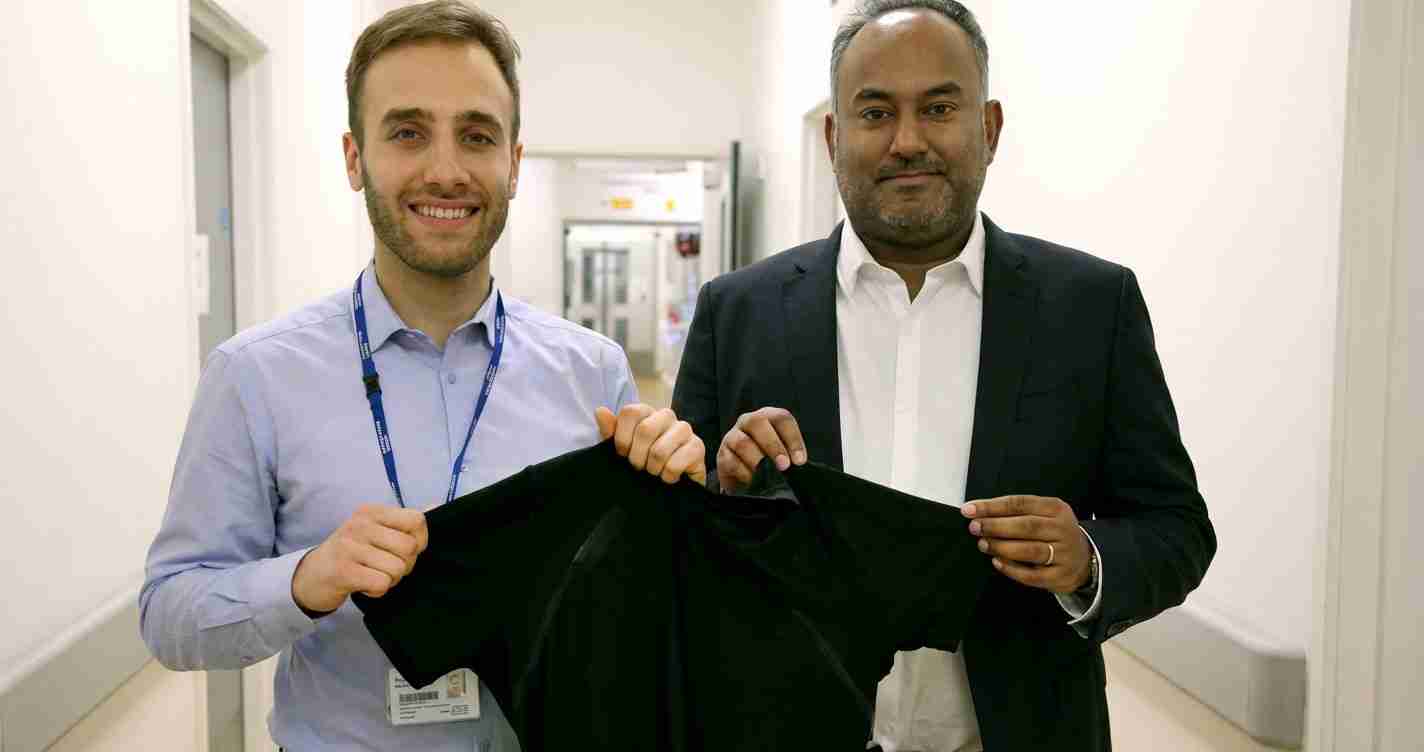
The prototype is a soft, sportswear-style T-shirt with sensors woven into the fabric. Up to 50 ECG-style sensors are distributed across the chest to capture multiple vectors of the heart’s electrical activity while the wearer goes about daily life. The shirt is intended to be:
- Comfortable under regular clothing and suitable for sleep
- Machine-washable and reusable
- Designed to avoid the awkwardness of sticky electrodes and waist-worn monitors that users must remove to shower
Data are processed by an AI algorithm trained on ECG records from over 1,000 people, combining examples from patients with known inherited rhythm disorders and healthy controls so the model can learn to reduce false positives (Imperial College London news release).
Who is behind it and who is funding it
The project is led by Professor Zachary Whinnett at Imperial College London’s National Heart and Lung Institute; he is also a consultant at Imperial College Healthcare NHS Trust. The British Heart Foundation (BHF) awarded more than £340,000 in grant funding, with additional support from the NIHR Imperial Biomedical Research Centre. The BHF has emphasised the study as a way to use AI to “unmask” hidden heart conditions (British Heart Foundation announcement).
Planned testing and regulatory path
The next phase is a feasibility study at Hammersmith Hospital’s Peart-Rose Research Unit. About 200 volunteers will wear the shirts for up to three months to assess real-world performance. Initial testing focuses on adults; if results are positive the team may expand to children and to other rhythm problems such as atrial fibrillation.
Researchers estimate the technology could reach clinical practice within roughly five years, but that depends on successful trials and regulatory review (Imperial project page).
Expert views and patient safety
Professor Whinnett commented on the need for better detection; Professor James Leiper of the BHF highlighted the potential of AI to identify patients at risk of sudden death. Researchers caution that careful, diverse testing is essential so the tool is accurate across groups and does not create excessive false alarms.
Privacy and data security are also critical. Continuous ECG monitoring generates sensitive information, and developers must follow strict rules for data handling, storage and consent as the programme proceeds (MedicalXpress summary).
How this fits into wider trends
The AI smart T-shirt is part of a broader shift toward wearable health monitoring and AI-assisted diagnosis. Advances in sensor textiles and machine learning have made continuous, non-invasive monitoring increasingly feasible. If validated as accurate, comfortable and affordable, these shirts could change screening for inherited rhythm disorders and reduce unexpected deaths.
Coverage has appeared across outlets, signalling public interest in wearable health tech (Fox News coverage).
Implications for Las Vegas, Nevada
Economic impact: Local hospitals and clinics could adopt new screening options, reduce specialist referrals, and spur partnerships with medical device companies and startups for distribution or manufacturing, potentially creating jobs in health tech.
Political consequences: City and state health officials may consider the shirt for public-health planning. Policymakers will face decisions on coverage, reimbursement and privacy protections under local Medicaid and insurer rules.
Social and cultural effects: A machine-washable shirt wearable during shifts and sleep could suit Las Vegas’ workforce and encourage uptake among people who avoid clinic visits due to work or caregiving. Outreach, education and evidence-based adoption will be key.
Practical applications: Cardiology clinics, sports-medicine programs and university health centers in Las Vegas could use the shirt for longer monitoring when adhesive patches are impractical. Clinicians will need training to interpret long-form ECGs and to integrate AI outputs into care plans.