
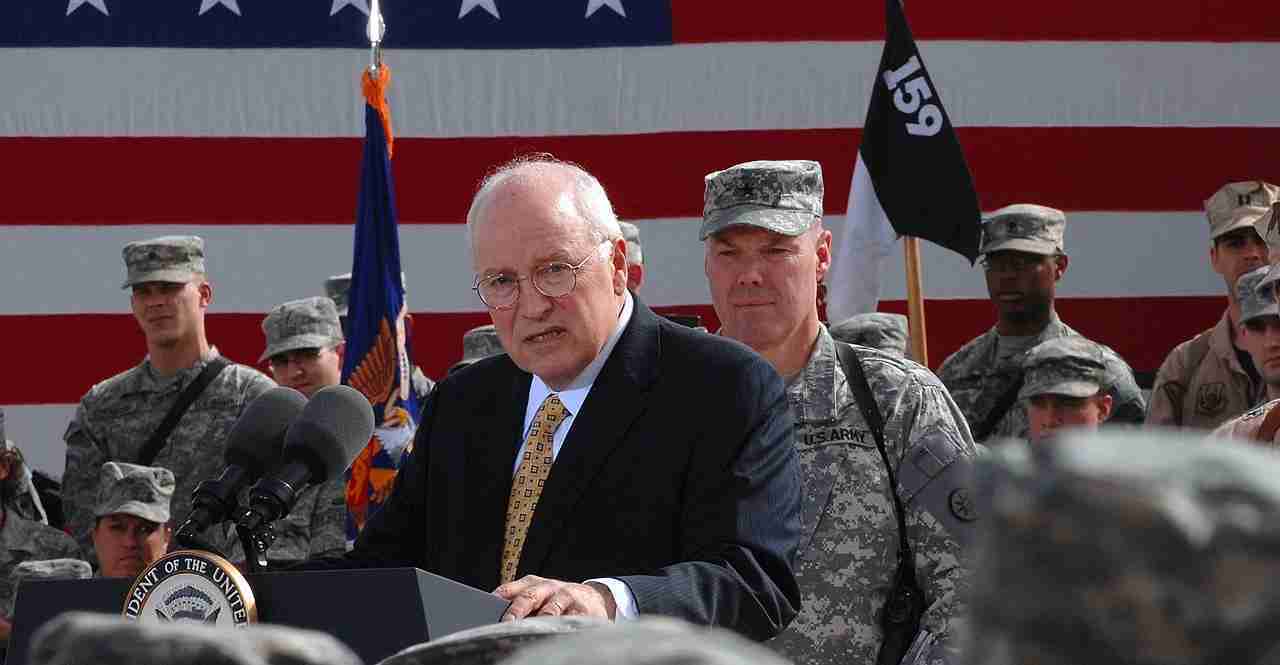
Dick Cheney, former vice president widely viewed as most influential in U.S. history, dies at 84
Richard B. “Dick” Cheney, the former vice president whose tenure reshaped the modern executive branch, died on November 3, 2025, at 84. His legacy of expanded presidential authority remains deeply consequential and debated globally.
Key takeaways
- Dick Cheney died November 3, 2025, at age 84; cause cited as complications related to pneumonia and cardiac and vascular disease (Wikipedia — Dick Cheney).
- He is widely regarded as the most influential vice president in U.S. history for expanding executive authority and shaping post‑9/11 policy.
- His tenure produced enduring debate over national security, civil liberties and the limits of presidential power.
- Local implications for places like Las Vegas include renewed discussion on security, veterans’ issues, corporate-government ties and civil liberties.
Main coverage
A life of accumulation and authority
Richard B. “Dick” Cheney was born in Lincoln, Nebraska, in 1941 and rose through Republican politics to hold several powerful posts: White House chief of staff under Gerald Ford, U.S. representative from Wyoming, and Secretary of Defense under President George H.W. Bush, where he oversaw operations in the 1991 Gulf War (Wikipedia — Dick Cheney).
Between government roles, Cheney led Halliburton, the multinational energy services company, before returning to public life as vice president in 2001 (Wikipedia — Dick Cheney). His early life included reported academic struggles and youthful arrests for driving under the influence, contrasts that biographers and reporters note when charting his transformation into a disciplined, strategic operator in Washington (KUOW — Cheney obituary).
The most powerful vice president
Cheney’s two terms, 2001–2009, redefined the modern vice presidency. He kept offices and staff across multiple branches of government, a practice that both symbolized and enabled his influence (Wikipedia — Dick Cheney).
After the September 11, 2001, attacks, Cheney was central to the administration’s counterterrorism responses. He advocated aggressive policies on detention, interrogation and surveillance, and was a leading voice in the push toward the 2003 invasion of Iraq (Wikipedia — Dick Cheney; KUOW — Cheney obituary).
“He argued for a restoration of presidential power,” a posture that legal scholars say underpinned efforts to minimize judicial oversight and legislative constraints.
Legal scholarship traces expansions of executive authority to strategies Cheney helped promote, including challenges to the Foreign Intelligence Surveillance Act and the War Powers Resolution (Legal scholarship — vice presidential power).
Controversy and criticism
Cheney’s record was polarizing. Critics condemned his advocacy for “enhanced interrogation techniques”—described by many legal experts as torture—and the administration’s broad warrantless surveillance programs (Wikipedia — Dick Cheney; Legal scholarship — vice presidential power).
The decision to invade Iraq in 2003, partially justified by intelligence later found to be flawed, remains among the most disputed elements of his legacy. His 2006 hunting accident—in which he accidentally shot Texas attorney Harry Whittington—intensified scrutiny and public ridicule (Wikipedia — Dick Cheney).
Supporters praised Cheney’s national-security expertise and credited him with restoring tools they argued were necessary to protect the country after 9/11. In statements after his death, family and allies described him as courageous, honorable and devoted to the nation (KUOW — Cheney obituary).
How Cheney reshaped the office
Scholars identify Cheney’s vice presidency as a turning point: he expanded the role from ceremonial to central policymaker through close coordination with the White House, strong influence over intelligence and defense policy, and a willingness to invoke secrecy as a tool of governance (Legal scholarship — vice presidential power).
Those precedents carry lasting implications for law and governance. Some see a blueprint for a stronger, more decisive executive; others view it as a warning about concentration of power and erosion of legal norms.
Public memory and record
Encyclopedic entries and retrospectives emphasize both Cheney’s instruments of power and his human complexities. Britannica — Dick Cheney documents his long public service and pivotal moments. News outlets noted polarized national reaction—reverence among conservatives and sharp criticism from civil‑liberties advocates and international observers (KUOW — Cheney obituary).
Records of his decisions, memos and meeting practices have informed legal challenges and historical study. Scholars use those documents to trace how policy moved from debate to action, creating a paper trail that will shape future judgments of his role in expanding executive power (Legal scholarship — vice presidential power).
Implications for Las Vegas, Nevada
- Local politics and security debates: Cheney’s record may reawaken discussions among Nevada leaders and voters about balancing security and liberty, including oversight of federal programs (Wikipedia — Dick Cheney).
- Military and veteran communities: Southern Nevada’s large veteran population may host events, panels and op-eds assessing the human and fiscal costs of wars initiated during his tenure (Britannica — Dick Cheney).
- Legal and civil‑liberties groups: Nonprofits and the legal community may use this moment to press for greater transparency in surveillance and detention practices (Legal scholarship — vice presidential power).
- Economic and corporate ties: Nevada’s energy and service industries may revisit questions about procurement, corporate accountability and Halliburton’s links to government policy (Wikipedia — Dick Cheney).
- Civic reflection: Residents and local media are likely to spark public conversations and forums reflecting diverse views about national security’s local effects.



