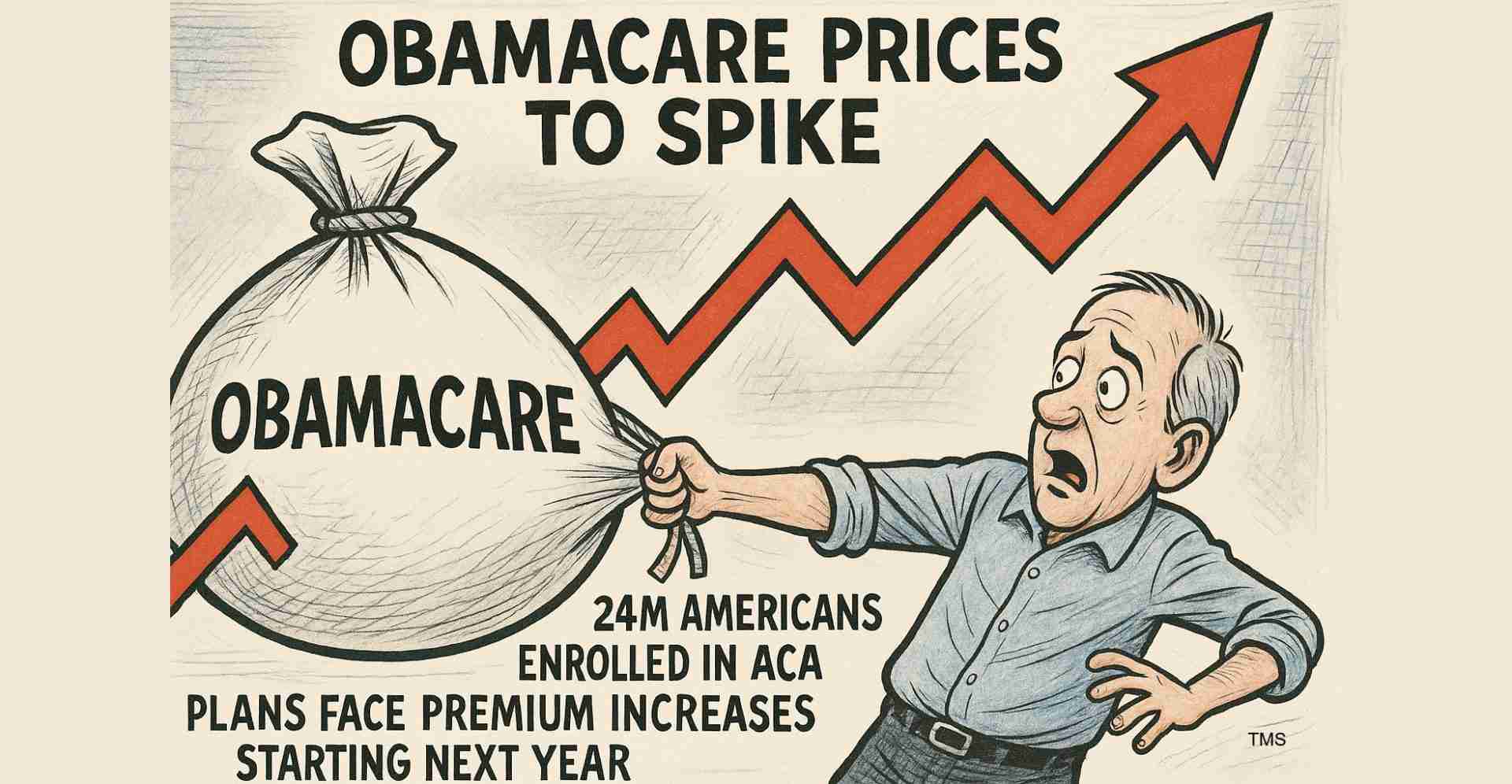
Obamacare premiums set to spike in 2026 — 24 million could face higher costs unless Congress acts
Obamacare (Affordable Care Act) premiums are projected to rise an average of 26% in 2026 as enhanced federal subsidies that helped 24 million Americans expire after 2025 unless Congress renews them, potentially sharply raising household costs.
Key takeaways
- Sticker prices up ~26% on average for 2026 across ACA plans, driven by insurer rate filings and rising medical costs (Kaiser Family Foundation).
- Enhanced premium tax credits expire after 2025 unless renewed; 24 million people benefited from the expansion and many could face much larger bills (TIME).
- Out-of-pocket premiums could double for some subsidized enrollees — KFF estimates average after-credit bills could increase by as much as 114% for those getting enhanced help (KFF analysis).
What’s happening and why premiums look set to jump
During the COVID-19 pandemic, Congress expanded ACA premium tax credits to make coverage more affordable. Those enhanced subsidies were later extended by the Inflation Reduction Act but are scheduled to end after 2025 unless lawmakers act. Without that federal aid, families who gained eligibility or received larger subsidies will see the government pay far less of their monthly bills (TIME).
At the same time, insurers have raised their advertised plan prices to cover higher medical care costs, prescription drug prices and general inflation. Those insurer-driven rate filings are the primary reason the “sticker price” is estimated to jump roughly 26% on average — with some states and federal exchange markets seeing even larger proposed increases (Kaiser Family Foundation).
How the math affects households
Gross premiums (advertised plan prices) differ from what people actually pay after tax credits. If Congress renews the enhanced premium tax credits, most subsidized enrollees would see little change in monthly payments because the credits would cover the higher sticker prices. But if the enhanced credits expire, many households would lose that shield and face substantial increases in their monthly bills (Kaiser Family Foundation).
KFF estimates average out-of-pocket premium bills could increase as much as 114% for those currently receiving enhanced help.
CMS also projects that for people who remain eligible for tax credits, the average after-credit premium for the lowest-cost plan will be about $50 per month in 2026 — a figure that does not apply to people who lose eligibility if the enhanced credits lapse (CMS).
Who would be hit the hardest
Middle-income families — those who earn too much for traditional Medicaid but not enough to comfortably buy unsubsidized plans — face the steepest risk. Analyses highlight scenarios where deductibles and monthly bills shift dramatically if subsidies lapse: one family in a state could see deductible exposure rise from under $1,000 to tens of thousands, while another could face several hundred dollars more per month (TIME; KFF).
Insurers’ rate filings show variation by state and by exchange: some states propose smaller increases (~17%) while others — particularly those on Healthcare.gov — show proposed hikes around 30% in some markets (Fox Business; Kaiser Family Foundation).
Political fight and timing
Renewing the expanded subsidies is part of broader budget and partisan negotiations in Washington. Democrats warn that letting subsidies expire would saddle families with heavy new bills and undermine ACA affordability; some Republicans argue the expansion is costly and favor alternative approaches. The timing matters: insurers set rates now for 2026 coverage, and exchanges prepare open-enrollment materials assuming whether subsidies will exist. If Congress delays or fails to act, consumers could face surprises during open enrollment (Fox Business; TIME).
Health insurance costs beyond subsidies
Rising health care delivery costs — hospital services, physician fees and prescription drugs — also pressure insurers to raise premiums even if subsidies remain. Medical cost inflation has outpaced general inflation, prompting insurer proposals higher for 2026 to keep plans solvent (AOL coverage).
What would change if Congress steps in
If lawmakers extend or make permanent the enhanced premium tax credits, most subsidized enrollees would be insulated from sticker-price increases because federal aid would cover the gap. Policymakers could also target assistance to specific income groups or states, but a broad renewal is the clearest path to prevent large disruptions for millions (KFF; CMS).
If Congress does not act: many families face higher monthly premiums, larger deductibles, or being priced out of plans they now have.
Implications for Las Vegas, Nevada
Las Vegas’s large hospitality and service-sector workforce includes many middle-income and part-time workers who rely on marketplace plans. A loss of enhanced subsidies could raise costs for these workers, squeezing household budgets already stressed by housing and living expenses, and increasing medical debt risk.
Nevada uses the federal exchange (Healthcare.gov), and states on that platform are among those seeing larger proposed sticker-price increases. Local insurers may file higher rates, change networks, or withdraw products, affecting choices in Clark and Washoe counties (Kaiser Family Foundation; Fox Business).
Politically, Nevada leaders may face constituent pressure to push Congress for extensions or consider state relief measures, enrollment outreach or targeted assistance to prevent sudden loss of affordable coverage (TIME).
Practical steps for residents
- Monitor Congress: follow whether enhanced credits are extended before open enrollment.
- Shop early: compare Marketplace plans, check employer options, and review network and deductible changes.
- Check Medicaid eligibility: some residents may qualify for state programs if premiums rise.
- Use CMS resources: CMS has published plan year 2026 pricing details to help consumers plan (CMS).
Sources and further reading
- Kaiser Family Foundation — Quick Take on insurer rate increases
- KFF — Marketplace premium payments analysis
- TIME — Analysis of premium tax credit expiration and examples
- Fox Business — Reporting on proposed rate hikes and political context
- CMS — Plan Year 2026 Marketplace plans and prices fact sheet
- AOL — Coverage summarizing inflation and health care cost drivers
(Reporting compiled from Times Media Service synthesis of public analyses and government fact sheets.)