
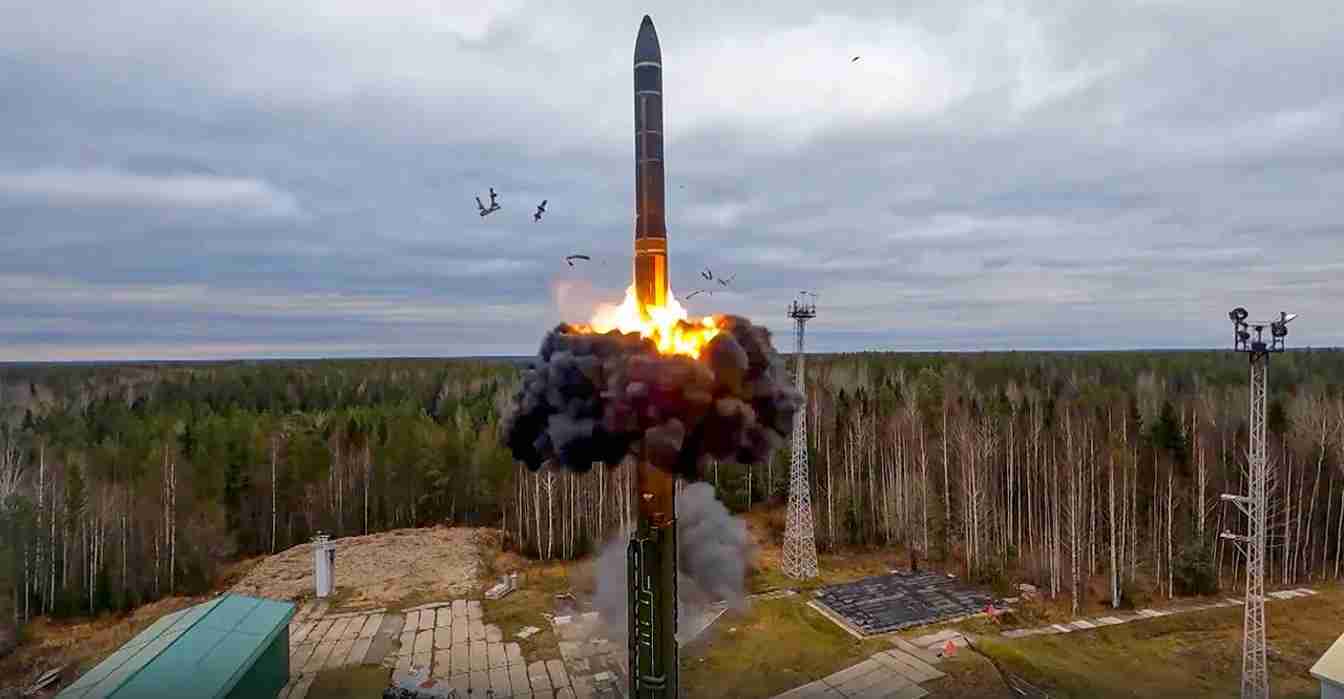
Trump orders immediate U.S. nuclear weapons testing, citing Russia and China as reasons in major policy shift
President Trump ordered the Defense Department to begin nuclear weapons testing immediately, ending a three-decade moratorium and citing Russia’s missile activity and China’s expanding arsenal as justification — a major shift in U.S. nuclear policy.
Key takeaways
- Immediate order: Trump directed testing to begin “immediately” in a social media announcement.
- Rationale cited: The White House pointed to Russian missile tests and the pace of China’s nuclear modernization as reasons for the move (source).
- Policy break: The U.S. has not conducted explosive nuclear tests since 1992; resuming would mark a major reversal in long-standing policy.
- Key unknown: Officials have not clarified whether the order targets warheads (detonations) or delivery systems and related technologies (source).
What the president announced and why
What was announced: President Trump posted that he had ordered the Defense Department to begin nuclear weapons testing immediately. He framed the decision as a response to changing global realities that require the United States to act to preserve deterrence and readiness. Reporters were pointed to the president’s public post and subsequent briefings (source).
Why: The announcement cited recent Russian missile activity and concerns about China’s nuclear buildup — warnings that, the White House said, make testing needed to keep U.S. forces ahead of rivals (source).
How big a change this is
If carried out, the order would be one of the most significant reversals in U.S. nuclear policy in decades. The United States ceased explosive nuclear testing in 1992 and has maintained a de facto moratorium since then, relying on stockpile stewardship — simulations, laboratory work and subcritical tests — to ensure arsenal reliability without detonations.
Resuming explosive tests would affect treaties, arms control norms and diplomatic relations with allies and rivals, and would reshape the technical and political framework that has governed U.S. nuclear stewardship for nearly 30 years.
What remains unclear
Scope: Officials were reported to be consulting on whether the order calls for full-scale nuclear warhead detonations or tests limited to delivery systems, missiles and related technologies. The distinction is crucial: detonations would be globally visible and legally fraught, while delivery-system tests may be framed differently under some agreements (source).
Logistics: No timeline, locations, agency leads or technical details have been made public. Questions remain about which national laboratories or sites would be involved and how oversight and environmental safeguards would be handled.
International context: Russia and China
The announcement explicitly linked testing to Russian missile tests and to concerns that China’s arsenal could grow rapidly. Trump characterized Russia as a major nuclear power and warned that China could close the gap within a few years if trends continue (source).
Arms-control experts warn that a declared U.S. testing program could escalate tensions and prompt reciprocal actions. Global norms against explosive testing have been central to nonproliferation efforts; a U.S. return to testing risks eroding those norms and complicating diplomacy.
Legal and treaty considerations
Although the United States has not ratified the Comprehensive Nuclear-Test-Ban Treaty (CTBT), it long supported a norm against explosive testing. Renewed tests would prompt legal and diplomatic questions and could undermine U.S. credibility when urging other states to refrain from testing.
Domestic legal authority involves multiple agencies — the Department of Defense, the National Nuclear Security Administration (NNSA) and congressional oversight committees — and any operational plan would require coordination across those entities.
Potential reactions and consequences
International: Allies, arms-control advocates and parts of the international community are likely to react strongly. Some allies that depend on U.S. extended deterrence may face new diplomatic pressures.
Domestic: Within the U.S., both political parties, defense experts and scientific communities will demand clarity on safety, environmental impacts and costs. Explosive testing would require significant resources and careful planning to mitigate environmental and public-health risks.
Implications for Las Vegas, Nevada
Las Vegas has deep ties to the nation’s nuclear testing history; renewed testing could have several concrete effects:
- Economic impact: The Nevada National Security Site (NNSS) near Las Vegas could see increased federal spending and contractor jobs, benefiting local suppliers and technicians.
- Political consequences: Nevada officials will face pressure to weigh economic benefits against public-safety concerns; local voters will seek briefings and assurances on protection measures.
- Social effects: Renewed testing may revive fears tied to the test-era fallout and health impacts, prompting calls for enhanced environmental monitoring and health screenings.
- Tourism and culture: Las Vegas’ tourism industry may demand reassurances that visitors and resort operations will not be affected.
- Practical changes: Residents could see increased federal activity, traffic near contractor sites and greater involvement from agencies such as the Department of Energy and the NNSA; nearby military installations like Nellis AFB would be part of coordination efforts.
Reporting, safety and next steps
The announcement originated on social media and cited global threats as the rationale, but officials have not provided an operational plan. Reporters were told senior aides are consulting to clarify the scope of the order (source).
Policy watchers in Nevada and nationwide will watch for formal guidance from the Department of Defense, the Department of Energy and the NNSA. Congress may hold hearings to examine legal authority, costs and safety measures. Local leaders will likely demand clear environmental and public-health safeguards before any activity proceeds.
Sources
Trump social media announcement and related reporting
Nevada National Security Site
Nellis Air Force Base



