
9th Circuit allows Trump National Guard Portland deployment in 2-1 ruling, stirring state-federal showdown
The 9th Circuit Court of Appeals overturned a district court injunction in a 2-1 decision permitting the Trump administration to federalize the Oregon National Guard for deployment to Portland, renewing debate over presidential power and state control amid protests.
Key takeaways
- Appellate hold: A three-judge Ninth Circuit panel stayed a district-court injunction blocking federalization — Full opinion.
- Split panel: Judges Ryan Nelson and Bridget Bade formed the 2-1 majority; Judge Susan Graber dissented (see coverage at Democracy Docket and Portland Tribune).
- Civil liberties concern: Advocacy groups including the ACLU called the ruling a dangerous federal overreach — ACLU statement.
Key information
Court: United States Court of Appeals for the Ninth Circuit (three-judge panel).
- Full opinion: Full opinion
- Panel composition: Judges Ryan Nelson and Bridget Bade (Trump appointees) formed the 2-1 majority; Judge Susan Graber (Clinton appointee) dissented — reporting: Democracy Docket, Portland Tribune.
- Holding: The appeals court stayed a district-court injunction that had blocked federalization and deployment of the Oregon National Guard to Portland.
- Central legal point: The majority said courts should defer to the President’s factual determinations about the need for federal troops and avoid substituting judicial judgment in national-security or unrest matters — see majority opinion.
- Dissent: Judge Graber warned the ruling “erodes core constitutional principles” and raised concerns about state control of militias and First Amendment rights — analysis at Democracy Docket.
- Reactions: Civil liberties groups criticized the ruling; the Justice Department indicated it would press forward in light of the appellate decision — reporting: Democracy Docket, ACLU.
- Related coverage: Fox News report.
What the ruling means and how the case reached the appeals court
Last week’s decision reverses an injunction issued by U.S. District Judge Karin Immergut, who initially blocked federalization of the Oregon National Guard. Judge Immergut, a Trump appointee, concluded the President’s justification was “simply untethered to the facts”, noting an absence of recent incidents that would justify federal intervention — background reporting: Democracy Docket.
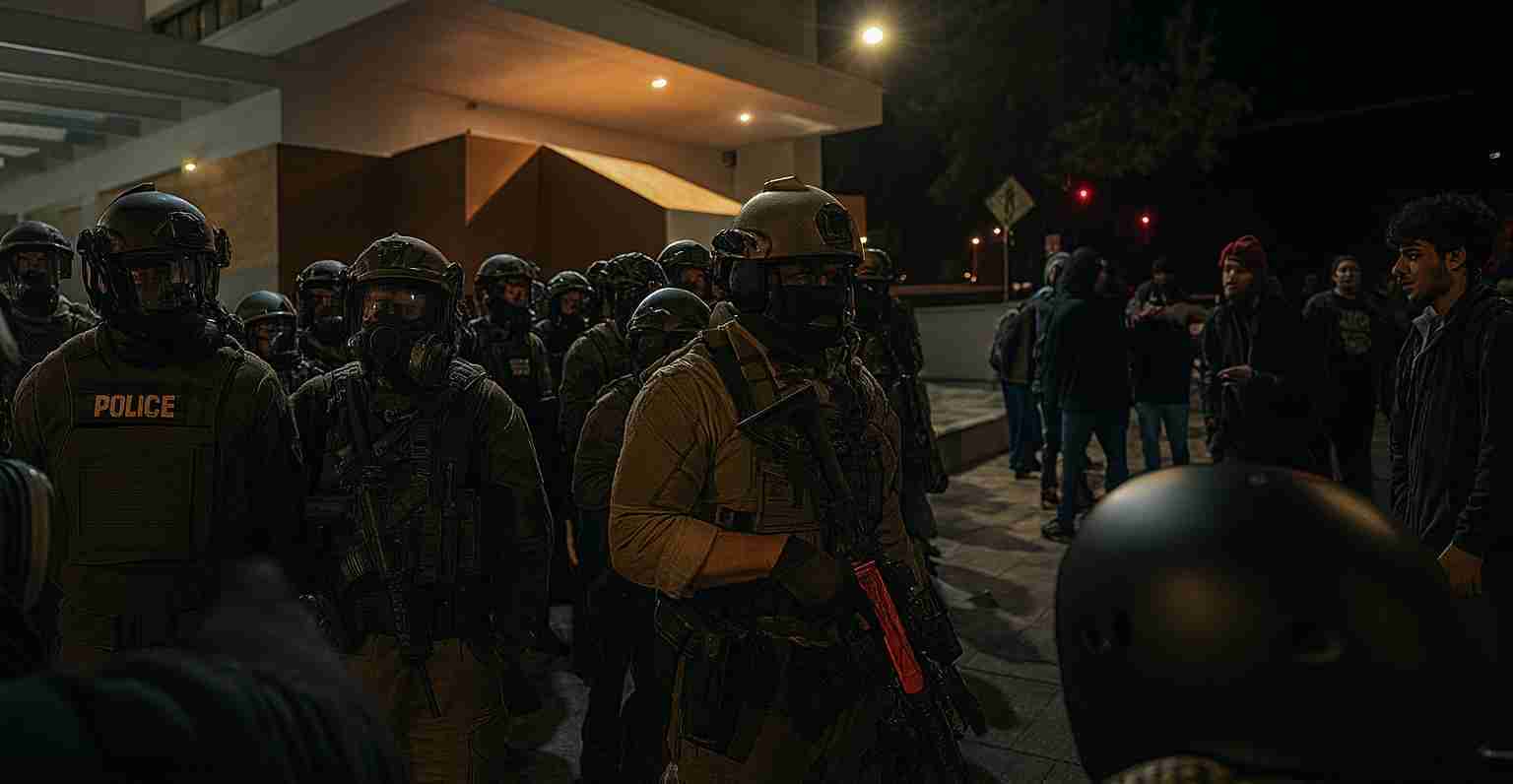
The dispute began after President Trump ordered federalization of Oregon National Guard personnel to respond to protests outside an Immigration and Customs Enforcement facility in Portland. State leaders, including Governor Tina Kotek, objected, arguing deployment intruded on state authority and risked suppressing lawful protest. Local officials and civil liberties advocates warned about militarized responses near demonstrations — reporting: Portland Tribune.
The Ninth Circuit majority held the district court erred by second-guessing the President’s factual determination that federal troops were necessary. The opinion emphasized judicial restraint and deference to executive decisions bearing on national security and public order, framing questions about when the President may federalize state National Guard units and the limits of judicial review — see the Ninth Circuit opinion.
The dissent: state sovereignty and First Amendment concerns
Judge Susan Graber’s dissent sharply criticized the majority. She warned the decision threatens “core constitutional principles, including sovereign States’ control over their States’ militias and the people’s First Amendment rights.” Graber emphasized factual gaps, noting a lack of significant incidents in the two weeks before the President’s order and cautioning the ruling could chill lawful protest — reporting: Democracy Docket.
“Allowing federalization under these circumstances risks enabling the federal government to deploy state forces in ways that could chill lawful protest and upset the balance between federal and state power,” Judge Graber wrote.
Reactions from advocacy groups and political leaders
Civil liberties organizations condemned the ruling. The ACLU said it was deeply concerned that the decision sets a dangerous precedent for federal control over state militias and could be used to suppress peaceful protest.
State and local officials framed the decision as an escalation. Governor Tina Kotek and others argued managing protests is primarily a state and local function, and that federal intervention risks escalating tensions rather than calming them — coverage: Portland Tribune.
Justice Department and supporters argued the President has authority to act when federal facilities or personnel face threats and indicated readiness to press the case further where district-court orders still block some National Guard deployments — reporting: Democracy Docket.
Legal next steps and the broader fight over federal power
Opponents have several legal avenues, including an emergency en banc rehearing by the full Ninth Circuit or appeal to the Supreme Court. The ACLU and other groups flagged potential appeals arguing the ruling misreads statutory limits and threatens constitutional rights.
The Department of Justice may move forward with federalization under the appellate ruling and challenge district court blocks elsewhere. How courts resolve the tension between federal authority and state control of militias could set precedent for future protest management across the country — see Ninth Circuit opinion and analysis at Democracy Docket.
Contextual reporting and primary sources
- Democracy Docket analysis
- Portland Tribune coverage
- Fox News report
- Ninth Circuit opinion (PDF)
- ACLU statement
- Video reports and hearings: YouTube video 1, YouTube video 2
Implications for Las Vegas, Nevada
Economic effects: A ruling that broadens federal power to deploy National Guard units could affect Nevada’s security posture and budgeting. State leaders may face pressure to coordinate differently with federal authorities; mutual-aid and crowd-control costs could shift, affecting city budgets in Las Vegas.
Political consequences: The decision will be watched by Nevada political leaders and may become a talking point in local and statewide races — a test of federal restraint versus stronger federal protections for federal facilities.
Social effects: Las Vegas hosts major gatherings and protests; residents and organizers may view the ruling as a warning that federal authorities could intervene more readily near federal property, potentially chilling protest activity or prompting heightened local mobilization.
Cultural relevance: Nevada values both individual liberty and respect for law. The debate reflects a broader tension: how to protect public safety without eroding civil rights. Communities prioritizing free expression and local control will closely follow developments.
Practical applications: City and county emergency planners should review coordination agreements with state and federal partners; law enforcement may need updated guidance on requesting federal assistance; nonprofits should update legal-education materials for volunteers and attendees.
What local leaders can do now
- Review mutual-aid and deployment protocols with state and federal partners to clarify roles if federalization is sought in Nevada.
- Communicate with community groups about civil liberties protections and crowd-safety best practices; provide clear materials for organizers and volunteers.
- Monitor legal developments closely — an en banc Ninth Circuit rehearing or Supreme Court review could rapidly change the legal landscape.
- Engage legal counsel to prepare for potential litigation or to advise on policies protecting First Amendment activity in the event of federal involvement.
Conclusion
This 9th Circuit ruling marks a flashpoint in the balance of federal authority and state control. For Las Vegas and other urban centers, the decision raises immediate questions about civil rights, emergency planning and how local leaders will protect both public safety and protest freedoms in the months ahead.


