U.S. Confirms Limited Clade I Mpox Cases Linked to Travel; Officials See Low Public Risk as Europe Monitors Hantavirus Reports
U.S. health authorities confirm 11 Clade I mpox cases, mainly travel-linked from Central/Eastern Africa between Nov. 2024 and Feb. 2026; officials say public risk is low and recommend targeted vaccination and prevention measures.
- 11 confirmed U.S. Clade I cases (Nov. 2024–Feb. 2026), largely linked to travel to Central/Eastern Africa.
- Clade I historically associated with greater severity but recent cases show low observed fatality with supportive care and antivirals.
- Immediate risk to the general public is considered low; targeted JYNNEOS vaccination is recommended for higher-risk people and travelers.
- Separate reports of new hantavirus outbreaks in Spain and France are not corroborated by WHO or European surveillance as of May 2026.
What is Clade I mpox and how does it differ from Clade II?
Mpox viruses are categorized into genetically distinct clades to guide clinical and public health responses. Clade I (primarily Central Africa) has historically been associated with more severe illness and higher death rates than Clade II, but recent CDC and WHO reporting shows observed fatality in recent Clade I detections has been low with modern supportive care and available antivirals. See the CDC — Mpox clinical overview and the WHO — Mpox fact sheet for clinical context.
Symptoms and prevention
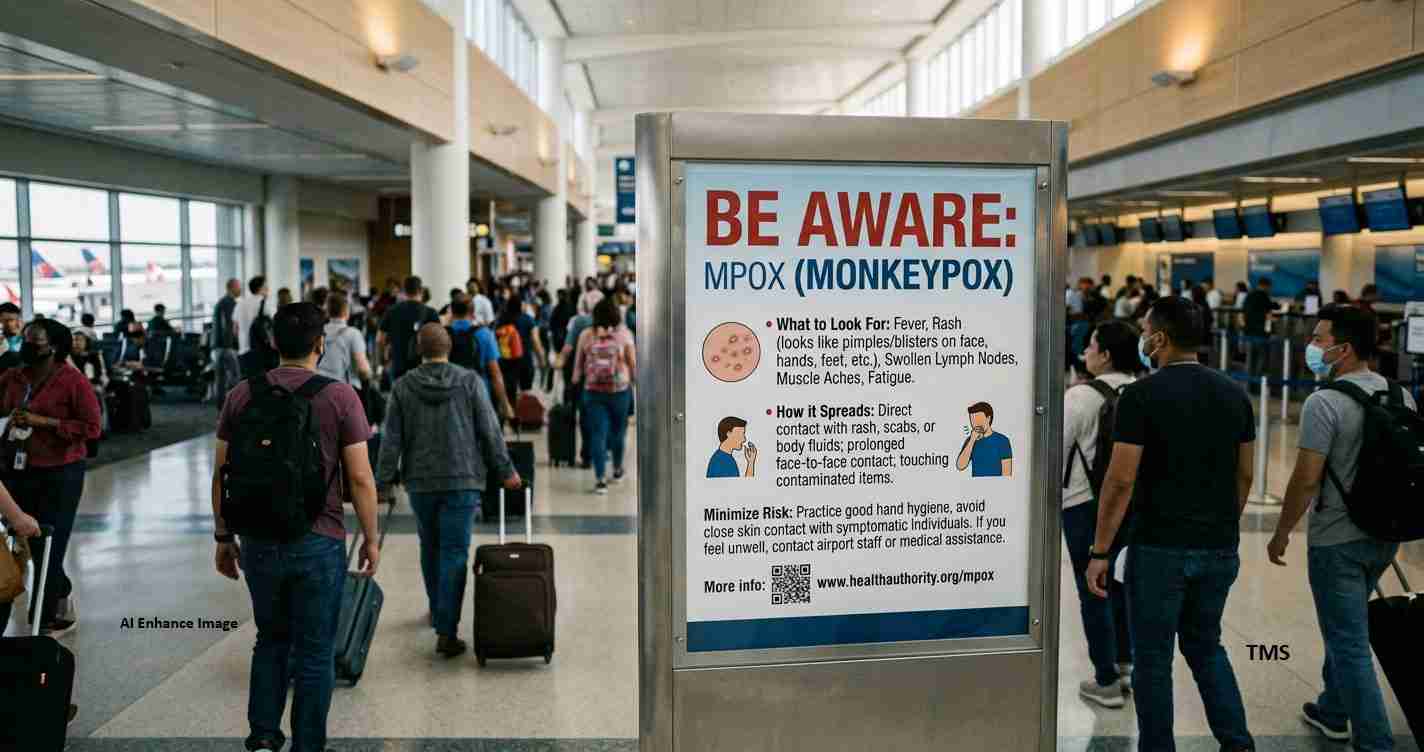
Common symptoms include fever, swollen lymph nodes and a characteristic rash that can affect the face, hands, feet, chest or genitals. Illness typically lasts two to four weeks. Transmission occurs mainly through close skin‑to‑skin contact, prolonged face‑to‑face respiratory exposure, or contact with contaminated materials. For general guidance, refer to CDC — About mpox.
Prevention:
- Vaccination: JYNNEOS is recommended for people at higher risk and for some travelers to areas with Clade I circulation; completing the two‑dose series is emphasized.
- Behavioral measures: Avoid close contact with symptomatic individuals and contaminated materials; practice good hand and respiratory hygiene.
- Seek care: Anyone with fever and rash should inform clinicians about travel or exposures so testing and isolation steps can be taken promptly.
U.S. cases and investigation of travel links
CDC reporting indicates the first confirmed U.S. Clade I case was identified on Nov. 15, 2024, in California and was linked to travel in Central/Eastern Africa; it did not lead to sustained community transmission, per CDC — HAN 00519 (Nov. 2024 Clade I notice).
From November 2024 through February 2026, CDC documents show 11 confirmed U.S. cases that met the Clade I designation. Most were associated with international travel; a small number of non‑travel detections were genomically linked to earlier travel‑associated infections rather than indicating widespread community transmission. See the CDC — Mpox situation summary and outbreak information for updates.
A note on an unverified Connecticut report and travel to Western Europe
Some social posts and secondary reports referenced a Connecticut Department of Public Health case tied to travel in Western Europe. A comprehensive review of CDC, WHO and state public health releases found no verifiable record of a Connecticut Clade I confirmation matching that description. Official sources emphasize that most U.S. Clade I cases have direct travel links to Central or Eastern Africa rather than Western Europe (CDC situation summary).
Hantavirus reports in Europe: what the records show
Questions circulated about new hantavirus cases in Spain and France. Hantaviruses are rodent‑borne and may cause hemorrhagic fever with renal syndrome in Europe (Puumala, Dobrava) or, less commonly in Europe, severe pulmonary syndromes. Transmission typically occurs via contact with rodent urine, droppings or saliva. Publicly available WHO and European surveillance data as of May 2026 do not document a new, large hantavirus outbreak in Spain or France; hantavirus infections in these countries are usually sporadic and under routine surveillance. For background, see the ECDC — Hantavirus overview.
Why distinguishing clades matters for public health
Determining whether a case is Clade I or Clade II helps public health officials assess potential severity, guide treatment priorities and focus contact tracing. Still, agencies stress individual outcomes depend more on exposure type and timely clinical care than clade alone. Laboratories detecting Clade I are instructed to notify public health authorities per current case definitions (CDC — Mpox case definitions).
Public health guidance for travelers and event-goers
Officials advise travelers to endemic areas and attendees of summer festivals to consider vaccination and practice preventive measures. Vaccination with JYNNEOS is available and recommended for eligible higher‑risk individuals; symptomatic people should seek care and report recent travel or exposures. For vaccine and prevention resources, see CDC — Mpox vaccination and prevention guidance.
Implications for Las Vegas, Nevada
Local travel and tourism risks: Las Vegas is a global travel hub. Most U.S. Clade I mpox cases have been travel‑linked rather than the result of widespread community transmission. Local health officials should be alert for cases among returning travelers and at large gatherings.
Healthcare readiness: Hospitals and clinics should ensure providers recognize mpox signs and know testing and reporting pathways. Local providers can order tests through public health labs and must report suspect cases to the Nevada Division of Public and Behavioral Health and the CDC as required (CDC — Testing and reporting resources).
Vaccination and outreach: Targeted vaccination for eligible residents and visitors — especially international travelers or those engaging in higher‑risk activities — can reduce risk. Messaging should emphasize completing the two‑dose JYNNEOS series and where to obtain it.
Economic and event planning: Event planners should include basic infection‑control messaging without causing alarm. Encourage symptomatic attendees to seek care and provide hygiene stations at venues.
Community impact and equity: Outreach should be culturally and linguistically appropriate and non‑stigmatizing to ensure access to care and vaccination for populations with varied healthcare access.
“Health officials say the immediate risk to the general public is low,” and recommend targeted prevention and vaccination for those at higher risk.
Sources and further reading
- CDC — Mpox clinical overview
- CDC — Mpox situation summary and outbreak information
- CDC — HAN 00519 (Nov. 2024 Clade I notice)
- CDC — Mpox case definitions
- CDC — About mpox
- WHO — Mpox fact sheet
- ECDC — Hantavirus overview
For the latest local guidance, Las Vegas residents should consult the Southern Nevada Health District and the Nevada Division of Public and Behavioral Health.