Federal judge blocks mask ban in California’s No Secret Police Act, upholds ID rule in Supremacy Clause ruling
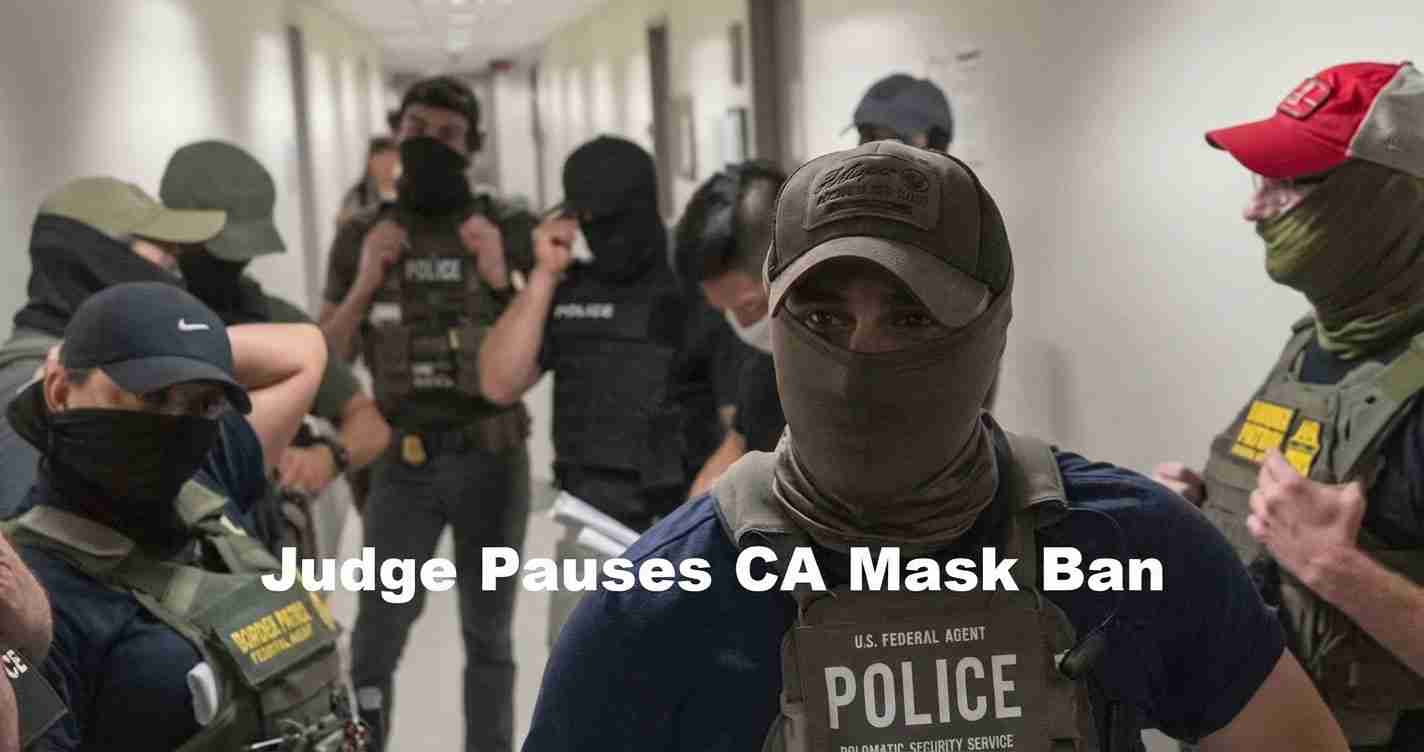
Lede: A federal judge in Los Angeles issued a split ruling on California’s No Secret Police Act, blocking the mask ban for federal officers under the Supremacy Clause while upholding a companion law requiring on-duty officers to display identification.
Key takeaways
- Mask ban blocked: U.S. District Judge Christina Snyder issued a preliminary injunction preventing enforcement of the provision that would bar federal officers from wearing masks during operations.
- ID rule upheld: The companion law requiring visible identification for officers on duty remains in effect and was not found to unlawfully regulate the federal government.
- Supremacy Clause central: The court found the mask provision unlawfully singled out federal officers and therefore conflicted with the Constitution’s Supremacy Clause.
- Next steps: California lawmakers may revise the statute to treat all officers equally; litigation is ongoing and the injunction applies while the case proceeds.
What happened
U.S. District Judge Christina Snyder issued a preliminary injunction blocking enforcement of the portion of California’s No Secret Police Act (SB 627) that would have barred federal officers from wearing masks while conducting operations. The court concluded the mask ban unlawfully discriminated against federal officers and therefore conflicted with the Supremacy Clause. Reporting on the decision drew from The California Sun and Fox 11 Los Angeles.
Background on the bills
California lawmakers approved two measures in response to public concern after masked federal enforcement actions left residents and activists unsure who was making arrests. SB 627 — the No Secret Police Act — sought to prohibit officers from wearing masks during enforcement in California. A companion measure, SB 805, often described as the No Vigilantes Act, requires officers to display name, badge number or agency identification while on duty. Both bills were signed by Gov. Gavin Newsom in September.
The lawsuit and the federal response
The federal government filed suit in November, arguing the statutes would interfere with federal law enforcement operations and increase risk to officers. The Department of Justice’s complaint noted masked federal officers have been targeted, harassed, doxxed and threatened, and that forcing them to remove face coverings could create safety risks in certain operations. The federal filing made clear the government did not intend to comply with the challenged mask provision. See reporting from The California Sun and Fox 11 Los Angeles for additional details.
The judge’s reasoning: Supremacy Clause ruling
Judge Snyder — a Clinton appointee — focused on whether the mask provision impermissibly discriminated against the federal government. She found California had written the mask ban to apply to federal officers while exempting state and local officers. That targeted application, the court wrote, interferes with federal officers’ ability to perform federal duties and therefore triggers the Supremacy Clause.
Snyder wrote that federal officers “can perform their federal functions without wearing masks,” and held the mask provision unlawful as written.
Why the ID rule survived
Snyder reached a different conclusion for the companion identification requirement. The judge found the ID rule does not single out federal officers or directly regulate federal functions, so it does not violate the Supremacy Clause. Supporters and state officials described the provision as an accountability measure to help the public identify officers and hold them responsible. Gov. Gavin Newsom called the identification ruling “a clear win for the rule of law.” (The California Sun)
Reactions from officials and lawmakers
Federal response: The Department of Justice emphasized officer safety and operational integrity, noting masked federal agents have been targeted and that forced unmasking could increase threats. Attorney General Pamela Bondi praised the injunction on social media, warning that requiring federal agents to remove masks would worsen safety risks. (Fox 11 Los Angeles)
State response: Sen. Scott Wiener (D-11), an author of the No Secret Police Act, said he plans to introduce revised legislation that would apply mask restrictions equally to state, local and federal officers to avoid the constitutional problem Snyder identified. Supporters say the bill was drafted with constitutional guidance and that exemptions for state police were removed after communications with the Governor’s office. (The California Sun)
What the ruling means for enforcement while the case continues
The preliminary injunction prevents enforcement of the mask ban provision against federal officers while the legal challenge proceeds; it does not resolve the final merits of the statute. The identification requirement remains enforceable. The ruling sets the stage for either legislative revisions by California or further court rulings on whether a uniformly applied law could survive constitutional scrutiny. (The California Sun; Fox 11 Los Angeles)
Path forward for California lawmakers
Supporters signaled they will try to revise SB 627 to treat all officers equally. If California rewrites the law to apply uniformly to state, local and federal officers, the specific Supremacy Clause objection may be reduced — though new legal challenges could follow. Sen. Wiener announced intentions to introduce a version that applies across the board to avoid the discrimination problem the judge identified. (The California Sun)
Implications for Las Vegas, Nevada
Local policy watchers: Las Vegas-area agencies should monitor the California litigation for guidance on how courts balance officer safety and public accountability. If states adopt visible-ID requirements broadly, Nevada agencies could face similar pressure from the public and lawmakers.
Federal operations in Nevada: Federal agencies operating in Las Vegas — including ICE, the FBI and Department of Homeland Security components — may continue to use face coverings where they deem necessary for safety or operational security until comparable, uniformly applied rules are adopted. The preliminary injunction signals courts are likely to block state laws that single out federal officers in contradiction to the Supremacy Clause. (Fox 11 Los Angeles; The California Sun)
Public accountability: The court’s decision to uphold identification requirements may encourage Nevada activists and community leaders to press for clearer ID rules locally. For residents concerned about encounters with officers who do not show ID, Las Vegas leaders and police chiefs could face pressure to clarify or adopt more transparent ID policies.
Political and legal signals: The ruling highlights the constitutional limit on state efforts to regulate federal operations. Nevada lawmakers considering similar measures should ensure statutes do not single out federal officers or otherwise create discrimination that would invite a Supremacy Clause challenge; broader, uniform policies covering all officers may reduce that risk.
Reporting notes and sources
This article draws on the court’s preliminary ruling and reporting from The California Sun and Fox 11 Los Angeles. For central reporting on the decision, reactions and next steps see those sources directly.
Legal and policy watchers across the West will continue monitoring whether California rewrites SB 627 to include all officers or whether the federal government pursues further litigation. The court’s split decision — blocking the mask ban while keeping the ID rule — establishes a pattern that may influence similar debates balancing accountability and officer safety in other states.