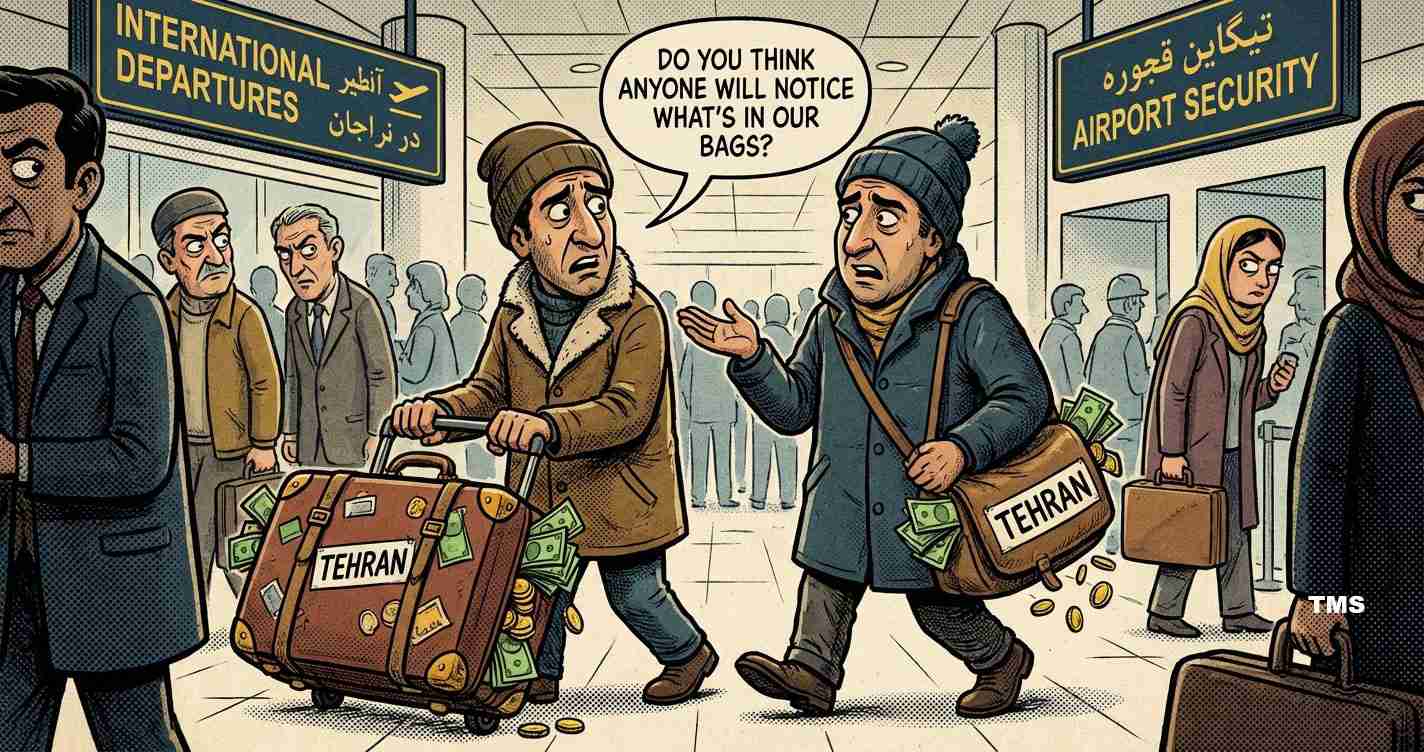
Iran capital flight accelerates as ruling elite move funds abroad amid fresh US Treasury Iran sanctions
Reports say Iran’s ruling elite moved billions abroad in recent days amid harsh U.S. sanctions, a collapsing rial and broad protests — a capital flight U.S. Treasury Secretary Scott Bessent described as like “rats fleeing the ship.”
- Elite transfers: Reports cite movements from tens of millions up to $1.5 billion abroad, and alleged individual transfers such as roughly $328 million.
- Policy trigger: The flows followed a Jan. 15 OFAC action targeting shadow banking and officials tied to protest crackdowns.
- Enforcement risk: U.S. Treasury officials warn banks and intermediaries could face secondary sanctions for facilitating suspicious transfers.
- Local impact: Markets and compliance teams in global hubs — including Las Vegas — should heighten anti-money-laundering vigilance.
Key information
Multiple outlets report that members of Iran’s ruling elite moved large sums out of the country in recent days — described in some accounts as tens of millions and in others as high as $1.5 billion. Reporting includes a claim that Mojtaba Khamenei moved roughly $328 million, a point noted as alleged and not independently verified.
For relevant reporting see Fox News reporting on alleged transfers and AINVEST analysis of regime fragility.
Treasury sanctions and policy response
On Jan. 15 the U.S. Treasury’s Office of Foreign Assets Control announced sanctions targeting five Iranian officials accused of violent suppression of protests and named shadow banking networks used to hide and launder revenue from Iran’s natural resources.
See the U.S. Treasury OFAC press release on Jan. 15 sanctions for the full announcement and designation details.
“The surge of departures of money was like ‘rats fleeing the ship,’” Treasury Secretary Scott Bessent said, urging stepped-up enforcement to trace, freeze and seize illicit transfers.
Treasury officials warned that banks or institutions that facilitate these flows — even inadvertently — could face secondary sanctions, reflecting a long-term enforcement posture to disrupt informal channels used by elites.
Reports and figures behind the claims
Accounts differ in scale and method. Some outlets cite wire transfers and cash shipments totaling tens of millions, while others claim much larger short-term outflows up to $1.5 billion. The Mojtaba Khamenei transfer of about $328 million is reported but remains unverified by independent sources.
Journalists and analysts stress reporting is fluid; Behnam Ben Taleblu of the Foundation for Defense of Democracies noted multiple reports exist and urged confirmation, arguing verified flows would bolster efforts to trace and seize assets linked to sanctioned officials (AINVEST).
Economic context driving the exodus
The capital movements occur amid deep economic distress for ordinary Iranians: a plunging rial — reported in some sources near 1.1 million rials per U.S. dollar — hyperinflation and widespread protests that began Dec. 28, 2025 over rising prices and the collapsing currency.
A decade of sanctions, curtailed oil sales and limited global banking access has eroded foreign-exchange reserves. Falling oil output in late 2025 widened budget gaps and likely motivated insiders to move wealth into perceived safe havens (The Media Line coverage; Specialeurasia analysis).
Methods of moving money and enforcement challenges
Reported channels include formal wire transfers to foreign banks, cash smuggling, use of shadow banking networks and conversion into cryptocurrencies to obscure origins and rapidly move value. The Jan. 15 OFAC action specifically targeted shadow networks historically used to hide revenue from oil and other resources.
U.S. officials say tracking and freezing such flows is difficult but achievable; OFAC has expanded pressure in recent years — in 2025 it sanctioned hundreds of persons, vessels and aircraft tied to Iran’s sanctions-evasion networks — and threatens secondary sanctions on facilitators (OFAC Jan. 15 release; AINVEST).
Strategic implications and expert views
Analysts warn that a confirmed, large-scale exodus of elite assets would be a direct signal of regime fragility, suggesting elite panic and weakening cohesion at the top of the Islamic Republic. Such fragmentation could lead to unpredictable foreign-policy behavior or sharper domestic repression as leaders try to retain control.
Experts like Behnam Ben Taleblu emphasize the urgency for U.S. and allied authorities to trace and seize assets linked to sanctioned individuals to deny safe havens, combining targeted designations with disruption of financial conduits (AINVEST reporting; OFAC).
Implications for Las Vegas, Nevada
- Economic exposure and vigilance: Las Vegas firms — banks, casinos and real-estate agents — should review compliance to avoid processing funds tied to sanctioned Iranian figures or shadow networks. The Treasury warned about secondary sanctions on facilitators (OFAC Jan. 15 release).
- AML enforcement: Local financial and crypto service providers may face heightened scrutiny and reporting demands as authorities trace Iranian elite assets (AINVEST).
- Real estate and luxury market risk: Las Vegas’ high-end property and luxury goods markets could attract foreign wealth seeking storage; brokers and sellers must increase due diligence to avoid facilitating illicit transfers (Fox News reporting).
- Community and humanitarian concerns: Economic collapse and unrest in Iran could increase requests for aid from Iranian-Americans and relatives; nonprofits and city services should coordinate with federal agencies on lawful assistance and resettlement pathways.
- Political and civic response: Local officials may be expected to weigh in as enforcement actions balance national-security aims with humanitarian and due-process concerns (AINVEST; OFAC).
Sources and further reading
- OFAC press release on Jan. 15 sanctions and shadow banking actions
- Reporting on alleged transfers and elite capital flight (Fox News)
- Analysis and reporting on regime fragility and capital movements (AINVEST)
- Coverage of rial collapse, protests and economic context (The Media Line)
- Reporting on Treasury statements and commentary (IranIntl)
- Background on Iran’s broader economic struggles (Specialeurasia)