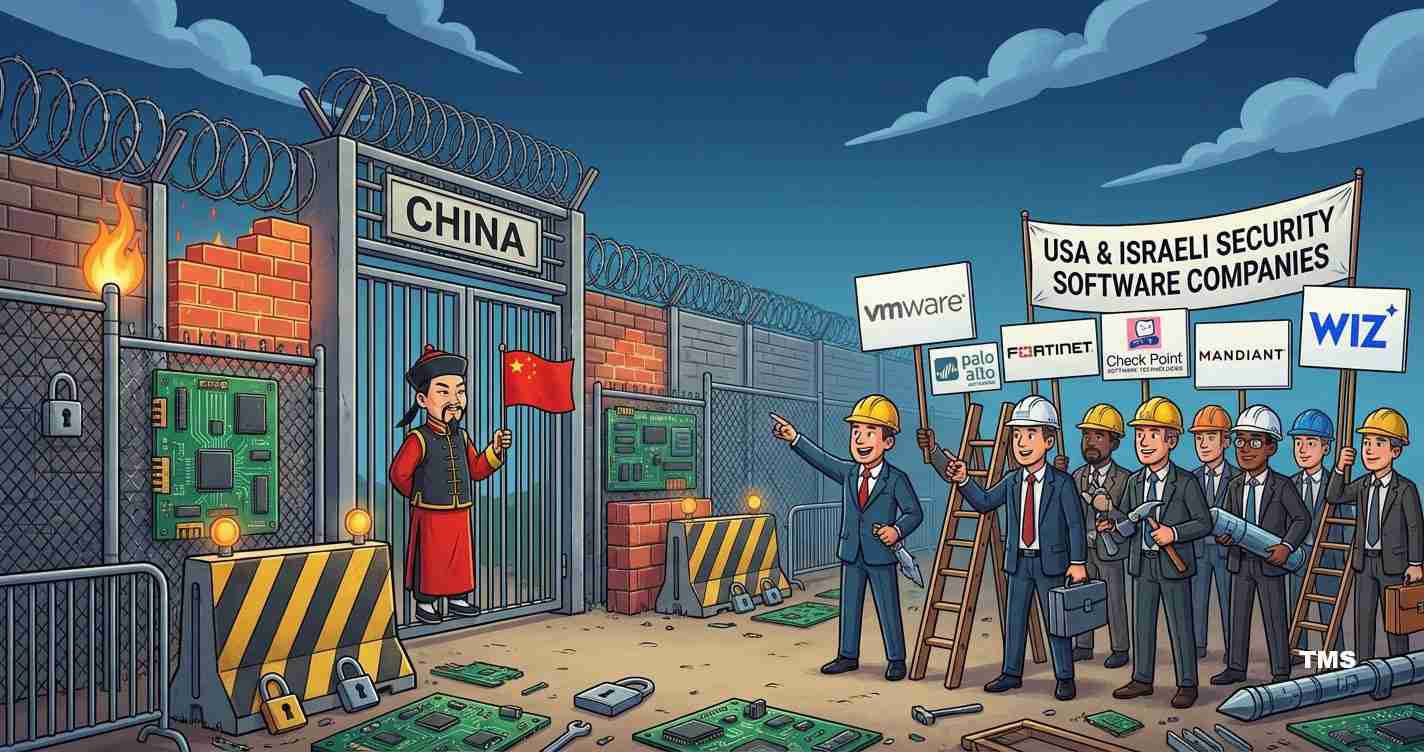
China directs domestic firms to drop cybersecurity tools from U.S., Israeli vendors amid national security concerns
Chinese authorities have ordered domestic firms to stop using cybersecurity software from more than a dozen U.S., Israeli and other foreign vendors, citing national security risks and concerns about sensitive data being transmitted abroad amid growing tech tensions.
- Directive reportedly targets 15+ foreign cybersecurity vendors, citing risk of data exfiltration.
- Reports rely on anonymous sources; Chinese regulators have not publicly confirmed the instruction.
- The move aligns with Beijing’s push for technology self-reliance and could reshape global cybersecurity markets.
What was reported and where the information came from
Multiple news organizations, citing unnamed sources, reported that Chinese regulators instructed some domestic companies to stop using cybersecurity products from a list of U.S., Israeli and other foreign vendors. Reporting aggregated includes coverage by Fox Business, The Jerusalem Post, and The Japan Times. A China-focused summary appears at table.media.
How the directive is described
Reports describe the action as an internal instruction or guidance rather than a formal, public ban issued by a named regulator. Sources say it applies to “domestic companies” using or procuring certain foreign cybersecurity tools. Crucial details — which regulator issued the order, which companies received it, enforcement mechanisms and exact timelines — were not specified in the reporting.
Companies named in reporting
Reporting lists multiple major cybersecurity and IT firms allegedly affected. The named companies include:
- U.S.-based: VMware (Broadcom-owned), Palo Alto Networks, Fortinet, CrowdStrike, SentinelOne, Recorded Future, McAfee, Claroty, Rapid7, Mandiant and Wiz (Alphabet-owned).
- Israeli: Check Point Software Technologies, CyberArk, Orca Security, Cato Networks.
- Other: Imperva (owned by Thales).
Why Beijing may be acting
Officials and analysts cited in reports say the concern is that foreign cybersecurity software could collect logs, alerts, or other sensitive telemetry and transmit it outside China’s borders. Observers frame the instruction as part of Beijing’s longer-term strategy to secure supply chains and accelerate domestic technology development amid intensifying US-China competition over semiconductors, AI and critical infrastructure.
“The stated worry is that foreign cybersecurity tools could leak sensitive information abroad, prompting a push for domestic alternatives.”
Limits of current reporting
Key caveats:
- There has been no public confirmation from agencies often associated with such guidance (for example, China’s Cyberspace Administration or the Ministry of Industry and Information Technology).
- Reports rely heavily on anonymous insiders and do not include a published list of banned products, enforcement details or timelines.
- At the time of reporting, the listed companies had not issued public responses.
Broader context: national security tech moves and US-China tensions
Analysts place the reported instruction within a global pattern of governments limiting certain foreign technologies in sensitive sectors to mitigate perceived risks. China has previously restricted some Western equipment in government and critical infrastructure; if confirmed, this step would further fragment the global cybersecurity market and raise strategic dilemmas for multinational vendors and customers.
Implications for Las Vegas, Nevada
Economic impact: Las Vegas businesses and casinos depend on robust cybersecurity to protect customer data, payment systems and operations. While the immediate operational impact on Nevada is limited, market fragmentation can increase costs for global vendors and affect firms operating internationally.
Political consequences: Local leaders and policymakers who court foreign investment may weigh how tech tensions influence tourism, trade and data-sharing arrangements. Nevada lawmakers may face questions about supply chain resilience and regulatory approaches to cybersecurity sourcing.
Social effects: Restrictions on global vendors could slow innovation or change data hosting practices, potentially affecting banking, healthcare and other services Nevadans rely on.
Practical applications for residents and businesses
- Review vendor risk profiles and supply chain exposure, especially for firms with China-facing operations or partners.
- Ensure contingency plans for software support, updates and alternative suppliers if vendors face restricted market access.
- Reinforce basic cybersecurity hygiene: strong passwords, multifactor authentication, regular backups and patch management.
Sources and reporting notes
This article draws on reporting from Fox Business, The Jerusalem Post, The Japan Times, and a China-focused summary at table.media. Reports cite unnamed sources briefed on the directive and note there has been no public confirmation from Chinese regulators or the named companies at the time of publication.