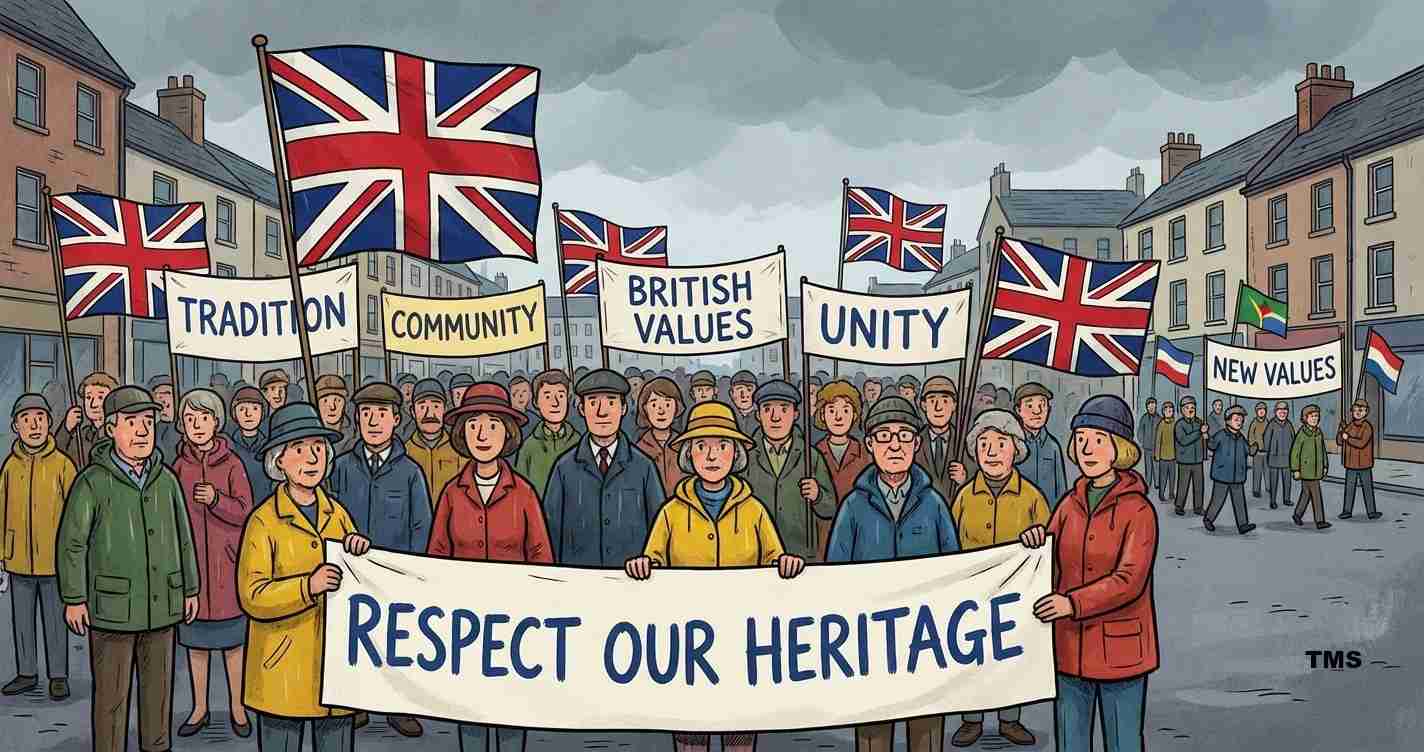
Union Jack, Extra Banners and a Backlash: UK Citizens Push Back Against “Woke” Policies in Anti-Immigration Protests
Since April 2025, England saw repeated anti-immigration protests targeting hotels and asylum housing; demonstrations often featured Union Jacks, clashes with police and arrests, while nationwide surveys show growing public support for progressive social attitudes across Britain.
Key takeaways
- Widespread local protests: From April 2025 many towns witnessed demonstrations against asylum accommodation, producing injuries to officers and multiple arrests.
- Visible symbols and campaigns: The Union Jack and coordinated efforts like “Operation Raise the Colours” played a central role in signalling national identity and unity.
- Mixed national mood: Despite loud street protests, surveys indicate growing acceptance of progressive or “woke” social attitudes across Britain.
- Far-right amplification: Extremist groups and some political figures have used local grievances to push broader anti-woke and nationalist narratives.
What happened: protests, places and policing
Beginning in April 2025, local campaigns against asylum accommodation spread across England. Demonstrations frequently centred on hotels and apartment blocks identified as housing for people seeking refuge. Police recorded more than 41 injuries to officers and roughly 180 arrests linked to the disturbances as events escalated in multiple locations.
In several communities activists and residents used petitions and sustained pressure to delay or halt planned housing schemes. One prominent example in Waterlooville saw thousands of signatures and intense local campaigning that stalled a placement plan. National politicians and local figures publicly praised or condemned these actions, deepening the debate.
Flags, banners and “Operation Raise the Colours”
A defining, visible feature of many rallies was the prominent display of the Union Jack. Organizers and supporters often presented the flag as a symbol of unity and heritage. At the same time, extra banners and coordinated campaigns — notably “Operation Raise the Colours” — encouraged mass flag-raising to project national solidarity and counter perceived media narratives.
“Flags can be both patriotic expression and tools for political mobilisation,” analysts note, depending on context and intent.
Reporting linked the campaign’s spread to messaging on platforms such as Telegram and Facebook and to far-right activist networks. Opponents argued that additional banners signalled efforts to reshape local communities and exclude newcomers, underscoring how symbols can mobilise support or provoke backlash.
Who is involved: groups and voices
A range of actors participated in or amplified the protests. Visible among them were far-right groups like Britain First and Patriotic Alternative, alongside smaller parties and individuals advocating tough migration policies. Elements of the mainstream right also signalled sympathy or support in certain local cases.
On the other side, large counter-demonstrations by anti-racism organisations — including Stand Up To Racism — drew thousands in some cities. Police frequently deployed separation tactics to prevent clashes; in cities such as Newcastle, crowds on both sides led to multiple arrests as officers worked to maintain order.
The anti-woke connection
Scholars and commentators link the protests to a broader anti-woke movement that criticises diversity initiatives, decolonisation efforts and progressive policies on race, gender and migration. Since 2020 cultural debates have provided fertile ground for actors who blend cultural grievances with immigration concerns to mobilise supporters.
Researchers warn that local housing disputes can be exploited by extremist networks to recruit and amplify nationalist agendas. Visible slogans and flags may function as recruitment tools, enabling the spread of extreme views both online and offline.
Public opinion: a divided picture
Despite the loud presence of anti-immigration protests, national survey data paint a more nuanced image. The National Centre for Social Research reports that attitudes labelled as “woke” — including support for equality and more liberal views on identity — are becoming more common. This suggests protests, though impactful locally, do not fully represent the broader public mood.
Analysts emphasise persistent divides by age, region and Brexit stance. Leave and Remain voters often hold different cultural views, keeping fault lines alive. Still, the overall drift toward progressive attitudes may constrain the long-term electoral appeal of hardline anti-woke or anti-immigration platforms.
Policing, misinformation and official reviews
Police forces faced difficult choices when demonstrations turned disorderly. A May 2025 review highlighted the role of online misinformation and the slow countering of harmful narratives that escalated tensions in some communities. The report recommended quicker responses to false claims and stronger protection for asylum accommodation sites.
Observers warned that remote amplification by public figures and social media can turn local disputes into national flashpoints. Experts emphasise that tackling misinformation, improving local communications and coordinated community engagement are crucial to de-escalation.
Implications for Las Vegas, Nevada
Though UK street protests are unlikely to alter immediate travel choices, sustained media attention can shape perceptions. Las Vegas tourism and hospitality sectors may view such headlines as reputational risks and reinforce messaging about safety and welcome.
Local political consequences include pressure on officials to balance enforcement and sanctuary-oriented policies. Socially, immigrant communities and service workers could feel the impact of overseas anti-immigrant rhetoric; nonprofits and faith groups may respond with outreach and solidarity actions.
Practically, Las Vegas law enforcement and event planners can learn from UK responses: clear public communications, rapid misinformation countermeasures and community coordination helped reduce harm in some towns. Hotels that host asylum seekers should review safety and engagement plans with local stakeholders.
Sources and further reading
- Wikipedia: 2025 British anti-immigration protests
- Frontiers in Political Science: analysis of anti-woke and political mobilization
- National Centre for Social Research: “Woke attitudes now more common in Britain”
- National Centre for Diversity: “Anti-woke fatigue — a backlash that’s wearing us out”
For further reading and verification of the facts and figures cited above, consult the linked sources. The reporting preserves original facts, timelines and referenced URLs.